 Bug FAQ
Great Banded Grayling
Brintesia circe · Order: Lepidoptera · Family: Lycaenidae
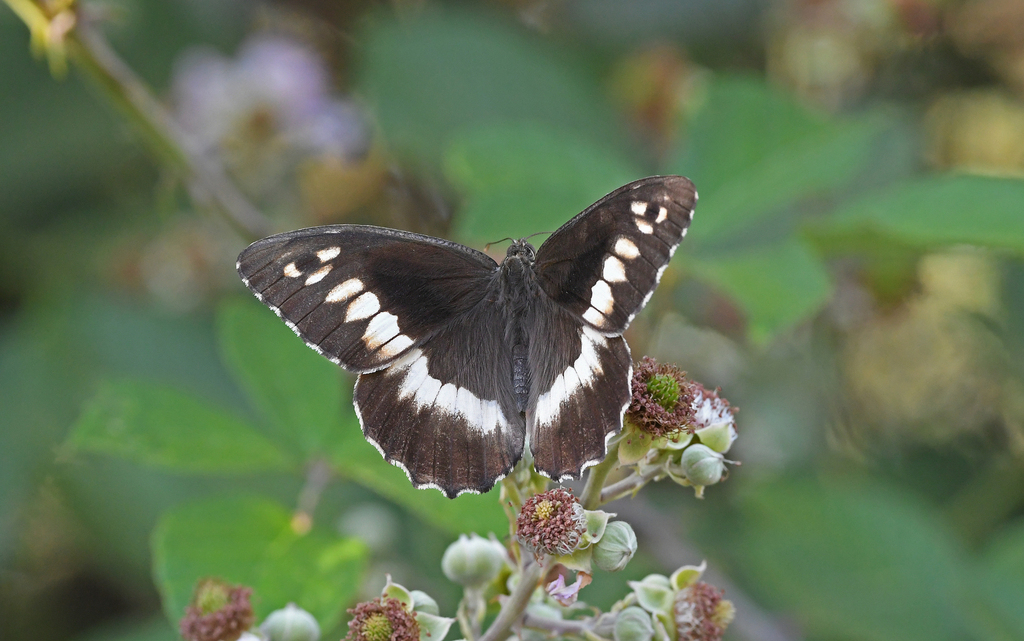
It lives in light woodlands, grassy forest edges and dry bushy areas up to 1,600 m altitude across southern Europe to the Levant. The larvae feed on grasses such as Anthoxanthum, Bromus, Festuca and Sesleria, overwinter as young larvae, and the adults fly from June to September, drinking flower nectar.
Source: Wikipedia
Size
Wingspan ranges from about 65 to 80 mm (2.6 to 3.1 in).
Source: Wikipedia
Where it lives
Prefers light woodland, grasslands at forest edges and generally dry, bushy environments up to 1,600 m elevation.
Source: Wikipedia
What it eats
Larvae eat various herbaceous grasses, especially Anthoxanthum, Bromus, Festuca and Sesleria species. Adults feed on flower nectar during their flight period.
Source: Wikipedia
Life cycle
Young larvae overwinter before developing into adults. Adults are on the wing in a single generation from June to September.
Source: Wikipedia
When you see it
Butterflies are active from July through September.
Source: Wikipedia
Where it comes from
Found throughout southern Europe, north to central Germany and east from Portugal to Lebanon and Mesopotamia.
Source: Wikipedia
More photos

Same family (Lycaenidae)





Sources
- Wikipedia: https://en.wikipedia.org/wiki/Brintesia
Look it up elsewhere: GBIF · iNaturalist · BugGuide · Wikipedia
Text written 2026-10-22 from the sources above and checked sentence by sentence against them. Data fetched 2026-10-22.