 Bug FAQ
Great Arctic
Oeneis nevadensis · Order: Lepidoptera · Family: Nymphalidae
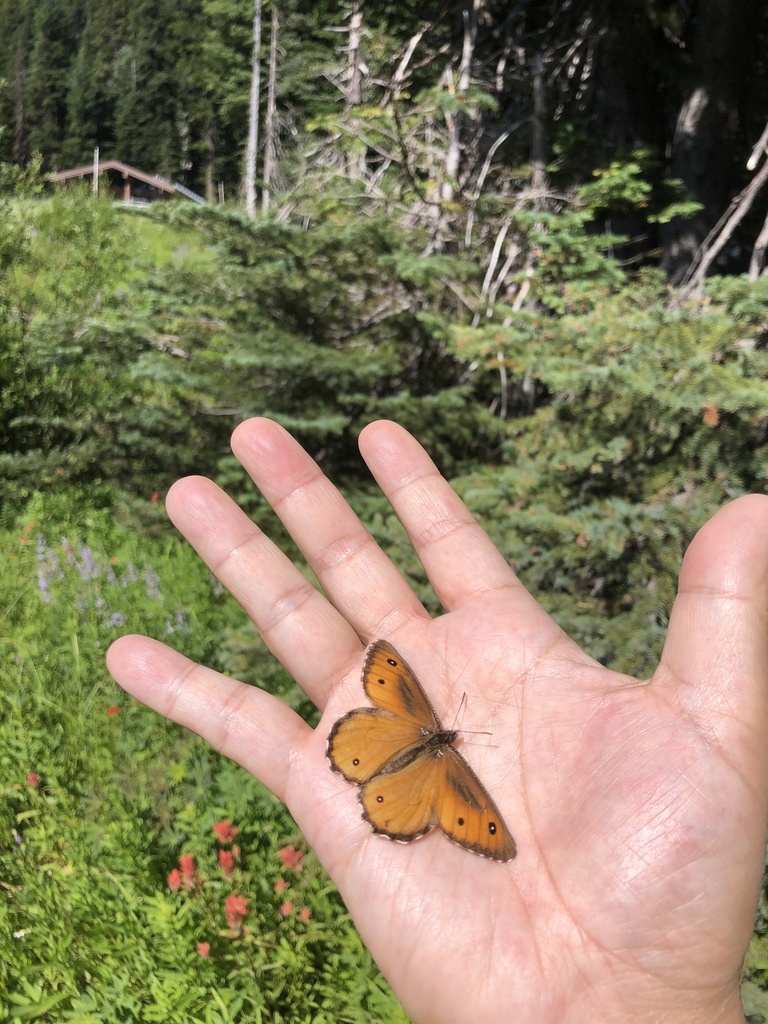
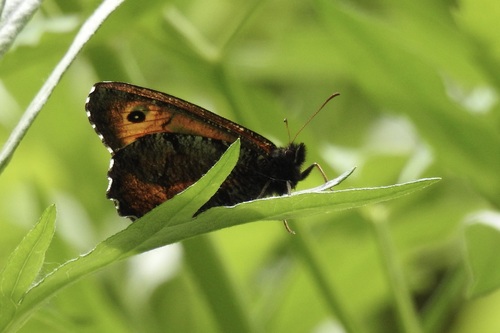
The great Arctic butterfly has a wingspan of about 2 to 2.5 inches and shows bright orange-brown upper wings; males have one or two black eyespots on each forewing while females have two or three. It lives from sea level up to 7,000 ft in forest clearings, open pinewoods, meadows and similar open habitats across northwestern North America.
Source: Wikipedia
What it eats
Host plant is unknown but is thought to belong to the grass family (Poaceae).
Source: Wikipedia
Life cycle
Caterpillars spend their first year partially grown, then overwinter again as fifth-instar larvae in the second year.
Source: Wikipedia
Where it comes from
Native to northwestern North America.
Source: Wikipedia
Where it is found in the US
Recorded in 7 of 51 states and DC. Most records: Oregon, Washington, California, Colorado, Utah, Idaho, Nevada.
Darker = more records. Counts are museum and citizen-science records, not population size.
Source: GBIF
Status: native in North America; native in Canada. Source: iNaturalist
Months it is reported in the US
Source: GBIF
More photos
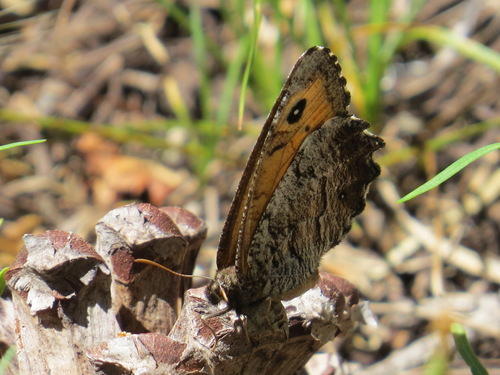
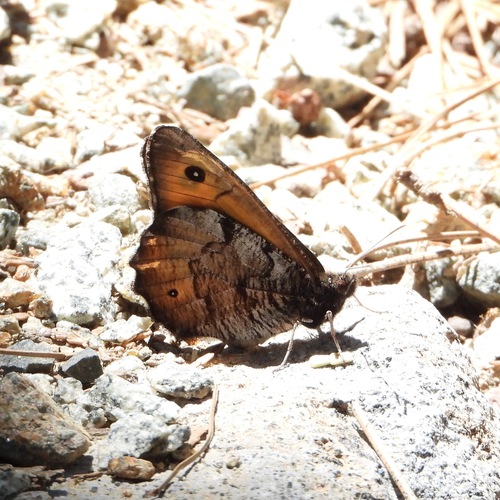
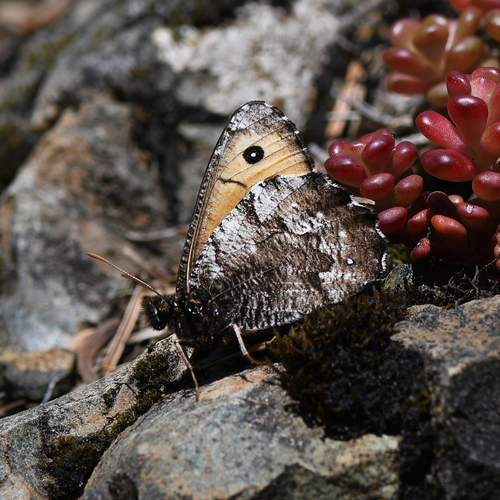
Questions people ask
When can I expect to see the great Arctic butterfly?
Adults are on the wing from early May through late September, but only in even-numbered years because they emerge every two years.
Source: Wikipedia
How can I tell a male great Arctic from a female?
Males have one or two black eyespots on each forewing, while females have two or three.
Source: Wikipedia
What habitats does the great Arctic prefer?
It lives in forest clearings, open pinewoods, meadows, slopes, canyons and similar open areas from sea level up to about 7,000 feet.
Source: Wikipedia
What plants do the caterpillars eat?
The exact host plant is unknown, but it is believed to be a grass in the Poaceae family.
Source: Wikipedia
Same family (Nymphalidae)






Sources
- Wikipedia: https://en.wikipedia.org/wiki/Oeneis_nevadensis
Look it up elsewhere: GBIF · iNaturalist · BugGuide · ITIS · Wikipedia
Text written 2026-10-24 from the sources above and checked sentence by sentence against them. Data fetched 2026-10-24.