 Bug FAQ
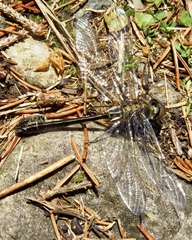
Gray's Dragonfly
Hemicordulia grayi · Order: Odonata · Family: Corduliidae
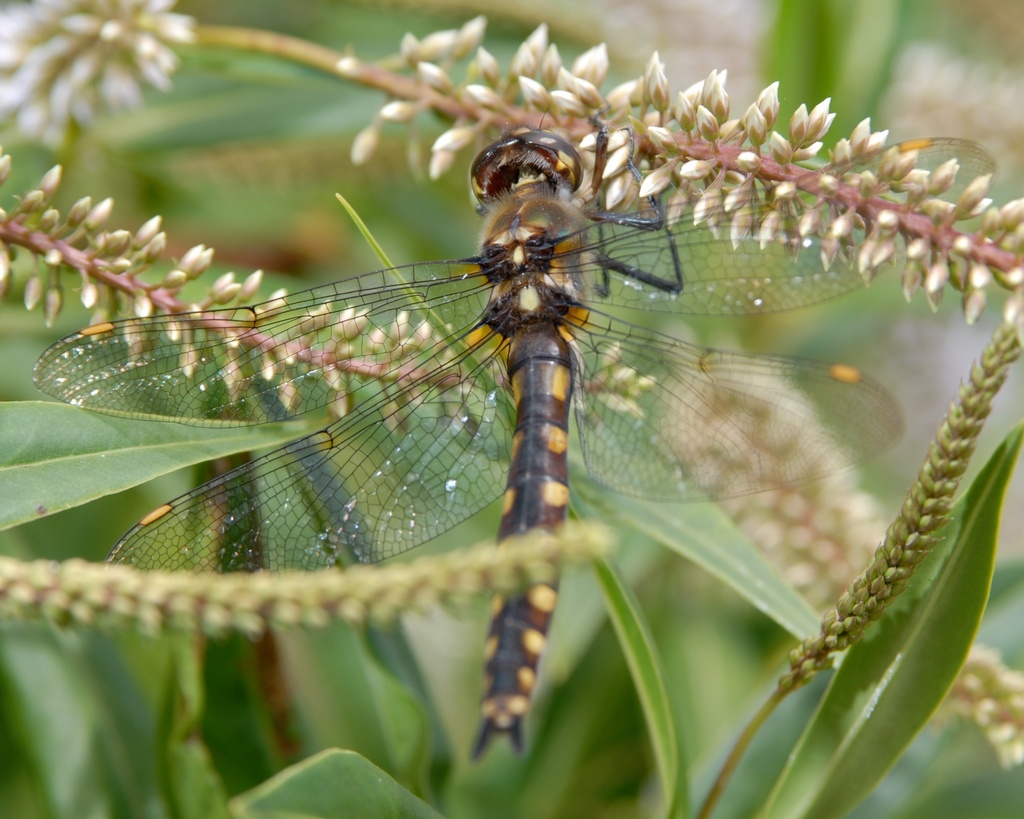
Gray's dragonfly is a medium-sized dragonfly about 48 to 52 mm long. It lives only in New Zealand, favoring freshwater wetlands, lake and pond edges, especially standing waters and rocky lakeshores.
Source: Wikipedia
Size
Adults measure between 48 and 52 mm in length.
Source: Wikipedia
Where it lives
It occupies a range of freshwater habitats such as shrubland wetlands and vegetated margins of lakes and ponds.
Source: Wikipedia
What it eats
Larvae live on the bottom and prey on a wide variety of invertebrates. Adults catch flying insects on the wing, while the aquatic naiads ambush prey underwater.
Source: Wikipedia
Life cycle
Eggs are laid on or near submerged vegetation. Eggs will not hatch below about 9.5 °C and development stops around 8.7 °C.
Source: Wikipedia
Where it comes from
Gray's dragonfly is endemic to New Zealand.
Source: Wikipedia
Lookalikes
Early New Zealand literature sometimes misidentified it as the large Uropetala carovei.
Source: Wikipedia
Questions people ask
When do Gray's dragonflies appear?
Adults emerge from late October through mid-November and are gone by late January.
Source: Wikipedia
Where can I find Gray's dragonfly?
They are found only in New Zealand, in freshwater wetlands, lake and pond margins, especially standing waters and rocky lake shores.
Source: Wikipedia
How can I tell Gray's dragonfly apart from similar species?
Look for two lines of yellow spots on each side of the abdomen, a dark greenish bronze thorax, and note its smaller size and non-burrowing habit compared with Uropetala carovei.
Source: Wikipedia
Same family (Corduliidae)


Sources
- Wikipedia: https://en.wikipedia.org/wiki/Hemicordulia_grayi
Look it up elsewhere: GBIF · iNaturalist · BugGuide · Wikipedia
Text written 2026-10-23 from the sources above and checked sentence by sentence against them. Data fetched 2026-10-23.