 Bug FAQ
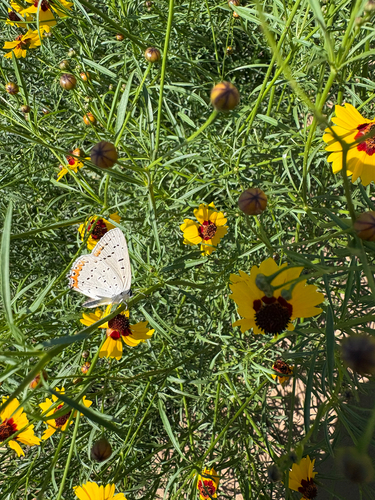
Gray Copper
Tharsalea dione · Order: Lepidoptera · Family: Lycaenidae
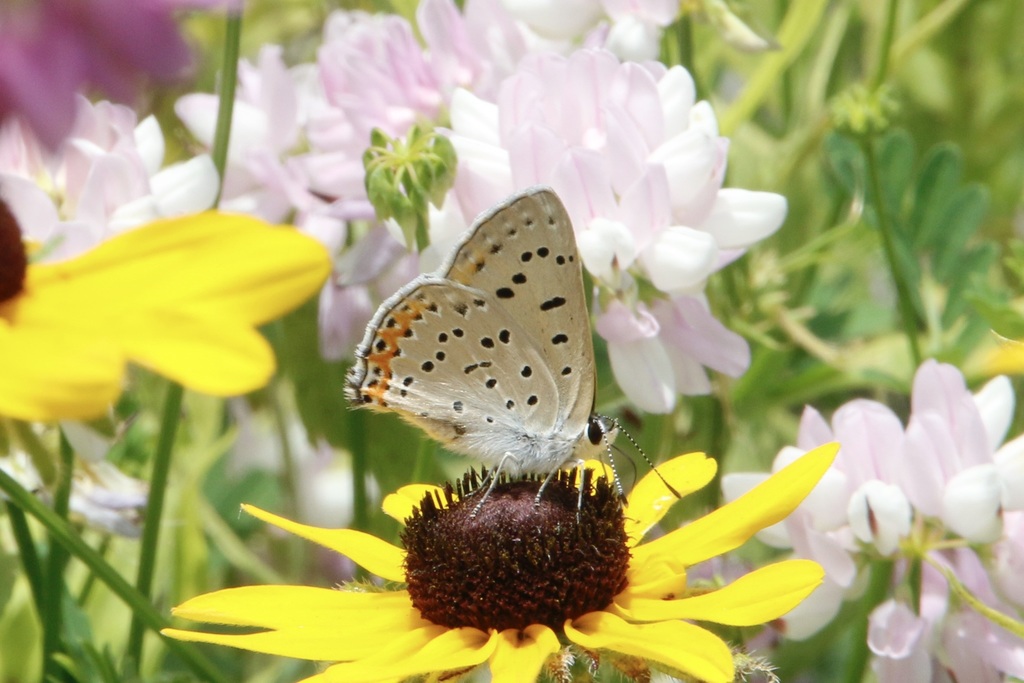
The grey copper butterfly has a wingspan of about 24 to 38 mm. Adults fly from mid-June through July or August, and they sip nectar from plants such as thistles, alfalfa, and milkweed relatives, while the caterpillars eat various Rumex species.
Source: Wikipedia
How to recognize it
Lycaena dione, called the grey copper or great copper, belongs to the butterfly family Lycaenidae.
Source: Wikipedia
Size
Its wingspan ranges from 24 to 38 mm.
Source: Wikipedia
What it eats
Adults feed on nectar from thistles, alfalfa, Grindelia, and sweet clover species. Caterpillars use Rumex salicifolius, Rumex crispus, and Rumex occidentalis as host plants.
Source: Wikipedia
Life cycle
Adults are on the wing from mid-June through July or August.
Source: Wikipedia
When you see it
The flight period spans mid-June to August.
Source: Wikipedia
Where it comes from
Its native range includes the southern Prairie provinces of Canada, western Ontario, Texas, Illinois, and Missouri.
Source: Wikipedia
Where it is found in the US
Recorded in 14 of 51 states and DC. Most records: Nebraska, Iowa, Colorado, Minnesota, Kansas, Oklahoma, Missouri, Illinois.
Darker = more records. Counts are museum and citizen-science records, not population size.
Source: GBIF
Status: native in North America; native in Canada. Source: iNaturalist
Months it is reported in the US
Source: GBIF
More photos
Questions people ask
When can I see grey copper butterflies?
Adults are active from mid-June through July or August.
Source: Wikipedia
What plants do grey copper butterflies visit?
They drink nectar from thistles, alfalfa, Grindelia, and sweet clover species.
Source: Wikipedia
What do the caterpillars eat?
The larvae feed on Rumex salicifolius, Rumex crispus, and Rumex occidentalis.
Source: Wikipedia
Same family (Lycaenidae)


Sources
- Wikipedia: https://en.wikipedia.org/wiki/Lycaena_dione
Look it up elsewhere: GBIF · iNaturalist · BugGuide · ITIS · Wikipedia
Text written 2026-10-24 from the sources above and checked sentence by sentence against them. Data fetched 2026-10-24.