 Bug FAQ
Gray Comma
Polygonia progne · Order: Lepidoptera · Family: Nymphalidae
Also called: Grey Comma
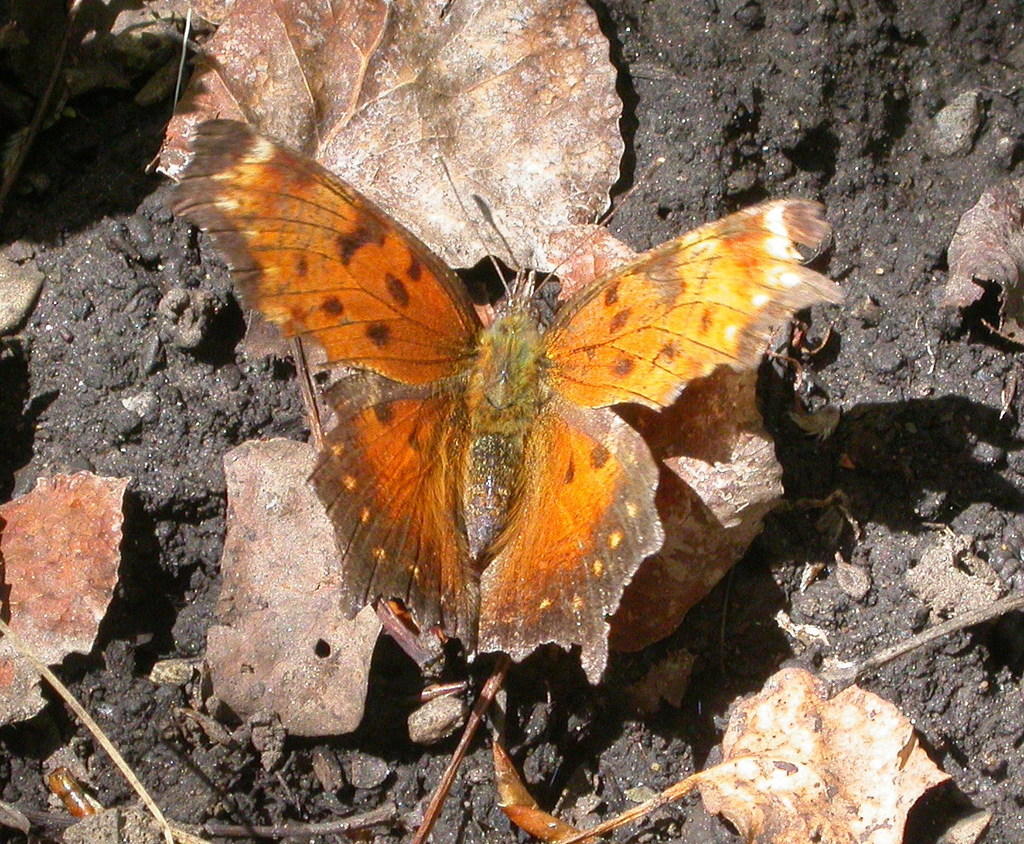
The gray comma butterfly has a wingspan of about 4.4 to 6.3 cm. Its upper wings are bright orange-brown, often with a dark border on the hindwing in summer forms, while the underside is charcoal gray with distinctive L-shaped silver marks. Adults appear twice a year, first in April-May and again from June-August, mating and laying eggs that produce a summer generation; those eggs hatch in October and the larvae hibernate.
Source: Wikipedia
How to recognize it
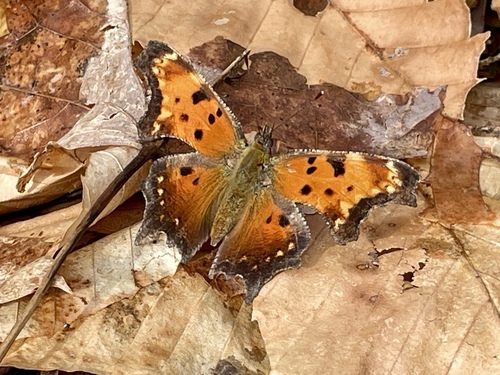
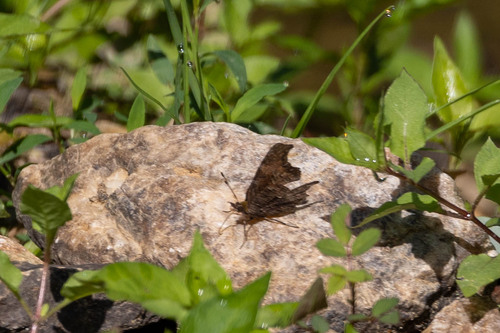
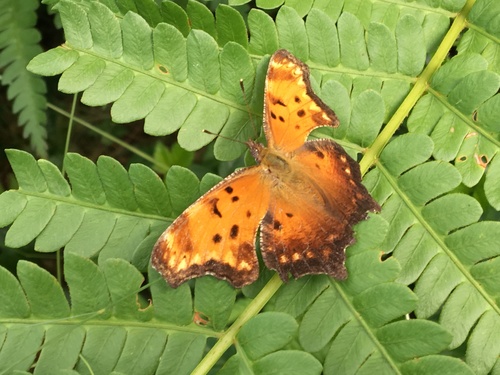
The top side of the wings is bright orange-brown, and summer individuals often show a dark border on the hindwing. The underside is charcoal gray with L-shaped silver markings.
Source: Wikipedia
Size
Wingspan ranges from 4.4 to 6.3 cm.
Source: Wikipedia
Where it lives
They are commonly seen near dirt roads and stream beds. They prefer hilly or canyon terrain.
Source: Wikipedia
Life cycle
Adults fly twice a year; the first flight in spring they mate and lay eggs that become the summer generation. The summer generation lays eggs in October, and those larvae hibernate.
Source: Wikipedia
When you see it
Adults are on the wing in April-May and again in June-August.
Source: Wikipedia
Where it comes from
The gray comma occurs in North America.
Source: Wikipedia
Where it is found in the US
Recorded in 36 of 51 states and DC. Most records: Vermont, Michigan, Illinois, Minnesota, Wisconsin, New York, Missouri, Pennsylvania.
Darker = more records. Counts are museum and citizen-science records, not population size.
Source: GBIF
Status: native in North America; native in Canada; native in United States. Source: iNaturalist
Months it is reported in the US
Source: GBIF
More photos

Questions people ask
When can I see gray commas?
They are active in two periods: April-May and June-August.
Source: Wikipedia
What do gray commas look like?
The upper wings are bright orange-brown with a possible dark border on the hindwing in summer forms, and the underside is charcoal gray with L-shaped silver marks.
Source: Wikipedia
Where do gray commas live?
They are found in North America, especially around dirt roads, stream beds, and in hilly or canyon areas.
Source: Wikipedia
Same family (Nymphalidae)






Sources
- Wikipedia: https://en.wikipedia.org/wiki/Polygonia_progne
Look it up elsewhere: GBIF · iNaturalist · BugGuide · ITIS · Wikipedia
Text written 2026-10-23 from the sources above and checked sentence by sentence against them. Data fetched 2026-10-23.