 Bug FAQ
Gram Blue
Euchrysops cnejus · Order: Lepidoptera · Family: Lycaenidae
Also called: Five-spotted Pea-blue, Spotted Pea-blue
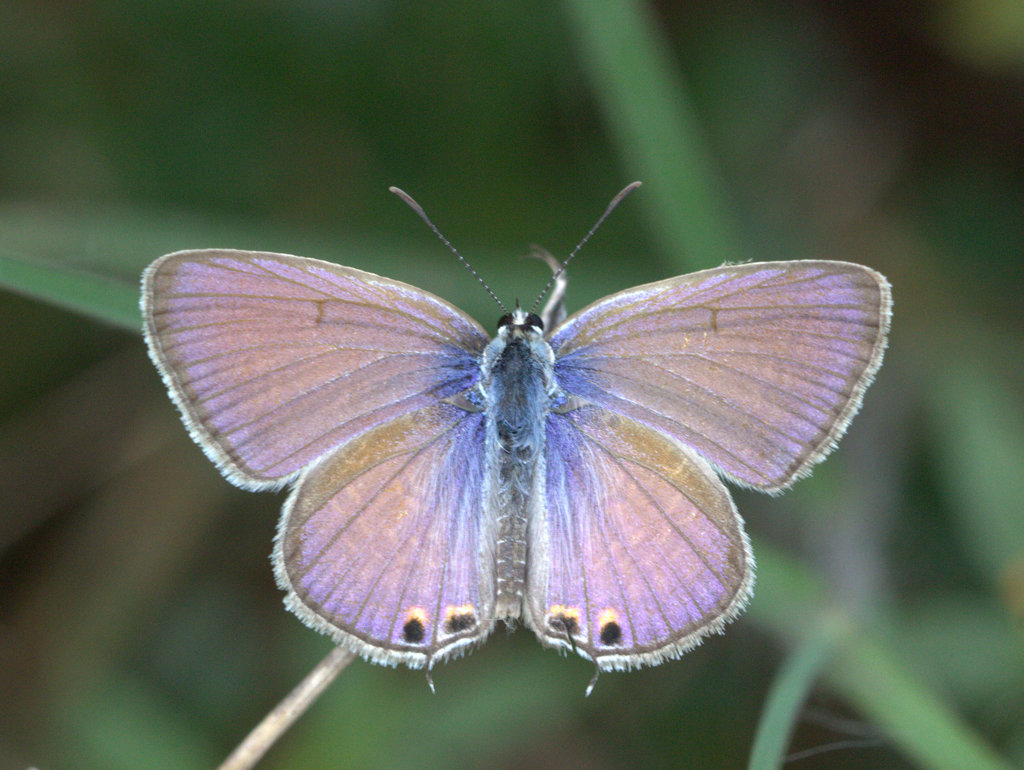
The gram blue is a small lycaenid butterfly with a pale purplish-bluish upperside in males and a thin black edge on the forewing. It lives from the Arabian Peninsula across India to Australia and the South Sea Islands, and its caterpillars feed on Fabaceae plants such as beans.
Source: Wikipedia
How to recognize it
Males have a pale purplish colour that shows a bluish shade in certain light, and the forewing edge has a thin black line edged with dark brown, wider at the tip than near the tornus.
Source: Wikipedia
Size
The gram blue is a small butterfly belonging to the blues family.
Source: Wikipedia
Where it lives
It is found throughout the Arabian Peninsula, India (except very high elevations), the Malayan region, Australia and the South Sea Islands.
Source: Wikipedia
What it eats
Caterpillars feed on plants in the legume family (Fabaceae), including beans such as Phaseolus trilobus.
Source: Wikipedia
Life cycle
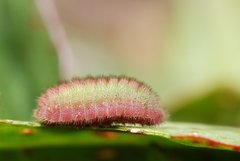
The larva has the typical lycaenid shape with a small, black, shiny, retractable head; the pupa is very pale green, slightly opaque on the abdomen, and also of the usual lycaenid form.
Source: Wikipedia
Where it comes from
Its range extends from India to Australia.
Source: Wikipedia
Where it is found in the US
Recorded in 1 of 51 states and DC. Most records: California.
Darker = more records. Counts are museum and citizen-science records, not population size.
Source: GBIF
More photos
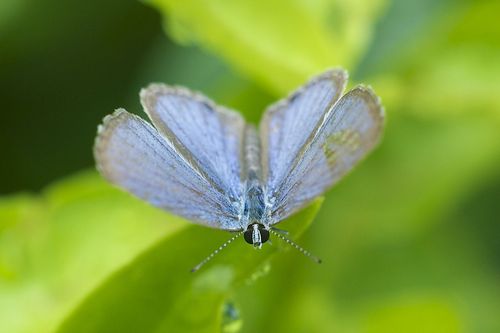
Same family (Lycaenidae)

Sources
- Wikipedia: https://en.wikipedia.org/wiki/Euchrysops_cnejus
Look it up elsewhere: GBIF · iNaturalist · BugGuide · Wikipedia
Text written 2026-10-22 from the sources above and checked sentence by sentence against them. Data fetched 2026-10-22.