 Bug FAQ
Gorgon Copper
Tharsalea gorgon · Order: Lepidoptera · Family: Lycaenidae

The Gorgon Copper butterfly lives in foothill habitats such as chaparral, woodland, and canyons. It is native to North America, mainly California. Adults feed on the flowers of their host plant, Eriogonum nudum, as well as milkweed and Eriophyllum lanatum, and the species has one brood from March to July.
Source: Wikipedia
How to recognize it
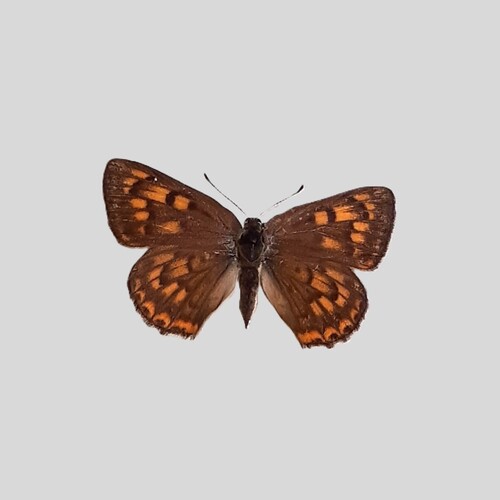
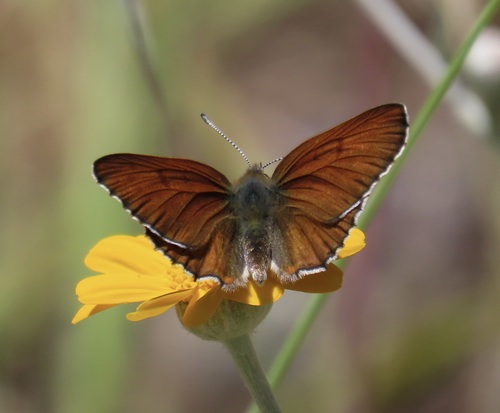
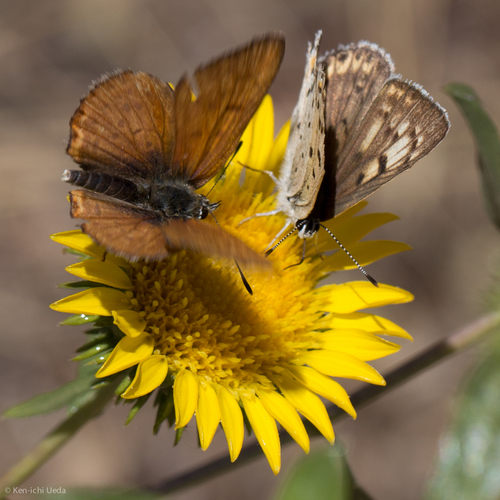
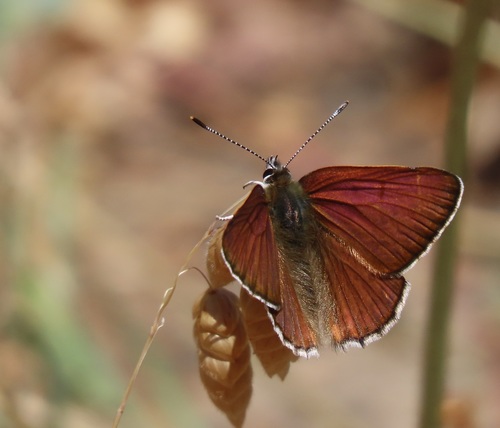
Both sexes have whitish undersides of the wings with black spots and reddish-orange spots near the hindwing margins. Males show brown upper wings with a purple sheen, while females have brown upper wings with yellow markings and black spots.
Source: Wikipedia
Where it lives
It inhabits foothill areas, including chaparral, woodland, and canyon environments.
Source: Wikipedia
What it eats
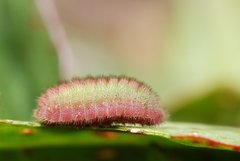
Caterpillars feed on the plant Eriogonum nudum, and adults sip nectar from its flowers as well as from milkweed and Eriophyllum lanatum.
Source: Wikipedia
Life cycle
There is a single annual brood that runs from March through July.
Source: Wikipedia
When you see it
Adults are on the wing between March and July.
Source: Wikipedia
Where it comes from
The species is found in North America, primarily in California.
Source: Wikipedia
Where it is found in the US
Recorded in 3 of 51 states and DC. Most records: California, Oregon, Nevada.
Darker = more records. Counts are museum and citizen-science records, not population size.
Source: GBIF
Months it is reported in the US
Source: GBIF
More photos
Questions people ask
Same family (Lycaenidae)





Sources
- Wikipedia: https://en.wikipedia.org/wiki/Lycaena_gorgon
Look it up elsewhere: GBIF · iNaturalist · BugGuide · ITIS · Wikipedia
Text written 2026-10-23 from the sources above and checked sentence by sentence against them. Data fetched 2026-10-23.