 Bug FAQ
Goldsmith Beetle
Cotalpa lanigera · Order: Coleoptera · Family: Scarabaeidae
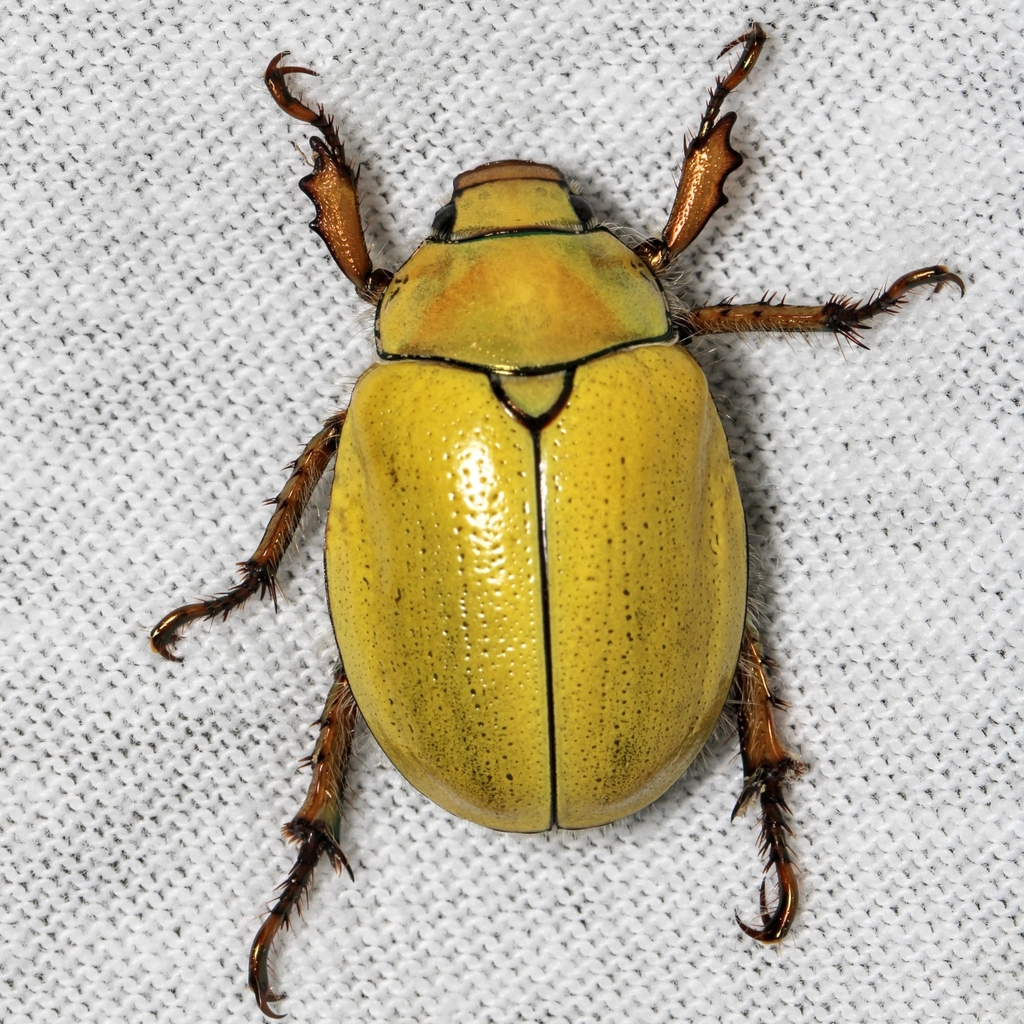
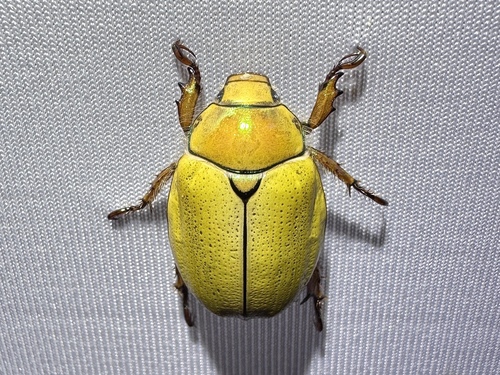
The Goldsmith beetle is a scarab about 19 to 26 mm long with a yellow-brown head and pronotum and paler yellow wing covers.
Source: Wikipedia
Size
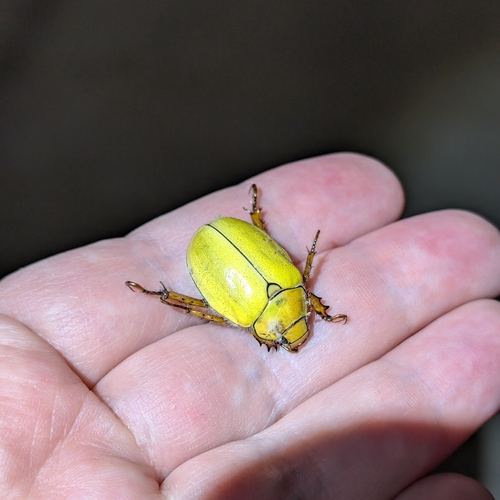
Adults measure between 19 and 26 mm in length.
Source: Wikipedia
Where it lives
It is nocturnally active and can be found feeding on tree leaves in late spring to early summer.
Source: Wikipedia
What it eats
Adults eat the foliage of poplars, silver maple, sweetgum, pear, hickory, and willow.
Source: Wikipedia
When you see it
They are most commonly seen from late spring through early summer.
Source: Wikipedia
Where it comes from
Cotalpa lanigera belongs to the scarab family Scarabaeidae.
Source: Wikipedia
Where it is found in the US
Recorded in 37 of 51 states and DC. Most records: Michigan, Wisconsin, Minnesota, New Jersey, Florida, Oklahoma, Massachusetts, Georgia.
Darker = more records. Counts are museum and citizen-science records, not population size.
Source: GBIF
Status: native in North America; native in Canada. Source: iNaturalist
Months it is reported in the US
Source: GBIF
More photos
Questions people ask
When are Goldsmith beetles active?
They are nocturnal and appear in late spring to early summer.
Source: Wikipedia
What do Goldsmith beetles eat?
Adults feed on the leaves of poplar, silver maple, sweetgum, pear, hickory, and willow trees.
Source: Wikipedia
Same family (Scarabaeidae)
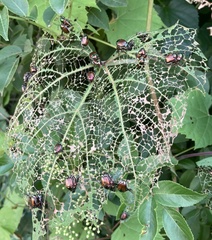 Japanese BeetlePopillia japonicaDamages trees, gardens or crops
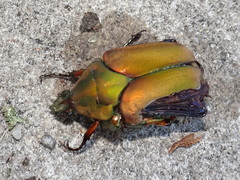 Common Green June BeetleCotinis nitidaDamages trees, gardens or crops
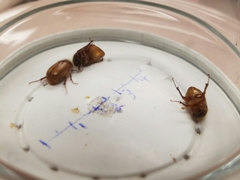 Phyllophaga crinitaPhyllophaga crinitaDamages trees, gardens or crops
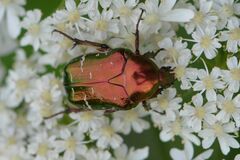 European Rose ChaferCetonia aurata
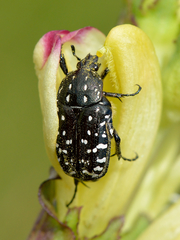 Mediterranean Spotted ChaferOxythyrea funestaDamages trees, gardens or crops
 Oriental BeetleExomala orientalisDamages trees, gardens or crops
Sources
- Wikipedia: https://en.wikipedia.org/wiki/Cotalpa_lanigera
Look it up elsewhere: GBIF · iNaturalist · BugGuide · ITIS · Wikipedia
Text written 2026-10-24 from the sources above and checked sentence by sentence against them. Data fetched 2026-10-24.