 Bug FAQ
Golden Giant Asian Mantis
Hierodula membranacea · Order: Mantodea · Family: Mantidae
Also called: Indian Giant Asian Mantis, Indian Giant Mantis
Source: Wikipedia
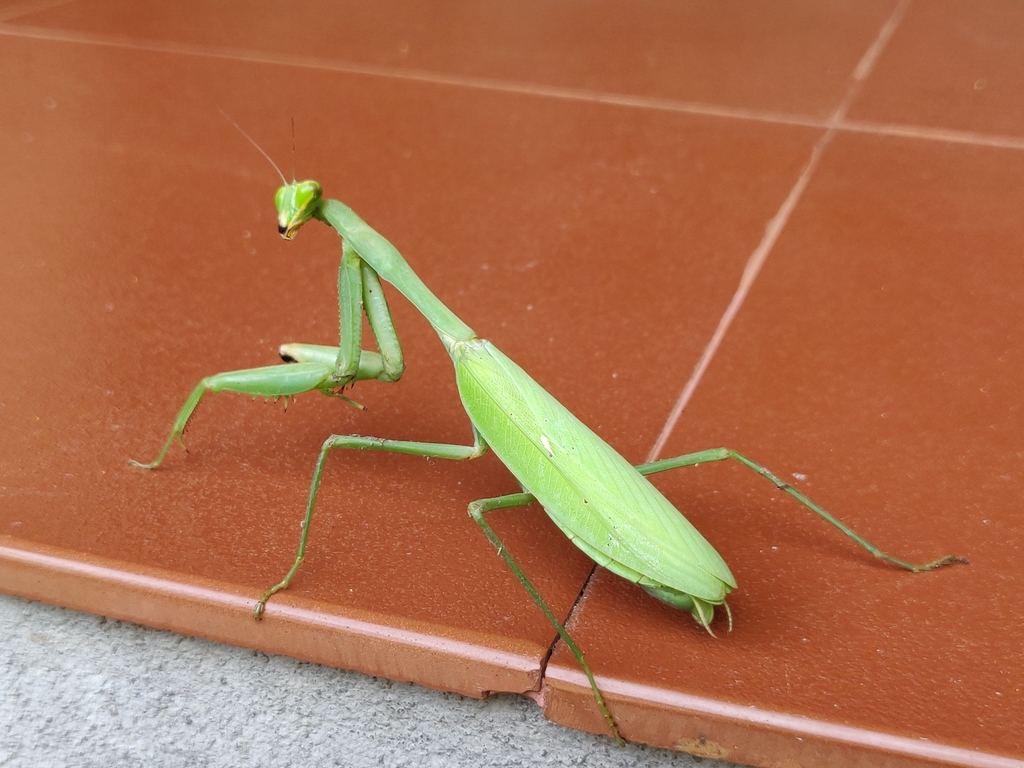
Adults are about 7 to 9 cm long, not counting their extended forelegs. They live on shrubs and trees in hot, humid areas with temperatures of 22 to 30 °C and 60 to 70 % humidity. They can catch large prey such as Asian giant hornets and may also eat other mantises.
Source: Wikipedia
How to recognize it
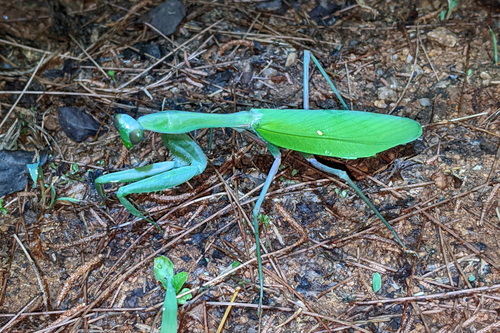
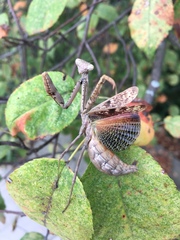
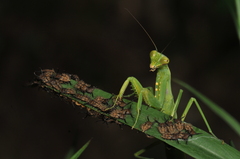
Their colour ranges from green to yellow-green, brown, or reddish-brown.
Source: Wikipedia
Size
Male and female adults reach roughly 7 to 9 cm in length, excluding forelegs.
Source: Wikipedia
Does it bite or sting?
A defensive bite from this large mantis can be painful and may break the skin.
Source: Wikipedia
Where it lives
They inhabit shrubs and trees in warm, humid climates (22 to 30 °C, 60 to 70 % humidity).
Source: Wikipedia
What it eats
They can take down large prey such as the Asian giant hornet. They may eat other mantises, a behaviour that can increase female fecundity.
Source: Wikipedia
Life cycle
They molt their exoskeleton until they become winged adults, after which they stop molting. Each ootheca can hatch up to 150 nymphs after six to eight weeks.
Source: Wikipedia
Where it comes from
They are native to southeastern Asia.
Source: Wikipedia
More photos
Questions people ask
Can the golden giant Asian mantis bite people?
Yes, a defensive bite can cause mild pain and sometimes break the skin.
Source: Wikipedia
How large does this mantis get?
Adults are about 7 to 9 cm long, not counting their extended forelegs.
Source: Wikipedia
What does it eat?
It can catch large prey such as Asian giant hornets and may also eat other mantises.
Source: Wikipedia
Where does it live?
It lives on shrubs and trees in hot, humid climates with temperatures of 22 to 30 °C and 60 to 70 % humidity, and it is native to southeastern Asia.
Source: Wikipedia
Same family (Mantidae)
Sources
- Wikipedia: https://en.wikipedia.org/wiki/Hierodula_membranacea
Look it up elsewhere: GBIF · iNaturalist · BugGuide · Wikipedia
Text written 2026-10-23 from the sources above and checked sentence by sentence against them. Data fetched 2026-10-23.