 Bug FAQ
Giant Asian Mantis
Hierodula patellifera · Order: Mantodea · Family: Mantidae
Also called: Asian mantis, Harabiro Mantis, Indochina mantis
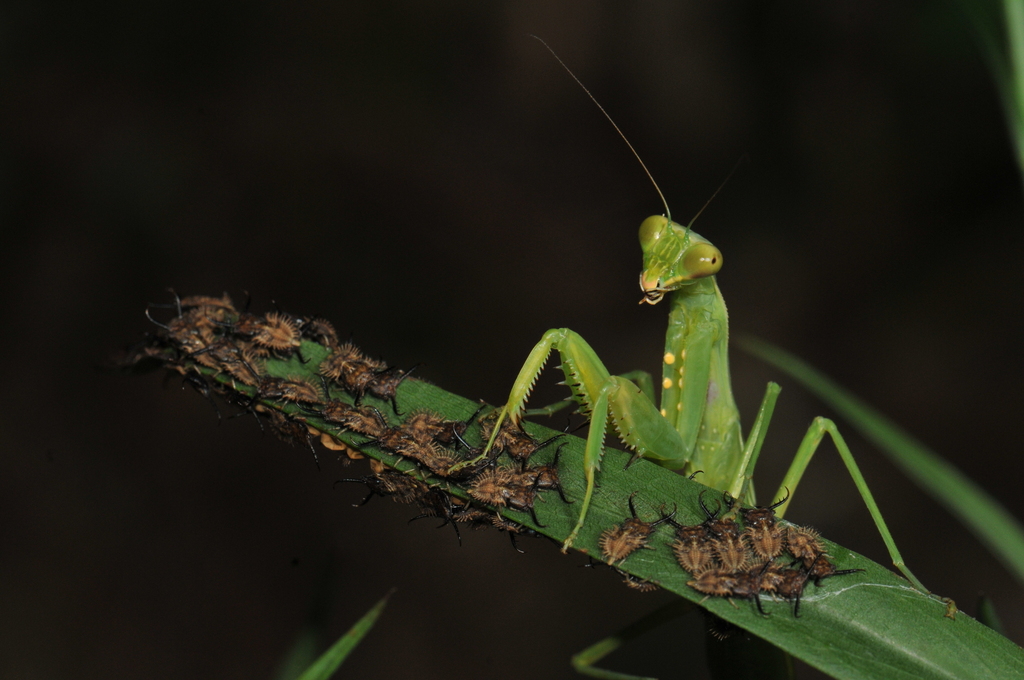
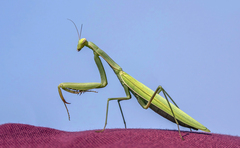
Adult males are about 5.2 cm long and females about 6 cm, coming in green or brown colors. They have a long prothorax and slender, stick-like body that makes them easy to recognise. They live in trees and grassland edges of forests across Southeast Asia and have also been recorded in Mediterranean countries.
Source: Wikipedia
How to recognize it
The species is noted for an elongated prothorax and a slender, stick-like shape.
Source: Wikipedia
Size
Males reach about 5.19 cm, females about 6.06 cm, and individuals may be green or brown.
Source: Wikipedia
Where it lives
It inhabits trees and grassland edges at forest margins. It is found in Southeast Asian grasslands and forests where it can camouflage.
Source: Wikipedia
What it eats
It mainly preys on homopteran insects.
Source: Wikipedia
Where it comes from
Native to Southeast Asia, it has also been reported in Mediterranean countries due to trade.
Source: Wikipedia
Where it is found in the US
Recorded in 4 of 51 states and DC. Most records: Hawaii, California, Massachusetts, New Jersey.
Darker = more records. Counts are museum and citizen-science records, not population size.
Source: GBIF
Months it is reported in the US
Source: GBIF
More photos
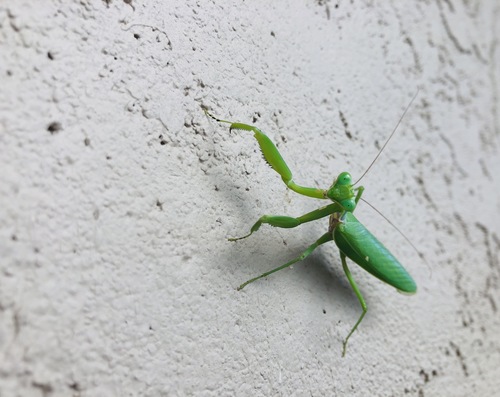
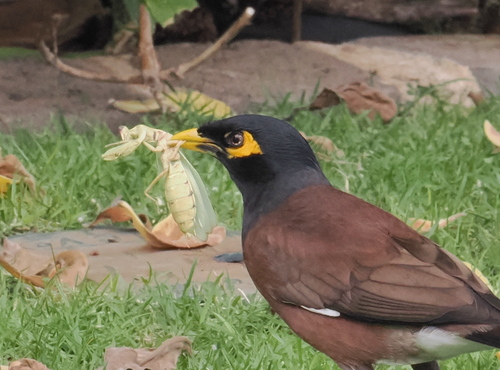
Same family (Mantidae)
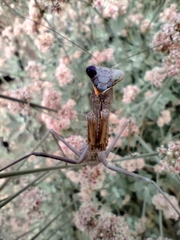
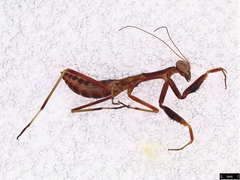
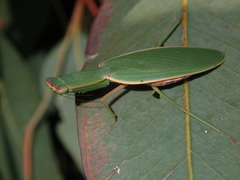
Sources
- Wikipedia: https://en.wikipedia.org/wiki/Hierodula_patellifera
Look it up elsewhere: GBIF · iNaturalist · BugGuide · Wikipedia
Text written 2026-10-22 from the sources above and checked sentence by sentence against them. Data fetched 2026-10-22.