 Bug FAQ
Carolina Mantis
Stagmomantis carolina · Order: Mantodea · Family: Mantidae
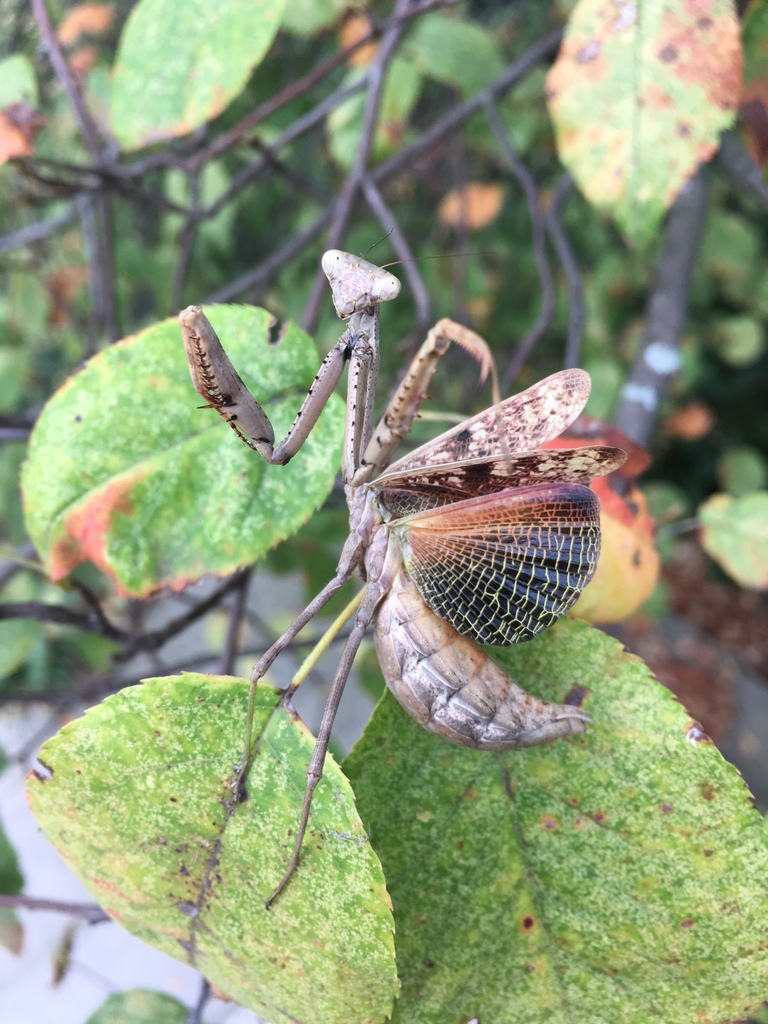
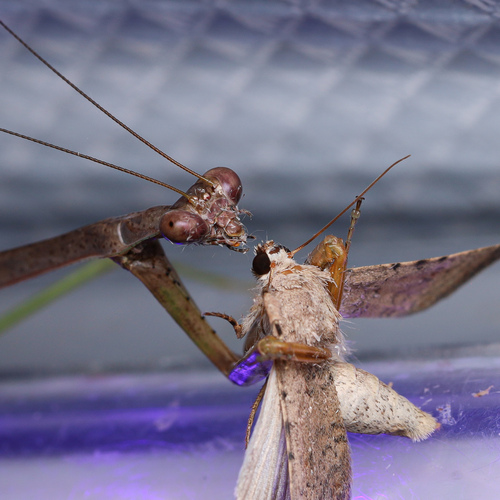
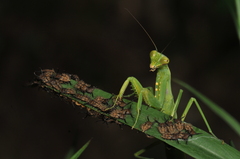
Adult females are about 47 to 60 mm long and males about 54 mm; nymphs start at 7 to 12 mm. They are dusty brown, gray or green and have a dark dot on each forewing. Native to the eastern U.S. coast, they are sold as oothecae for biological pest control.
Source: Wikipedia
How to recognize it
Their colour ranges from dusty brown to gray or green for camouflage. Both sexes have a dark spot on each forewing, sometimes hidden in darker colour forms.
Source: Wikipedia
Size
Adult females measure 47 to 60 mm; adult males are about 54 mm long. First-instar nymphs are 7 to 12 mm in length.
Source: Wikipedia
How to get rid of it
You can buy oothecae from garden centers to help control pest insects biologically.
Source: Wikipedia
Where it lives
They occur along the eastern coast of the United States.
Source: Wikipedia
What it eats
Oothecae are sold for use in gardens to control pest insects.
Source: Wikipedia
Life cycle
They grow by molting rather than undergoing complete metamorphosis. They can change colour at each molt until they reach adulthood.
Source: Wikipedia
Where it comes from
Their native range is the eastern U.S. coastline.
Source: Wikipedia
Where it is found in the US
Recorded in 43 of 51 states and DC. Most records: North Carolina, Georgia, Texas, Virginia, Ohio, Illinois, Maryland, Pennsylvania.
Darker = more records. Counts are museum and citizen-science records, not population size.
Source: GBIF
Status: native in North America; native in United States. Source: iNaturalist
Months it is reported in the US
Source: GBIF
More photos
Questions people ask
Are they harmful to garden plants?
No, they are actually sold to help control pest insects in gardens.
Source: Wikipedia
Same family (Mantidae)
Sources
- Wikipedia: https://en.wikipedia.org/wiki/Carolina_mantis
Look it up elsewhere: GBIF · iNaturalist · BugGuide · ITIS · Wikipedia
Text written 2026-10-22 from the sources above and checked sentence by sentence against them. Data fetched 2026-10-22.