 Bug FAQ
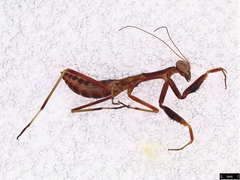
Giant rainforest mantis
Hierodula majuscula · Order: Mantodea · Family: Mantidae
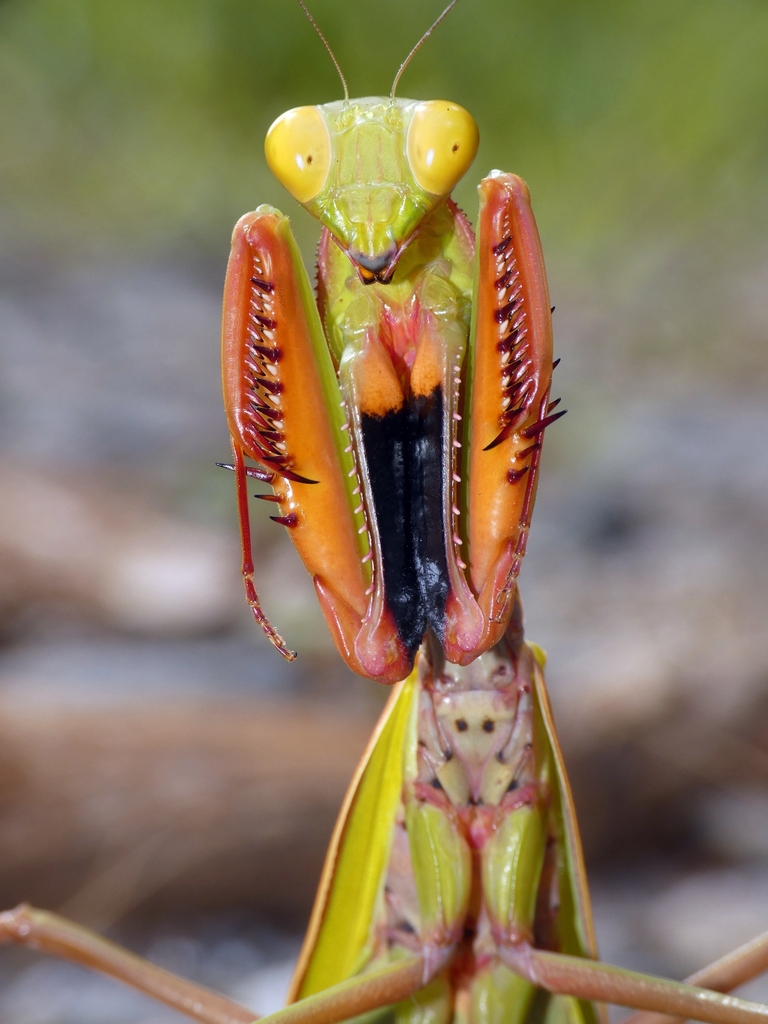
The giant rainforest mantis reaches 7 to 11 cm in total length, making it one of the world’s largest mantis species. It lives in coastal northern Australia’s rainforests and nearby habitats, where it preys on insects, spiders and occasionally small vertebrates such as geckos, frogs and juvenile snakes.
Source: Wikipedia
How to recognize it
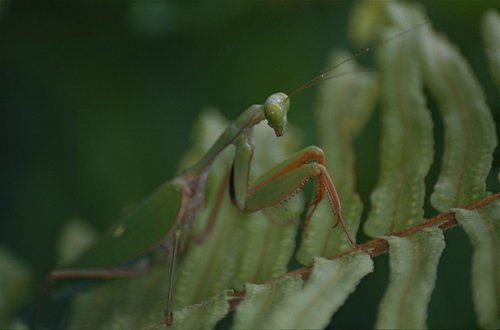
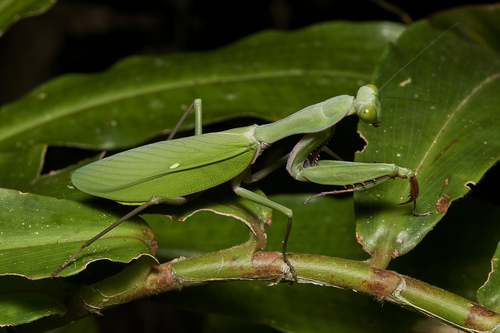
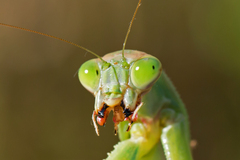
Most individuals are green, but a less common bright-yellow form also occurs.
Source: Wikipedia
Size
It ranks among the largest mantis species worldwide.
Source: Wikipedia
Where it lives
It is found in coastal northern Australia, typically in rainforest and adjacent habitats.
Source: Wikipedia
What it eats
It mainly hunts insects such as phasmids, grasshoppers, crickets, flies and other mantids. It also consumes other invertebrate predators like spiders and sometimes small vertebrates including geckos, frogs and juvenile snakes.
Source: Wikipedia
Where it comes from
Its native range is coastal northern Australia.
Source: Wikipedia
Lookalikes
In 1935 the genus Parhierodula was merged into Hierodula by Max Beier.
Source: Wikipedia
More photos
Questions people ask
What colors does the giant rainforest mantis have?
It is usually green, but a bright-yellow form also exists.
Source: Wikipedia
Where is this mantis found?
It lives in coastal northern Australia’s rainforests and nearby areas.
Source: Wikipedia
What does it eat?
It eats a variety of insects, spiders and occasionally small vertebrates such as geckos, frogs and young snakes.
Source: Wikipedia
Same family (Mantidae)
Sources
- Wikipedia: https://en.wikipedia.org/wiki/Hierodula_majuscula
Look it up elsewhere: GBIF · iNaturalist · BugGuide · Wikipedia
Text written 2026-10-23 from the sources above and checked sentence by sentence against them. Data fetched 2026-10-23.