 Bug FAQ
Australian Garden Mantis
Orthodera ministralis · Order: Mantodea · Family: Mantidae
Also called: Australian Green Mantis, Garden Mantis, Mantis
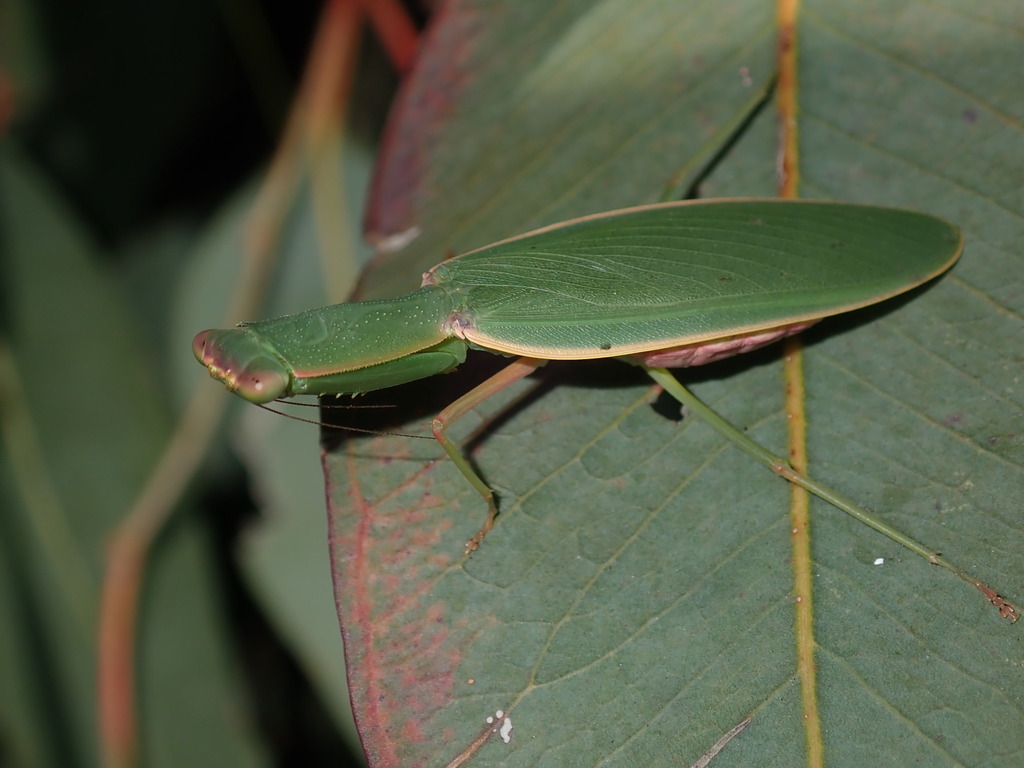
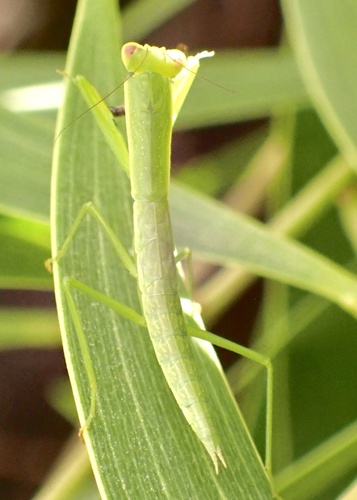
The Australian garden mantis can grow up to about 4 cm long and has a green body with a broader thorax than its head and abdomen. It lives throughout Australia, especially in gardens, where it stays still and ambushes small insects for food.
Source: Wikipedia
How to recognize it
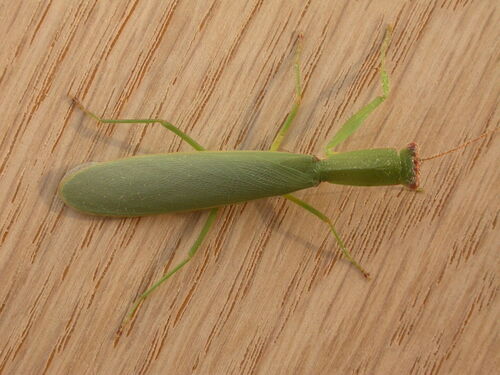
The thorax is broader than both the head and abdomen.
Source: Wikipedia
Size
Adults can reach up to 4 cm in length.
Source: Wikipedia
Where it lives
It is found across all of Australia, especially in gardens and leafy scrub from ground level up to eye height. The mantis remains motionless for long periods to ambush passing prey.
Source: Wikipedia
What it eats
It preys on small insects by waiting and striking.
Source: Wikipedia
Life cycle
Females lay their eggs in a single, sturdy, woody case.
Source: Wikipedia
Where it comes from
Orthodera ministralis, known as the garden mantis or Australian green mantis, is native to Australia.
Source: Wikipedia
Where it is found in the US
Recorded in 1 of 51 states and DC. Most records: Hawaii.
Darker = more records. Counts are museum and citizen-science records, not population size.
Source: GBIF
Months it is reported in the US
Source: GBIF
More photos
Questions people ask
Are they a problem for garden plants?
They feed on small insects, not on plants, so they are not reported as a plant pest.
Source: Wikipedia
Same family (Mantidae)
Sources
- Wikipedia: https://en.wikipedia.org/wiki/Orthodera_ministralis
Look it up elsewhere: GBIF · iNaturalist · BugGuide · Wikipedia
Text written 2026-10-22 from the sources above and checked sentence by sentence against them. Data fetched 2026-10-22.