 Bug FAQ
Gatekeeper
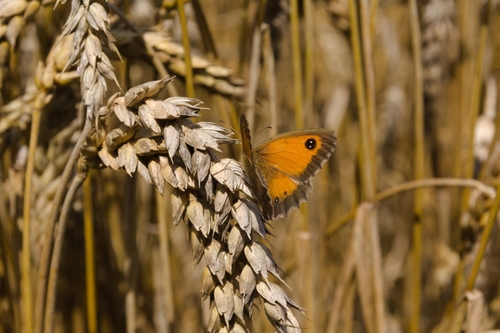
Pyronia tithonus · Order: Lepidoptera · Family: Nymphalidae
Also called: The Gatekeeper, Hedge Brown
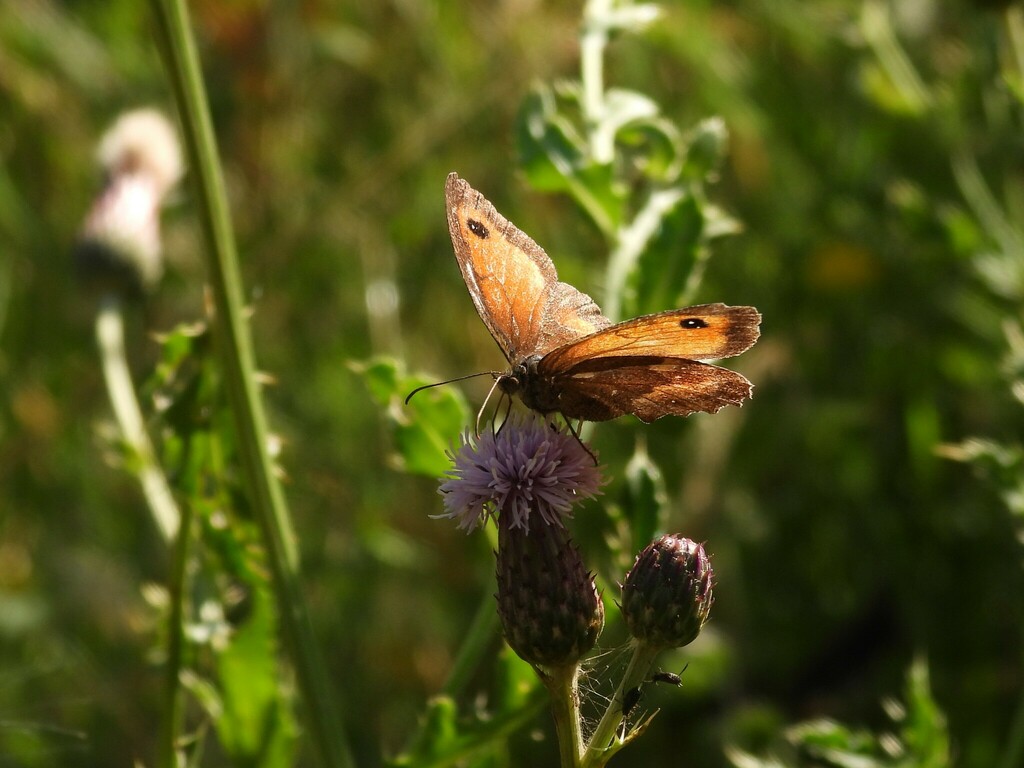
It lives on meadow edges, hedgerows, field gates, scrubby grassland, woodland rides and similar open habitats across Europe. Caterpillars feed on grasses such as meadowgrass and fescue, and adults sip nectar from a variety of wildflowers and thistles.
Source: Wikipedia
Where it lives
It prefers meadow margins, hedges, field gates, scrubby grassland, woodland rides, country lanes and hedgerows.
Source: Wikipedia
What it eats
Larvae feed on grasses like rough meadowgrass, smooth meadow grass and sheep's fescue. Adults feed on nectar from bramble, thistles, ragwort, red clover, thyme, water mint and other wildflowers.
Source: Wikipedia
Life cycle
Eggs hatch after about two weeks.
Source: Wikipedia
Where it comes from
The species occurs throughout Europe.
Source: Wikipedia
Lookalikes
It can be confused with the meadow brown (Maniola jurtina).
Source: Wikipedia
More photos
Questions people ask
How can I tell a gatekeeper butterfly from a meadow brown?
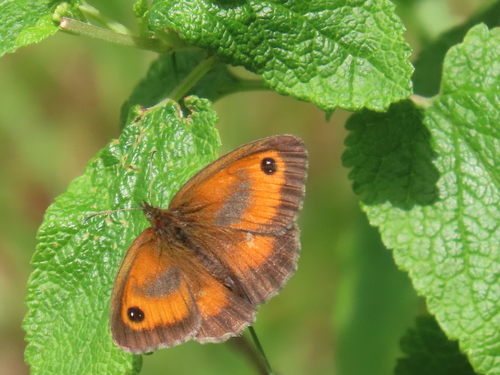
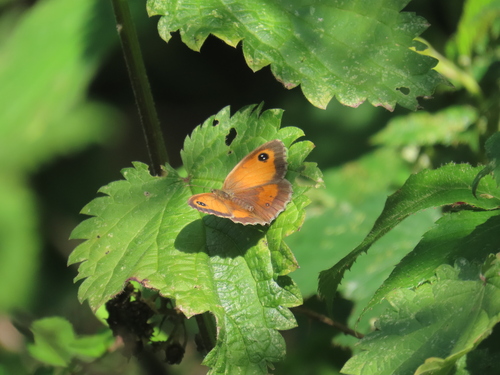
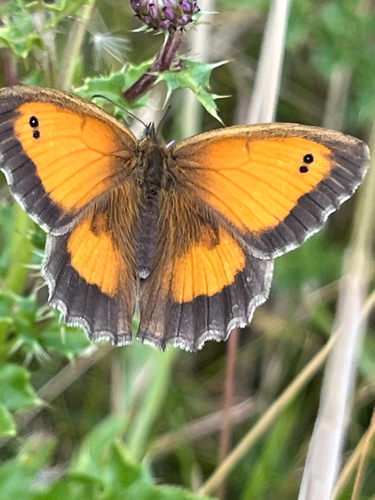
Look for the orange ground colour with two large brown spots on each wing and a brown edge; meadow browns lack these orange markings.
Source: Wikipedia
When do gatekeeper butterflies appear?
Adults emerge in July and are most common in early August, with one generation per year.
Source: Wikipedia
What do gatekeeper caterpillars eat?
The larvae feed on grasses such as rough meadowgrass, smooth meadow grass and sheep's fescue.
Source: Wikipedia
What flowers attract adult gatekeeper butterflies?
Adults visit bramble, thistles, ragwort, red clover, thyme, water mint and other wildflowers for nectar.
Source: Wikipedia
Same family (Nymphalidae)






Sources
- Wikipedia: https://en.wikipedia.org/wiki/Gatekeeper_%28butterfly%29
Look it up elsewhere: GBIF · iNaturalist · BugGuide · Wikipedia
Text written 2026-10-22 from the sources above and checked sentence by sentence against them. Data fetched 2026-10-22.