 Bug FAQ
Garden Chafer
Phyllopertha horticola · Order: Coleoptera · Family: Scarabaeidae
Also called: Bracken Chafer, Bracken Clock, Garden Chafer Beetle, Garden Foliage Beetle
Source: Wikipedia
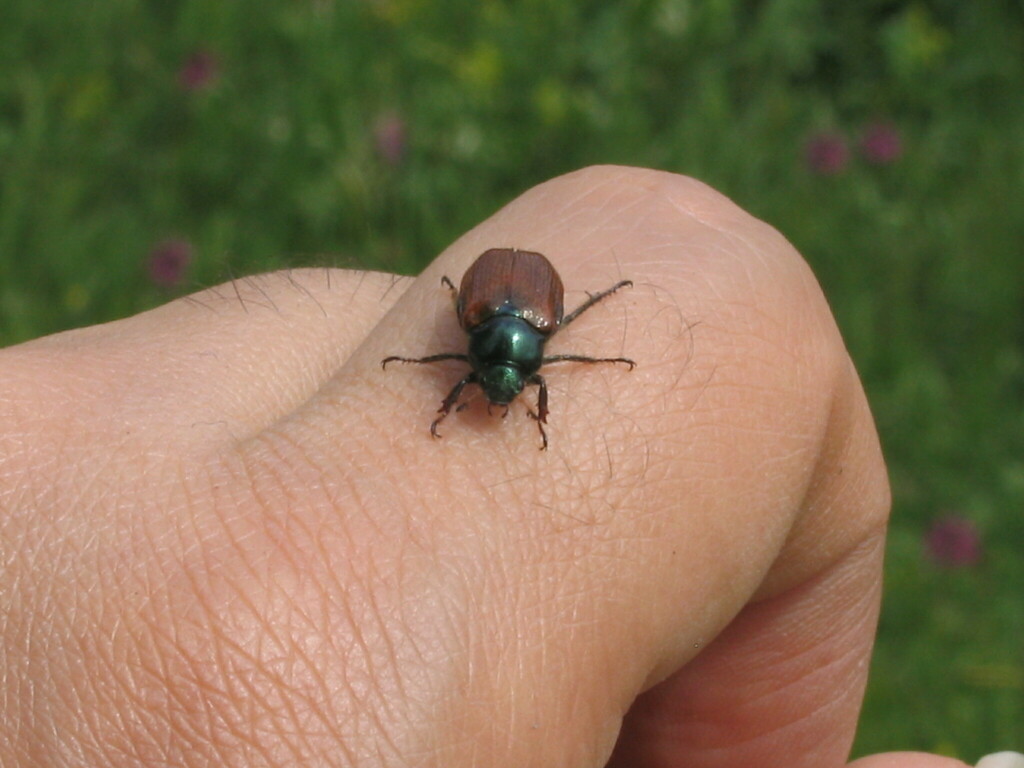
Adults eat oak, hazelnut, birch, cherry and rose parts, while larvae attack the roots of clover, grasses and a range of crops. They are most common from April to July, especially in June when they appear in large numbers.
Source: Wikipedia
How to recognize it
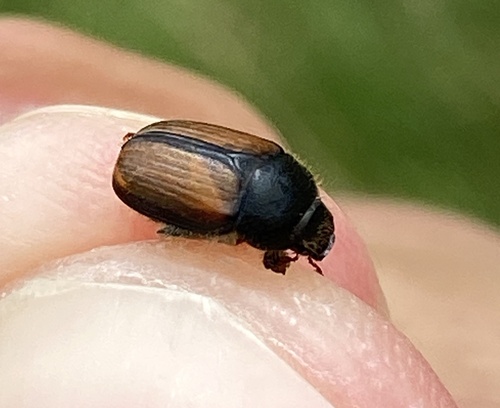
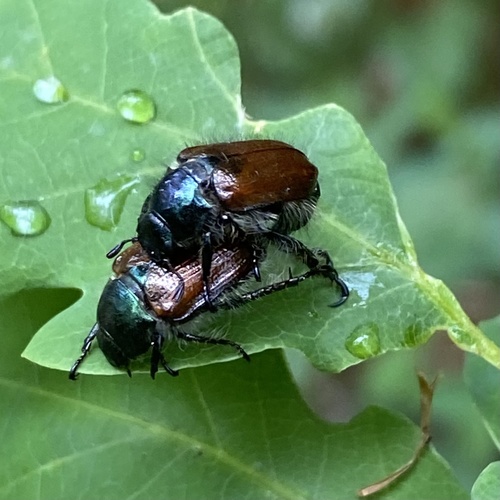
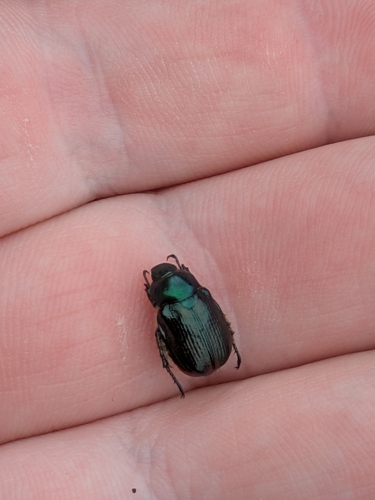
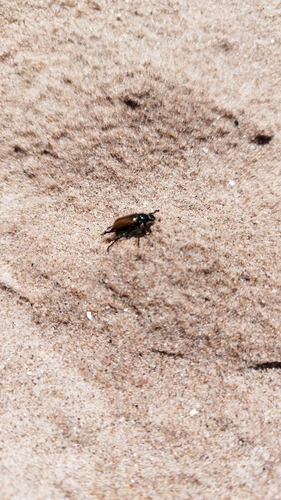
They have chestnut-brown wing covers with long upright hairs and each wing shows six rows of tiny dots.
Source: Wikipedia
Size
The beetle is about 8.5 to 11 mm long.
Source: Wikipedia
Where it lives
You’ll find them in bushes, hedgerows, woodland edges, meadows, fields, parks and gardens.
Source: Wikipedia
What it eats
Larvae feed on the roots of clover, grasses and crops including cereals, cabbage, cucumber, beet and pea.
Source: Wikipedia
Life cycle
Females lay 15-25 eggs 10 to 15 cm deep in the soil. The larvae need two to three years to develop.
Source: Wikipedia
When you see it
Adults are visible from April through July, with the highest numbers in late spring and early summer. June often brings especially large swarms.
Source: Wikipedia
Where it comes from
They are common across Europe and extend eastward through Asia to Siberia and Mongolia.
Source: Wikipedia
Lookalikes
Unlike Mimela species, garden chafers have a body that is not ovoid.
Source: Wikipedia
More photos
Questions people ask
How can I tell a garden chafer apart from similar beetles?
Look for chestnut-brown wing covers with long upright hairs and six rows of tiny dots on each wing; the body is not ovoid like Mimela beetles.
Source: Wikipedia
When are garden chafers most likely to appear?
Adults show up from April to July, with the biggest numbers in June.
Source: Wikipedia
What plants do garden chafers damage?
Adults chew leaves, flowers and fruits of oak, hazelnut, birch, cherry and rose, while larvae eat the roots of clover, grasses and many crops such as cereals, cabbage and peas.
Source: Wikipedia
How do garden chafer larvae develop?
Females lay 15-25 eggs 10 to 15 cm deep, and the larvae take two to three years to mature in the soil.
Source: Wikipedia
Same family (Scarabaeidae)
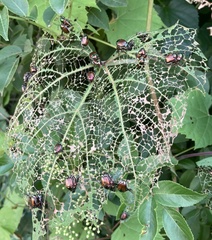 Japanese BeetlePopillia japonicaDamages trees, gardens or crops
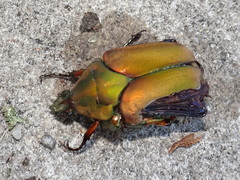 Common Green June BeetleCotinis nitidaDamages trees, gardens or crops
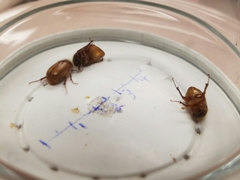 Phyllophaga crinitaPhyllophaga crinitaDamages trees, gardens or crops
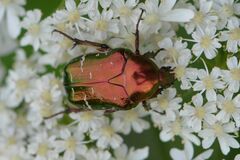 European Rose ChaferCetonia aurata
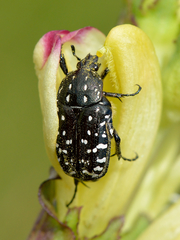 Mediterranean Spotted ChaferOxythyrea funestaDamages trees, gardens or crops
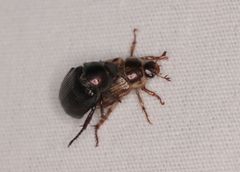 Oriental BeetleExomala orientalisDamages trees, gardens or crops
Sources
- Wikipedia: https://en.wikipedia.org/wiki/Phyllopertha_horticola
Look it up elsewhere: GBIF · iNaturalist · BugGuide · Wikipedia
Text written 2026-10-22 from the sources above and checked sentence by sentence against them. Data fetched 2026-10-22.