 Bug FAQ
Galerita lecontei
Galerita lecontei · Order: Coleoptera · Family: Carabidae
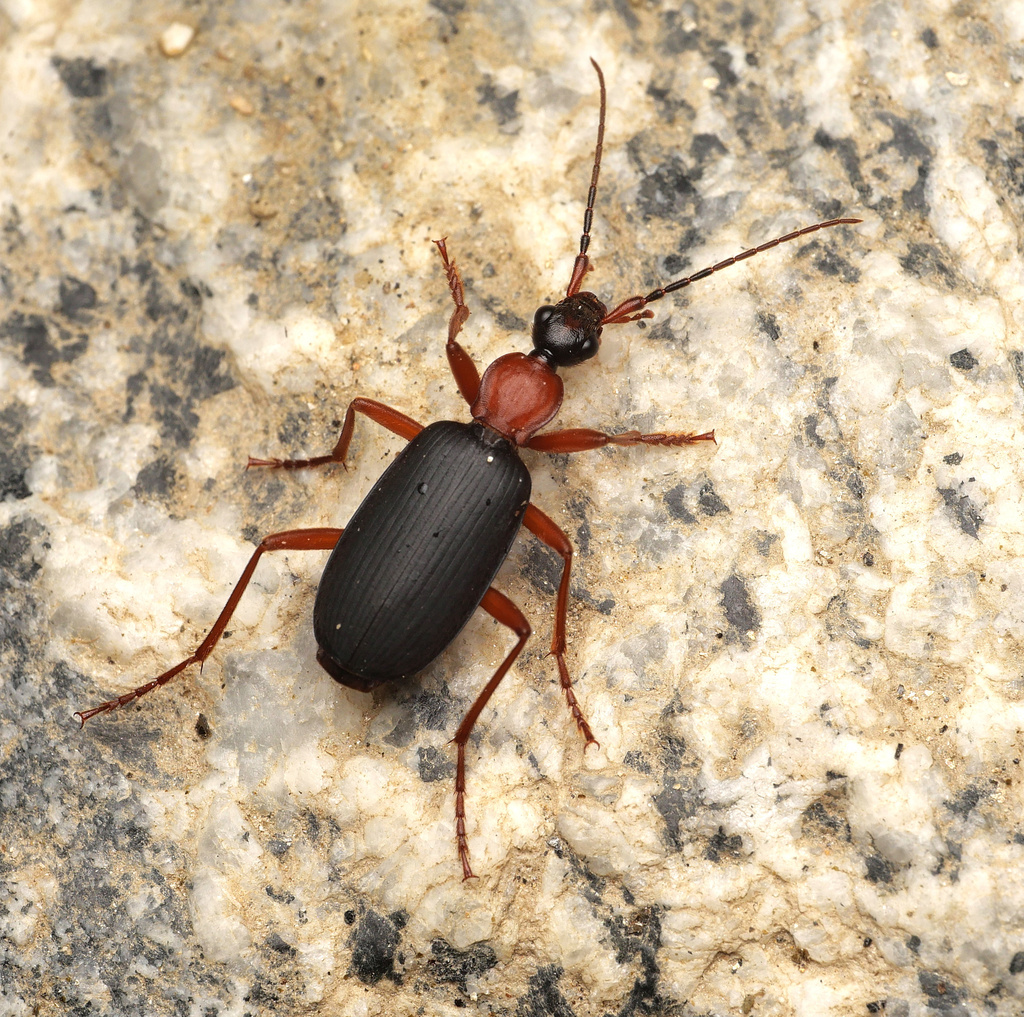
The false bombardier beetle measures about 15 to 20 mm long and is black with red-orange on its thorax and legs. It lives in moist micro-habitats such as under logs or leaf litter in temperate woodlands and grasslands. Its range includes the Caribbean, Central America, and North America, especially the United States and northern Mexico.
Source: Wikipedia
How to recognize it
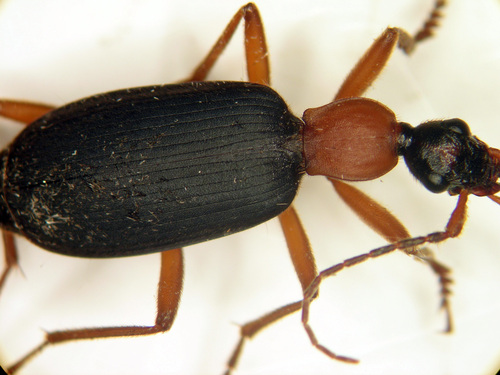
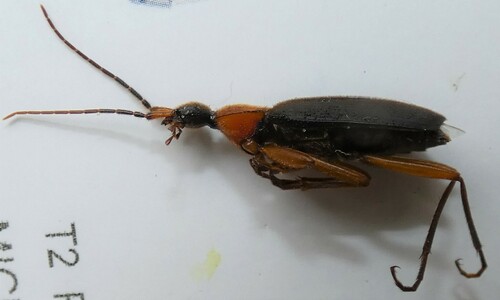
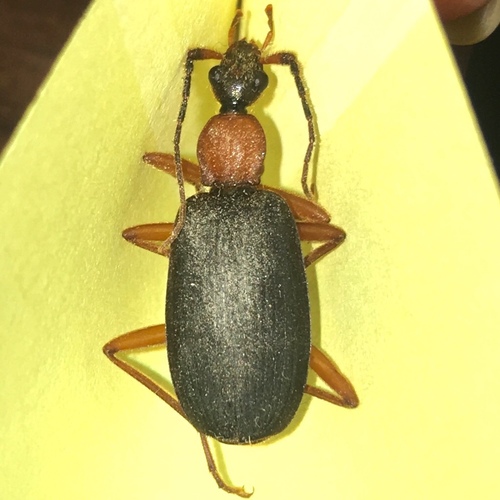
Adults are mostly black with a red or orange coloration on the thorax and legs. The hardened forewings (elytra) are glossy and protect the hind wings.
Source: Wikipedia
Size
They range from about 14.9 mm to 20.0 mm in length.
Source: Wikipedia
Where it lives
They prefer moist environments needed for egg laying. Typical sites are temperate woodlands or grasslands with moist micro-habitats like under logs and leaf litter.
Source: Wikipedia
What it eats
It feeds on fluids and semi-fluids, often ingesting fragments such as arthropod pieces. It shows little selectivity but prefers soft-bodied prey like larvae.
Source: Wikipedia
Life cycle
The egg hatches into a larva. After the pupal stage, the adult emerges by shedding the pupal skin.
Source: Wikipedia
When you see it
Adults hunt smaller insects at night and gather in dark, damp places during the day.
Source: Wikipedia
Where it comes from
The species is native to the Caribbean, Middle America, and North America, especially the continental United States and northern Mexico. A 2023 study also recorded it in Sialkot, Punjab, Pakistan.
Source: Wikipedia
Where it is found in the US
Recorded in 20 of 51 states and DC. Most records: Florida, California, Arizona, Tennessee, Virginia, Alabama, Kansas, Georgia.
Darker = more records. Counts are museum and citizen-science records, not population size.
Source: GBIF
Months it is reported in the US
Source: GBIF
More photos
Questions people ask
What does the false bombardier beetle look like?
It is about 15 to 20 mm long, black with red-orange on the thorax and legs, and has glossy, hardened forewings (elytra).
Source: Wikipedia
Where can I find this beetle?
It lives in moist spots like under logs or leaf litter in temperate woodlands and grasslands, and its range includes the Caribbean, Central America, and the United States.
Source: Wikipedia
What does it eat?
It consumes fluids and semi-fluids with small arthropod fragments, preferring soft-bodied prey such as larvae.
Source: Wikipedia
How does its life cycle go?
The egg hatches into a larva, then becomes a pupa, and finally the adult emerges by shedding the pupal skin.
Source: Wikipedia
Same family (Carabidae)
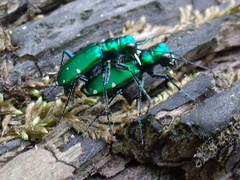

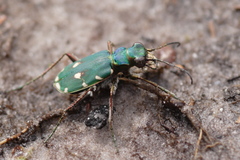

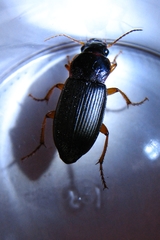
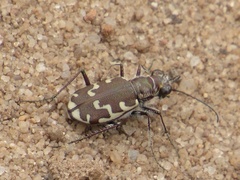
Sources
- Wikipedia: https://en.wikipedia.org/wiki/Galerita_lecontei
Look it up elsewhere: GBIF · iNaturalist · BugGuide · ITIS · Wikipedia
Text written 2026-10-25 from the sources above and checked sentence by sentence against them. Data fetched 2026-10-25.