 Bug FAQ
Fuller's rose weevil
Naupactus cervinus · Order: Coleoptera · Family: Curculionidae
Also called: Fuller rose beetle
Source: Wikipedia
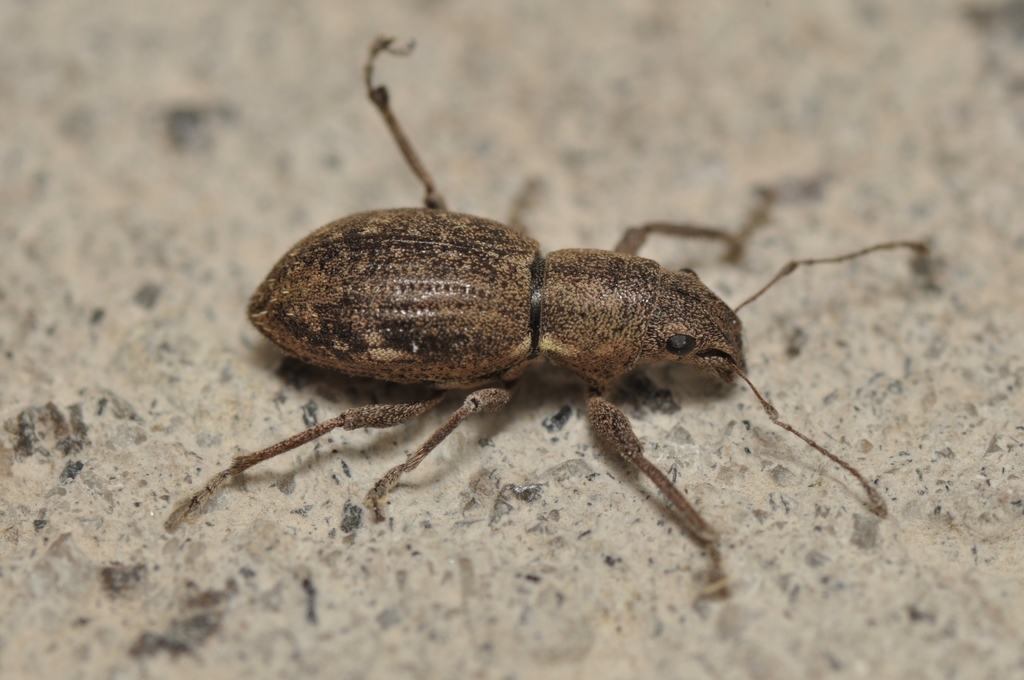
Fuller's rose weevil is a small beetle about 6.5 to 8 mm long. Adults are brown-grey, have side-placed eyes, a slightly down-curved snout and fused wing covers that make them unable to fly. Females can lay up to a thousand eggs on stones, bark crevasses, leaves or fruit calyxes, and the larvae live in the soil feeding on roots for many months.
Source: Wikipedia
How to recognize it
Adults are brown-grey, have eyes on the sides of the head, a short downward-curved rostrum, and fused elytra that prevent flight.
Source: Wikipedia
Size
They grow to about 6.5 to 8 mm in length.
Source: Wikipedia
Life cycle
Eggs hatch in two to six weeks; the larvae drop to the ground, burrow, and feed on roots for eight to ten months before becoming adults.
Source: Wikipedia
Where it comes from
The species is native to South America.
Source: Wikipedia
Where it is found in the US
Recorded in 26 of 51 states and DC. Most records: California, North Carolina, Georgia, Virginia, Hawaii, South Carolina, Alabama, Tennessee.
Darker = more records. Counts are museum and citizen-science records, not population size.
Source: GBIF
Months it is reported in the US
Source: GBIF
Questions people ask
What plants can it damage?
It feeds on a variety of crops and garden plants such as beans, citrus fruits, peaches, rhubarb, roses, potatoes, walnuts, avocado, bananas, passionfruit and apples.
Source: Wikipedia
How can I recognize an adult Fuller's rose weevil?
Look for a small brown-grey beetle with side-placed eyes, a short down-curved snout and fused wing covers that make it flightless.
Source: Wikipedia
Same family (Curculionidae)
 Green Immigrant Leaf WeevilPolydrusus formosusDamages trees, gardens or crops
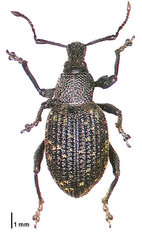 Black Vine WeevilOtiorhynchus sulcatusDamages trees, gardens or crops
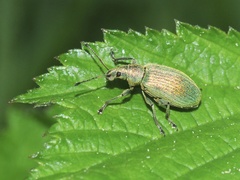 Nettle weevilPhyllobius pomaceusDamages trees, gardens or crops
 Asian Oak WeevilCyrtepistomus castaneusDamages trees, gardens or crops
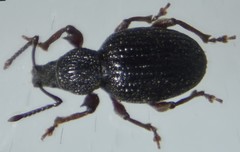 Strawberry Root WeevilOtiorhynchus ovatusDamages trees, gardens or crops
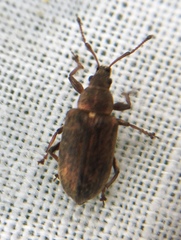 Common Leaf WeevilPhyllobius pyriDamages trees, gardens or crops
Sources
- Wikipedia: https://en.wikipedia.org/wiki/Naupactus_cervinus
Look it up elsewhere: GBIF · iNaturalist · BugGuide · Wikipedia
Text written 2026-10-23 from the sources above and checked sentence by sentence against them. Data fetched 2026-10-23.