 Bug FAQ
Fruit-tree Leafroller Moth
Archips argyrospila · Order: Lepidoptera · Family: Tortricidae
Also called: Fruit-tree Leaf-roller
Source: Wikipedia
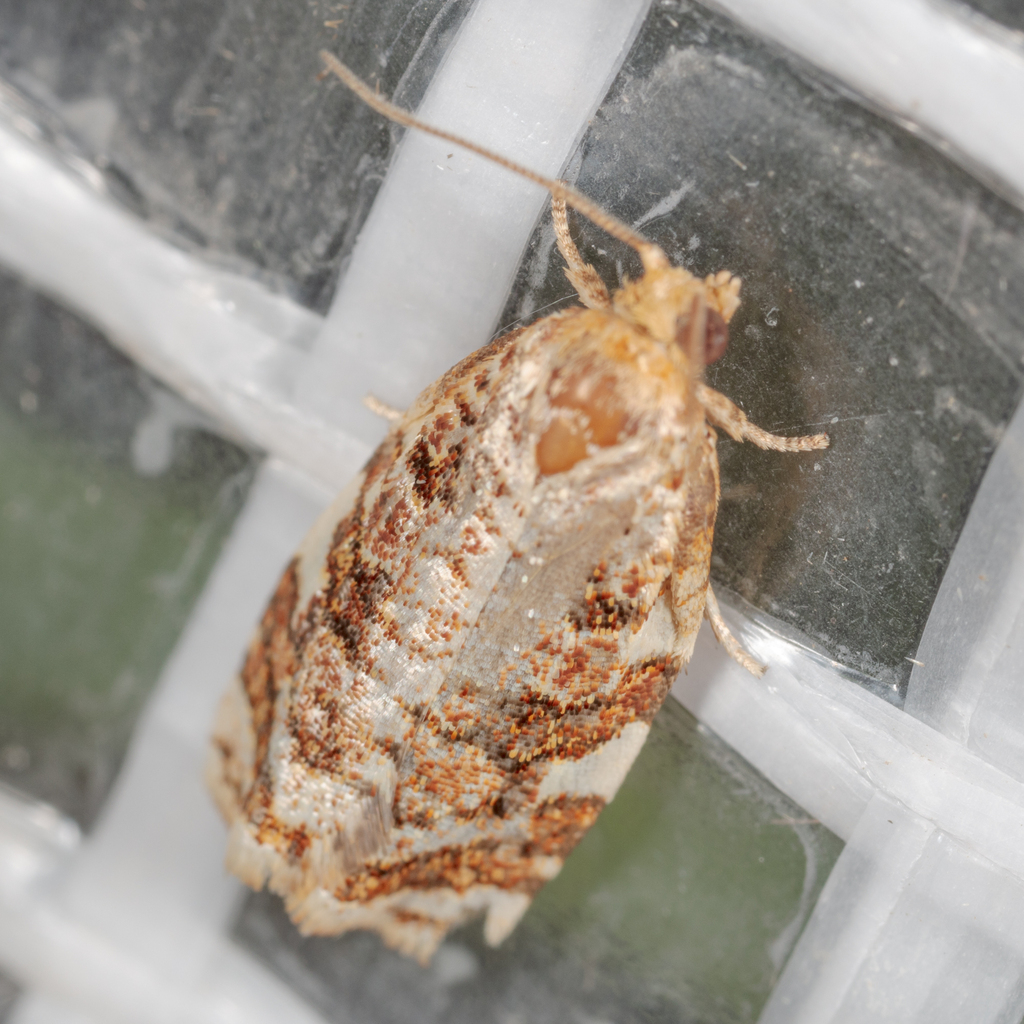
Males have forewings 6 to 10.2 mm long and females 8.5 to 11.7 mm long. Adults fly from mid-May to July and there is one generation each year.
Source: Wikipedia
Size
Male forewings measure 6 to 10.2 mm, while females are 8.5 to 11.7 mm long.
Source: Wikipedia
Is it a pest in the house?
The larvae are considered a pest on apple and pear trees.
Source: Wikipedia
What it eats
The larvae eat a wide variety of plants, including apples, pears, beans, berries, oaks and many others.
Source: Wikipedia
Life cycle
Adults are on the wing from mid-May to July, producing one generation per year.
Source: Wikipedia
When you see it
Adults appear from mid-May through July in a single yearly generation.
Source: Wikipedia
Where it is found in the US
Recorded in 43 of 51 states and DC. Most records: Texas, California, Michigan, Idaho, Wisconsin, Florida, Oklahoma, Louisiana.
Darker = more records. Counts are museum and citizen-science records, not population size.
Source: GBIF
Status: native in North America; native in Canada; native in United States. Source: iNaturalist
Months it is reported in the US
Source: GBIF
More photos
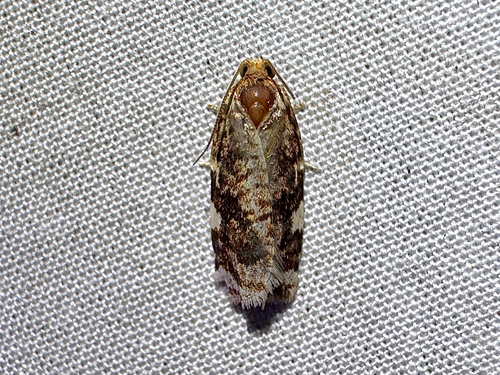
Questions people ask
What plants does the fruit-tree leafroller damage?
Its caterpillars feed on many hosts such as apples, pears, beans, berries, oaks and other trees and shrubs.
Source: Wikipedia
When are adult leafrollers active?
Adults fly from mid-May to July, with only one generation each year.
Source: Wikipedia
How big are these moths?
Males have forewings about 6 to 10 mm long and females 8.5 to 11 mm.
Source: Wikipedia
Same family (Tortricidae)
 Oblique-banded Leafroller MothChoristoneura rosaceanaDamages trees, gardens or crops
 Garden TortrixClepsis peritanaDamages trees, gardens or crops
 Common MarbleSyricoris lacunanaDamages trees, gardens or crops
 Red-banded Leafroller MothArgyrotaenia velutinanaDamages trees, gardens or crops
 Light Brown Apple MothEpiphyas postvittanaDamages trees, gardens or crops
 Filbertworm MothCydia latiferreanaDamages trees, gardens or crops
Sources
- Wikipedia: https://en.wikipedia.org/wiki/Archips_argyrospila
Look it up elsewhere: GBIF · iNaturalist · BugGuide · Wikipedia
Text written 2026-10-23 from the sources above and checked sentence by sentence against them. Data fetched 2026-10-23.