 Bug FAQ
Frigid bumble bee
Bombus frigidus · Order: Hymenoptera · Family: Apidae
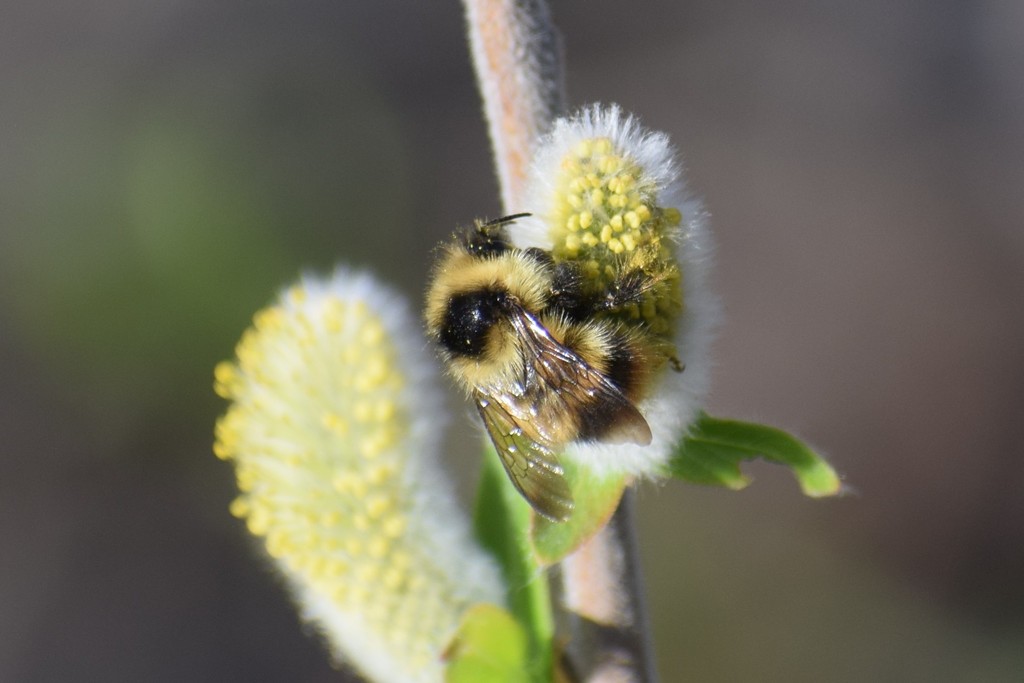
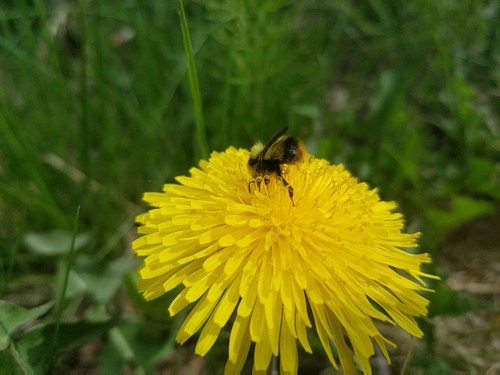
Bombus frigidus is a large bumblebee; queens weigh about 0.257 g and males are roughly half that size. It lives in cold, high-latitude or high-altitude regions from Alaska to Colorado, nesting in small burrows or on the ground. Queens have a yellow thorax, a possible black band between the wings, orange-yellow rear segments, black facial hair, and a pale orange pollen sack.
Source: Wikipedia
How to recognize it
Queens show a yellow thorax and the first two abdominal segments; a black band may appear between the wings, and the last two segments are orange or yellow. Female faces are covered in black hair, while males can have black or yellow facial hair. The pollen-carrying fringe near the rear is pale orange.
Source: Wikipedia
Size
Queens are among the larger bumblebees, weighing about 0.257 g with a volume of 40 mm³.
Source: Wikipedia
Where it lives
They inhabit cold, high-latitude or high-altitude areas. Colonies are built in small underground burrows or directly on the ground.
Source: Wikipedia
What it eats
Adults feed on nectar using a medium-short tongue and bring it back to the colony for the larvae.
Source: Wikipedia
Life cycle
The queen establishes a seasonal eusocial colony that lasts a year. Eggs hatch in about four days and the first workers become adults after roughly four weeks.
Source: Wikipedia
When you see it
Reproductive bees leave the colony to mate in early September.
Source: Wikipedia
Where it comes from
This rare bee ranges from Alaska across Canada down to Colorado in the United States.
Source: Wikipedia
Lookalikes
It belongs to the Apidae family, which also includes honey bees and other bumblebees.
Source: Wikipedia
Where it is found in the US
Recorded in 17 of 51 states and DC. Most records: Alaska, Colorado, Montana, Washington, Minnesota, Wyoming, Michigan, Oregon.
Darker = more records. Counts are museum and citizen-science records, not population size.
Source: GBIF
Status: native in North America; native in Canada. Source: iNaturalist
Months it is reported in the US
Source: GBIF
More photos
Questions people ask
When does the frigid bumblebee start its colony?
The queen begins looking for a nest as soon as the snow melts in mid-May.
Source: Wikipedia
What does Bombus frigidus look like?
Queens have a yellow thorax, may show a black band between the wings, orange-yellow rear segments, black facial hair, and a pale orange pollen sack.
Source: Wikipedia
Where is the frigid bumblebee found?
It is a rare species ranging from Alaska through Canada down to Colorado in the United States.
Source: Wikipedia
What do these bees eat?
Adults sip nectar with their medium-short tongue and bring it back to feed the larvae.
Source: Wikipedia
Same family (Apidae)





Sources
- Wikipedia: https://en.wikipedia.org/wiki/Bombus_frigidus
Look it up elsewhere: GBIF · iNaturalist · BugGuide · ITIS · Wikipedia
Text written 2026-10-23 from the sources above and checked sentence by sentence against them. Data fetched 2026-10-23.