 Bug FAQ
Francesca Carpenterworm Moth
Givira francesca · Order: Lepidoptera · Family: Cossidae
Source: Wikipedia
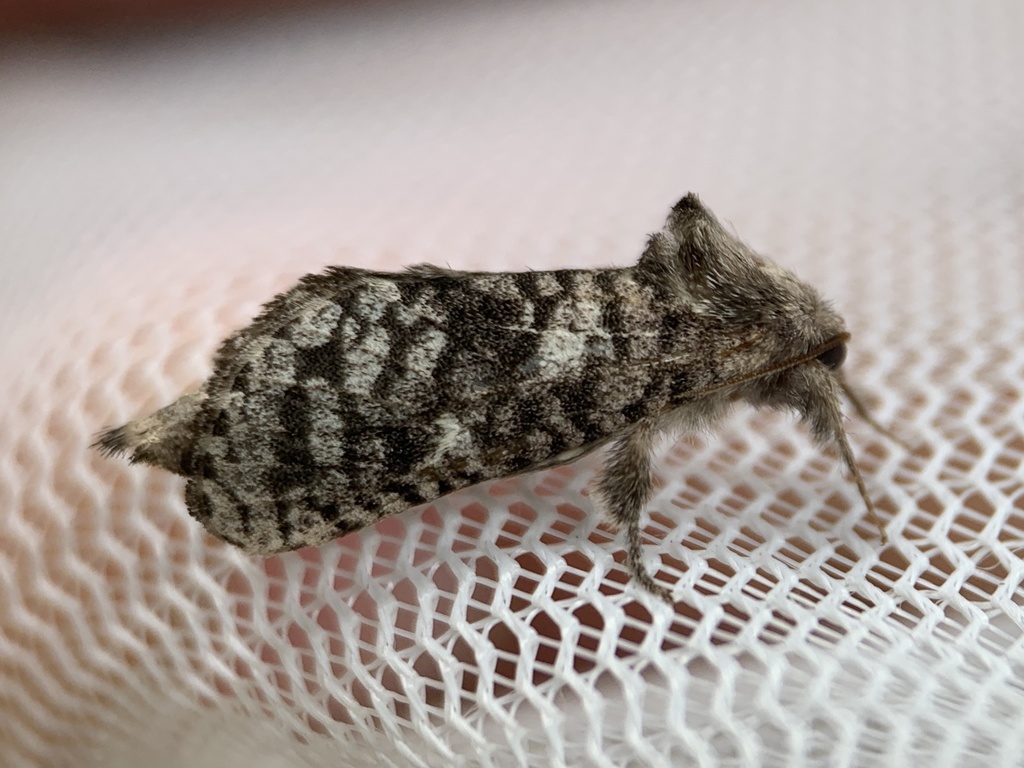
The Francesca carpenterworm moth has a wingspan of about 22 to 27 mm. Adults can be seen flying at any time of year.
Source: Wikipedia
How to recognize it
Adults have been recorded on the wing throughout the year.
Source: Wikipedia
Size
The wingspan ranges from 22 to 27 mm.
Source: Wikipedia
Is it a pest in the house?
Larvae damage pine trees by boring into their bark.
Source: Wikipedia
What it eats
The larvae bore into the bark of pine trunks.
Source: Wikipedia
Life cycle
Adults are active year round.
Source: Wikipedia
When you see it
Adults can be seen any month of the year.
Source: Wikipedia
Where it comes from
Its North American range includes the listed southeastern states.
Source: Wikipedia
Where it is found in the US
Recorded in 10 of 51 states and DC. Most records: Florida, Alabama, Georgia, Mississippi, North Carolina, South Carolina, Louisiana, Virginia.
Darker = more records. Counts are museum and citizen-science records, not population size.
Source: GBIF
Months it is reported in the US
Source: GBIF
More photos
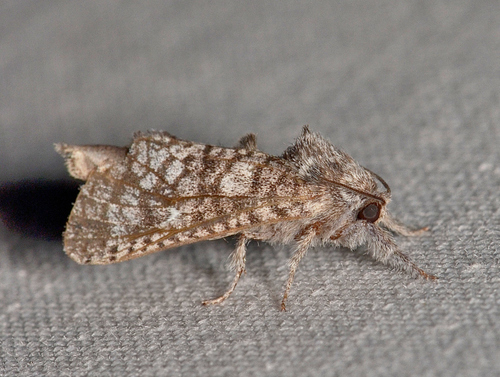
Questions people ask
When can I see adult Francesca carpenterworm moths?
Adults are on the wing throughout the entire year.
Source: Wikipedia
Same family (Cossidae)
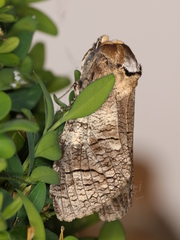 Goat MothCossus cossusDamages trees, gardens or crops
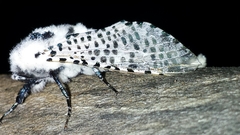 Wood Leopard MothZeuzera pyrinaDamages trees, gardens or crops
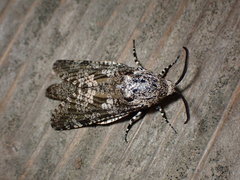 Carpenterworm MothPrionoxystus robiniaeCan damage your home
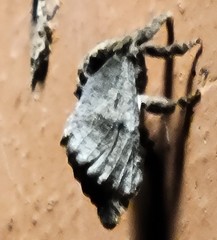 Arbela Carpenterworm MothGivira arbeloides
 Anna Carpenterworm MothGivira anna
 Little Carpenterworm MothPrionoxystus macmurtreiCan damage your home
Sources
- Wikipedia: https://en.wikipedia.org/wiki/Givira_francesca
Look it up elsewhere: GBIF · iNaturalist · BugGuide · Wikipedia
Text written 2026-10-26 from the sources above and checked sentence by sentence against them. Data fetched 2026-10-26.