 Bug FAQ
Carpenterworm Moth
Prionoxystus robiniae · Order: Lepidoptera · Family: Cossidae
Source: Wikipedia
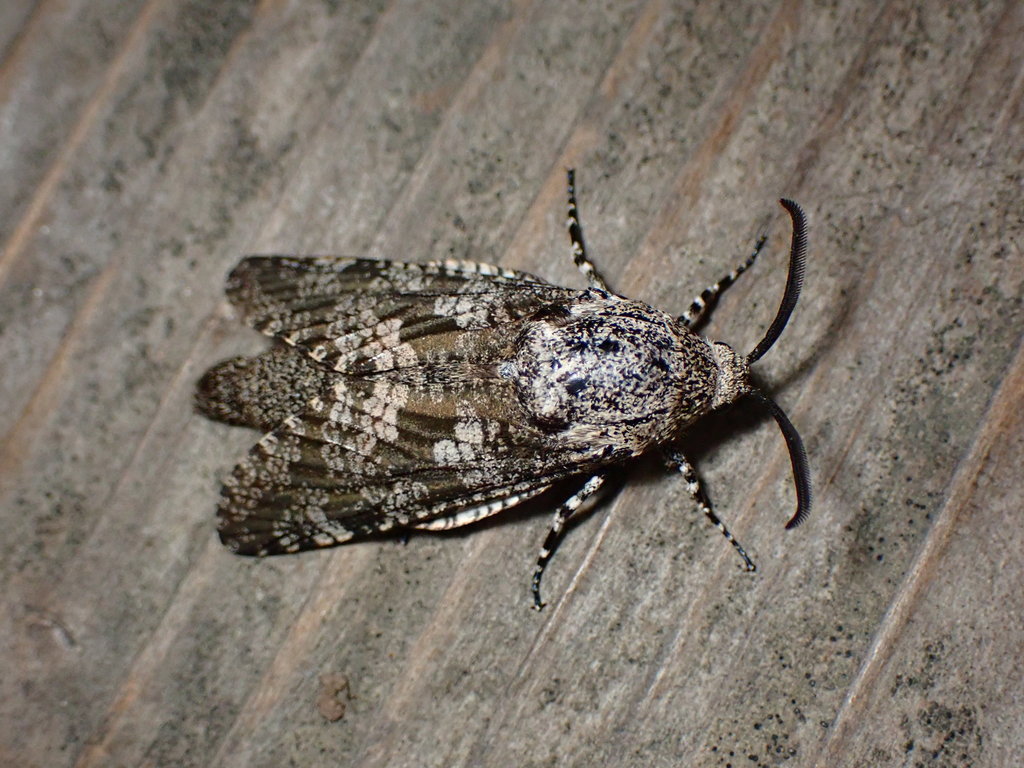
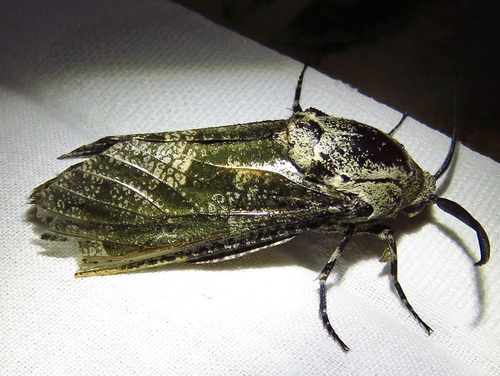
The carpenterworm moth (Prionoxystus robiniae) belongs to the Cossidae family and has a wingspan of about 1.7 to 3.3 inches (43 to 85 mm).
Source: Wikipedia
Size
Its wingspan ranges from 43 to 85 mm, roughly 1.7 to 3.3 inches.
Source: Wikipedia
Is it a pest in the house?
The tunnels created by the larvae lower the value of hardwood lumber, making it a pest for wood products.
Source: Wikipedia
Life cycle
The species was first described by Peck in 1818.
Source: Wikipedia
When you see it
Adults are on the wing from May through July, depending on location.
Source: Wikipedia
Where it is found in the US
Recorded in 49 of 51 states and DC. Most records: Texas, Florida, California, Virginia, Oklahoma, Maryland, New Jersey, North Carolina.
Darker = more records. Counts are museum and citizen-science records, not population size.
Source: GBIF
Status: native in North America; native in United States; native in Canada. Source: iNaturalist
Months it is reported in the US
Source: GBIF
More photos
Questions people ask
Do carpenterworm moths damage my house?
Yes, the larvae bore tunnels in hardwood lumber, which can reduce the strength and value of wooden structures.
Source: Wikipedia
When can I see adult carpenterworm moths?
Adults are typically active from May to July, varying with local climate.
Source: Wikipedia
Same family (Cossidae)
Sources
- Wikipedia: https://en.wikipedia.org/wiki/Prionoxystus_robiniae
Look it up elsewhere: GBIF · iNaturalist · BugGuide · ITIS · Wikipedia
Text written 2026-10-22 from the sources above and checked sentence by sentence against them. Data fetched 2026-10-22.