 Bug FAQ
Wood Leopard Moth
Zeuzera pyrina · Order: Lepidoptera · Family: Cossidae
Also called: Leopard Moth
Source: Wikipedia
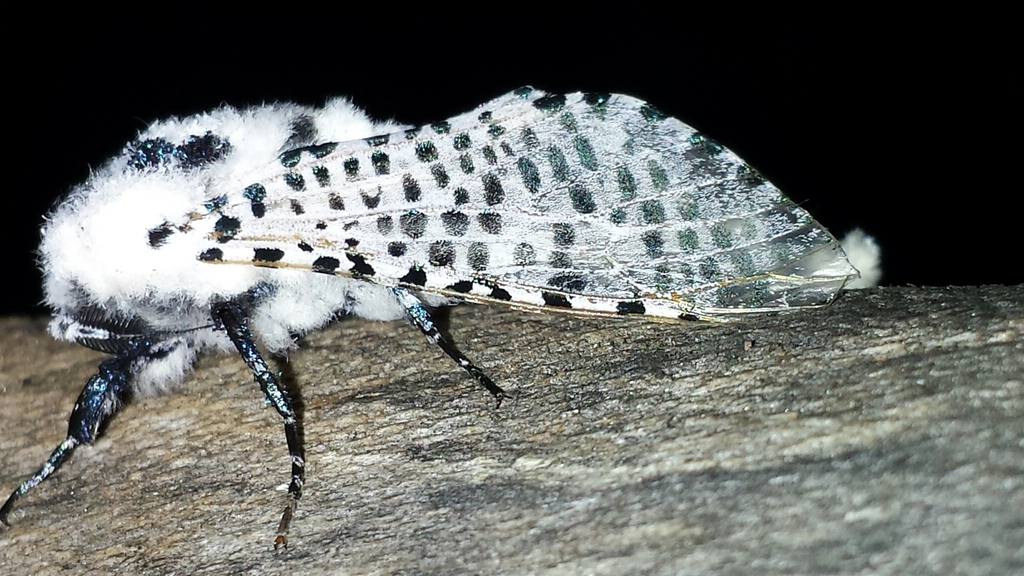
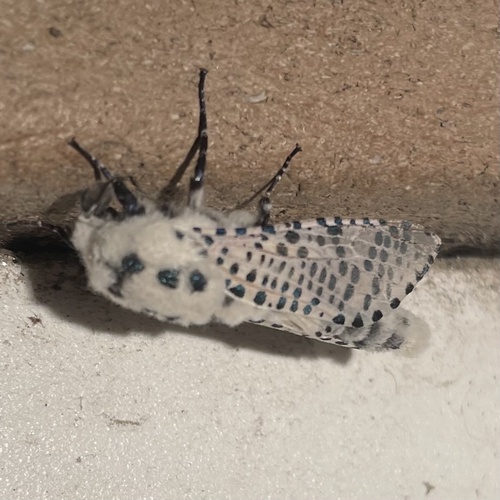
The wood leopard moth has a wingspan of about 35 to 60 mm and very distinctive white forewings marked with rows of black spots. Its larvae live inside the wood of deciduous trees for two to three years, feeding on the bark and can become a problem for fruit growers.
Source: Wikipedia
How to recognize it
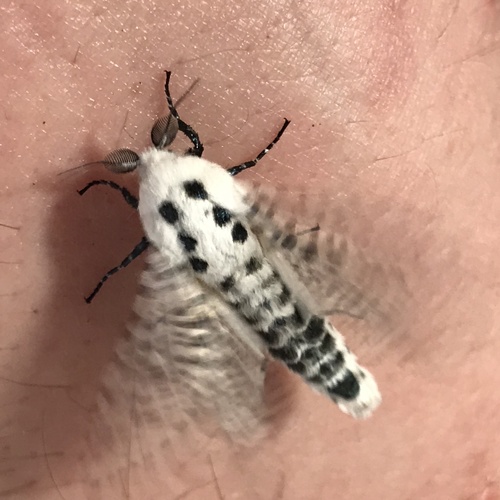
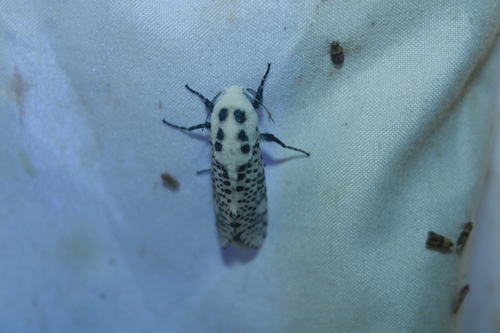
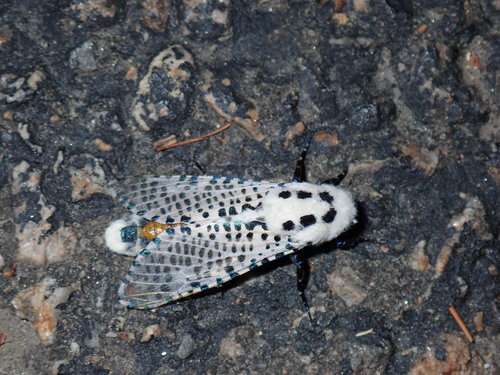
It is a highly distinctive species; males are a bit smaller than females and have broader, feathery antennae. Forewings are whitish, long and narrow with many black spots, sometimes with white centers, arranged in rows along the veins. Hindwings are mostly translucent except near the anal area and have small black spots.
Source: Wikipedia
Size
Wingspan ranges from 35 to 60 mm (about 1.4 to 2.4 in). Antennae are bipectinate, wide at the base and narrowing toward the tips, especially in males.
Source: Wikipedia
Is it a pest in the house?
Considered a pest by fruit growers because the larvae damage branches of many fruit trees.
Source: Wikipedia
Where it lives
They are found in woodlands, gardens and orchards.
Source: Wikipedia
What it eats
Caterpillars are wood-eaters, feeding inside the stems and branches of various deciduous trees and shrubs.
Source: Wikipedia
Life cycle
Larvae live inside wood for two to three years before emerging to pupate under the bark.
Source: Wikipedia
When you see it
Adults fly from June through September, depending on location.
Source: Wikipedia
Where it comes from
Native to most of Europe (except Ireland), northern Africa and parts of Asia including Japan, Korea and India.
Source: Wikipedia
Where it is found in the US
Recorded in 15 of 51 states and DC. Most records: New York, Massachusetts, New Jersey, Connecticut, Pennsylvania, Maryland, Vermont, Maine.
Darker = more records. Counts are museum and citizen-science records, not population size.
Source: GBIF
Status: introduced in United States; introduced in Canada. Source: iNaturalist
Months it is reported in the US
Source: GBIF
More photos
Questions people ask
What damage can they cause in my garden?
The larvae chew the wood of deciduous trees and fruit shrubs, which can weaken branches and reduce fruit yields.
Source: Wikipedia
When are the adult moths active?
Adults are on the wing from early summer through early autumn, roughly June to September.
Source: Wikipedia
Where might I find this moth?
Look for them in woodlands, gardens and orchards across Europe, northern Africa and parts of Asia.
Source: Wikipedia
Same family (Cossidae)
Sources
- Wikipedia: https://en.wikipedia.org/wiki/Zeuzera_pyrina
Look it up elsewhere: GBIF · iNaturalist · BugGuide · ITIS · Wikipedia
Text written 2026-10-22 from the sources above and checked sentence by sentence against them. Data fetched 2026-10-22.