 Bug FAQ
Goat Moth
Cossus cossus · Order: Lepidoptera · Family: Cossidae
Source: Wikipedia
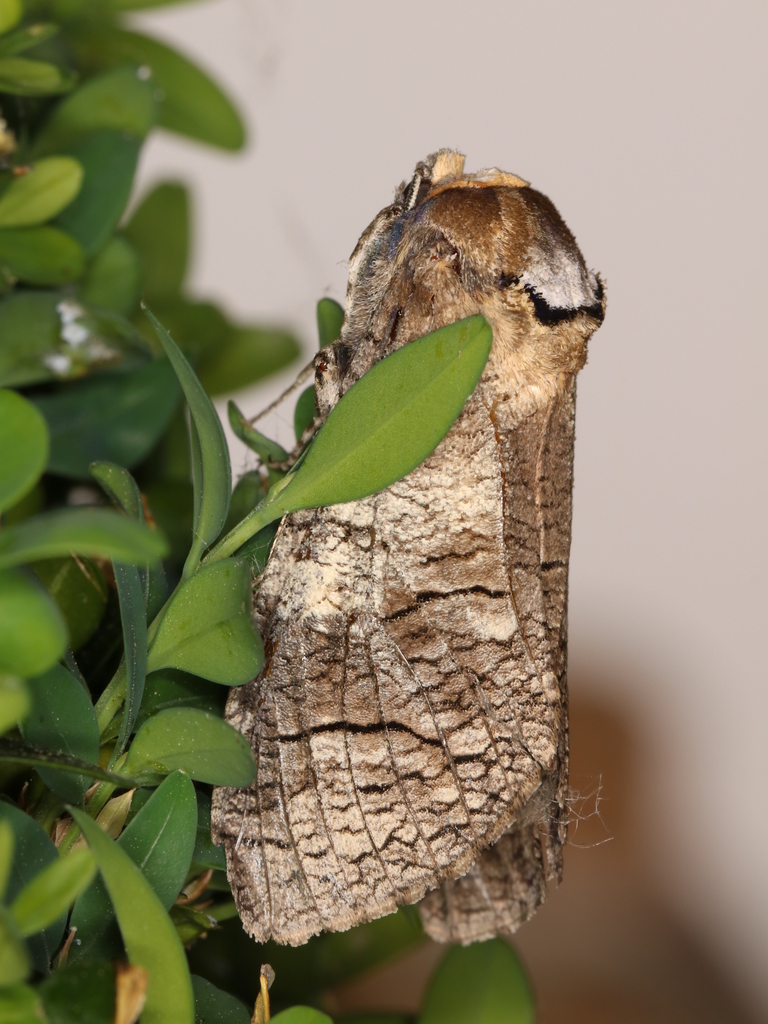
Adults have grey-brown wings marked with fine dark cross lines, while the larvae show a red-purple stripe on the back and a black head. It flies from April to August, depending on where it lives, and prefers humid habitats.
Source: Wikipedia
How to recognize it
The moth’s wings are greyish brown with fine dark cross lines. Caterpillars have a red or purple stripe along the back and a black head.
Source: Wikipedia
Size
Wingspan ranges from 68 to 96 mm, making it a large, heavy moth.
Source: Wikipedia
Where it lives
The species prefers humid environments.
Source: Wikipedia
What it eats
Larvae feed inside the trunks and branches of many tree species. Historically, the grub was considered a Roman delicacy after being fed flour.
Source: Wikipedia
Life cycle
Caterpillars prefer poplar, oak and willow trees.
Source: Wikipedia
When you see it
Adults are on the wing from April through August, varying with location.
Source: Wikipedia
Where it comes from
It occurs in northern Africa, Asia and Europe.
Source: Wikipedia
More photos


Questions people ask
Can goat moth larvae damage my garden trees?
Yes, the larvae bore into trunks and branches of many trees, which can harm shade trees and garden plants.
Source: Wikipedia
When can I expect to see adult goat moths?
Adults fly from April to August, depending on the local climate.
Source: Wikipedia
Same family (Cossidae)
Sources
- Wikipedia: https://en.wikipedia.org/wiki/Cossus_cossus
Look it up elsewhere: GBIF · iNaturalist · BugGuide · Wikipedia
Text written 2026-10-22 from the sources above and checked sentence by sentence against them. Data fetched 2026-10-22.