 Bug FAQ
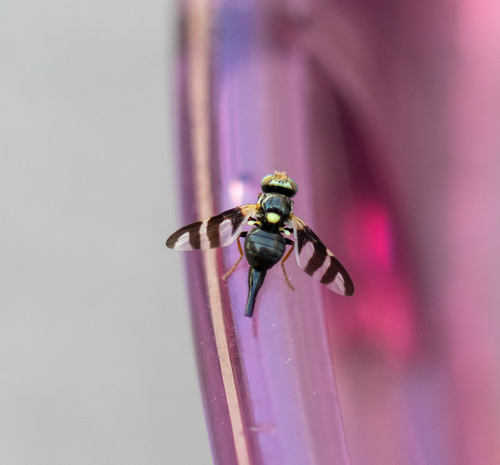
Four-barred Knapweed Gall Fly
Urophora quadrifasciata · Order: Diptera · Family: Tephritidae
Also called: Knapweed seedhead fly
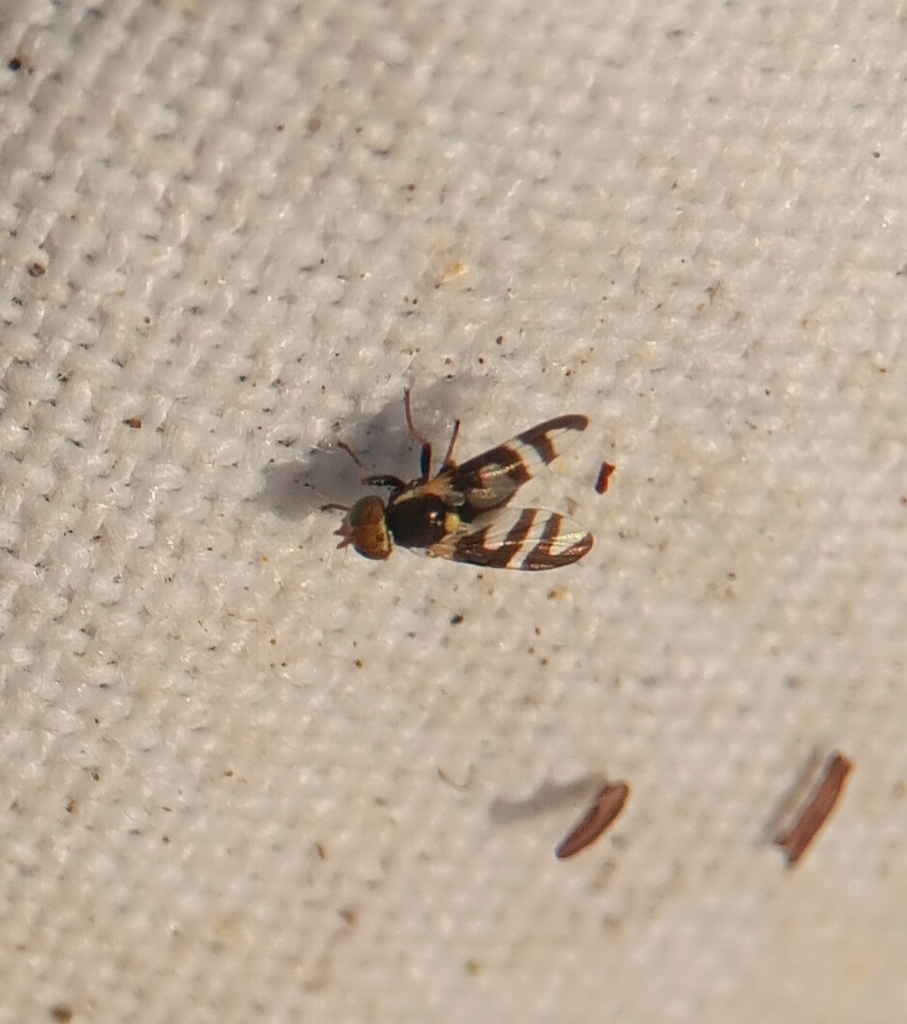
The four-barred knapweed gall fly lives in Europe, Kazakhstan, North Africa and Iran. Its larvae develop inside knapweed plants, usually species of Centaurea. Because it targets knapweed, it is sometimes released to help control the invasive Centaurea stoebe.
Source: Wikipedia
How to get rid of it
It is used as a biological control agent against Centaurea stoebe.
Source: Wikipedia
What it eats
The larvae feed on knapweed (Centaurea species).
Source: Wikipedia
Where it comes from
It is native to Europe, Kazakhstan, North Africa and Iran.
Source: Wikipedia
Where it is found in the US
Recorded in 21 of 51 states and DC. Most records: New York, Pennsylvania, Michigan, Virginia, Massachusetts, Maryland, Vermont, New Jersey.
Darker = more records. Counts are museum and citizen-science records, not population size.
Source: GBIF
Status: introduced in North America; introduced in United States; introduced in Canada. Source: iNaturalist
Months it is reported in the US
Source: GBIF
More photos
Questions people ask
What plants does the four-barred knapweed gall fly use?
Its larvae develop inside knapweed plants, usually Centaurea species.
Source: Wikipedia
Is this fly used for weed control?
Yes, it is released to help control the invasive knapweed Centaurea stoebe.
Source: Wikipedia
Same family (Tephritidae)
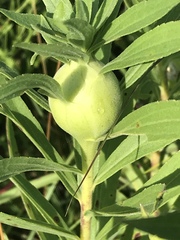 Goldenrod Gall FlyEurosta solidaginis
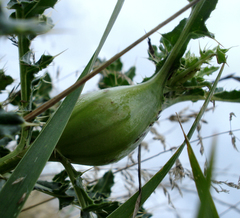 Thistle Stem Gall FlyUrophora cardui
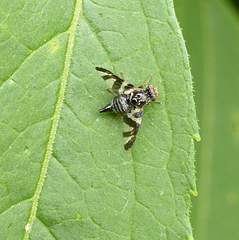 Goldenrod Brussels Sprout Gall FlyProcecidochares atra
 Mediterranean Fruit FlyCeratitis capitataDamages trees, gardens or crops
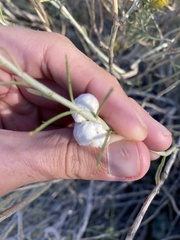 Cotton-gall TephritidAciurina bigeloviae
 Oriental Fruit FlyBactrocera dorsalisDamages trees, gardens or crops
Sources
- Wikipedia: https://en.wikipedia.org/wiki/Urophora_quadrifasciata
Look it up elsewhere: GBIF · iNaturalist · BugGuide · ITIS · Wikipedia
Text written 2026-10-26 from the sources above and checked sentence by sentence against them. Data fetched 2026-10-26.