 Bug FAQ
Flower Elf
Pyropyga minuta · Order: Coleoptera · Family: Lampyridae
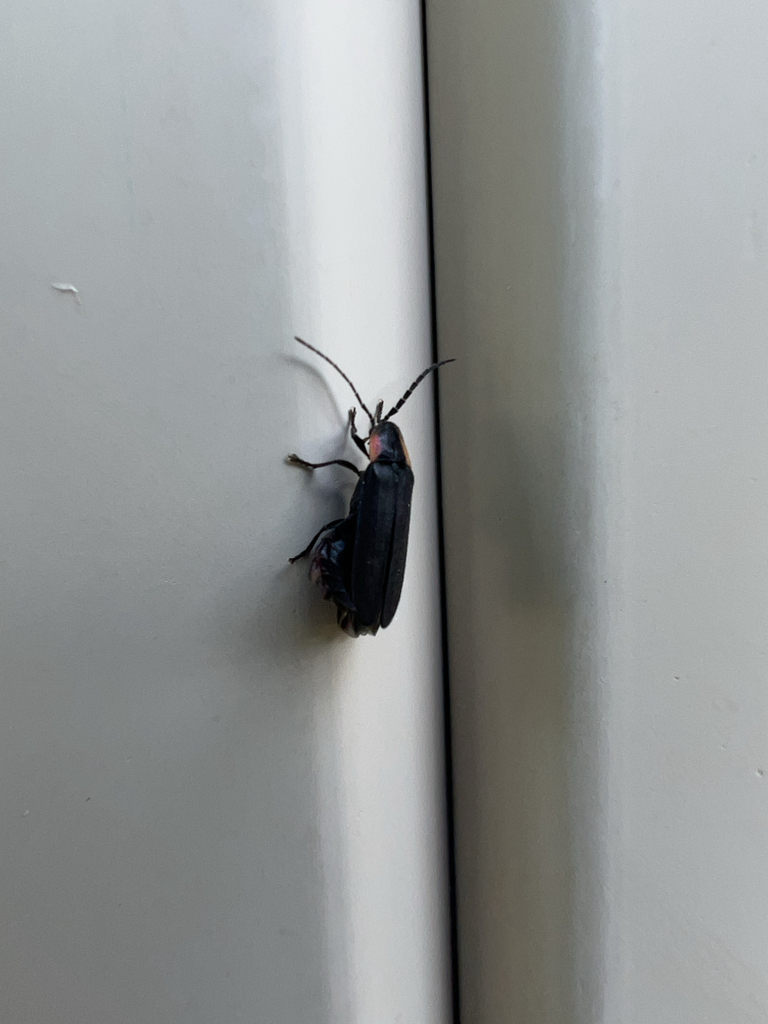
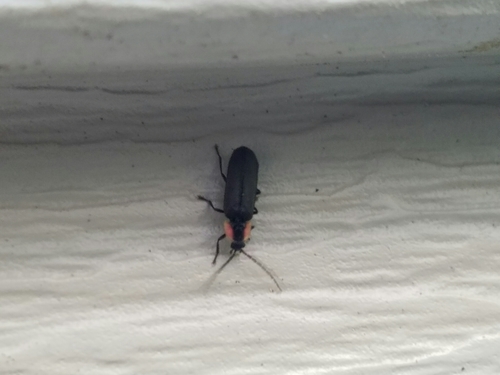
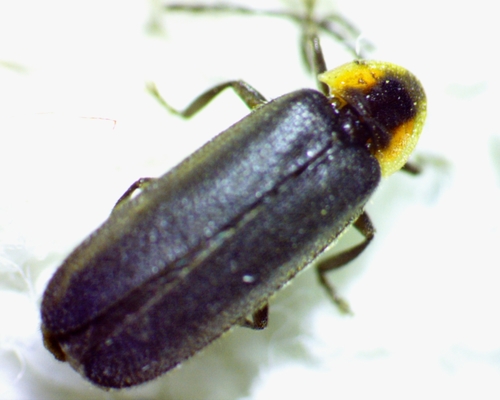
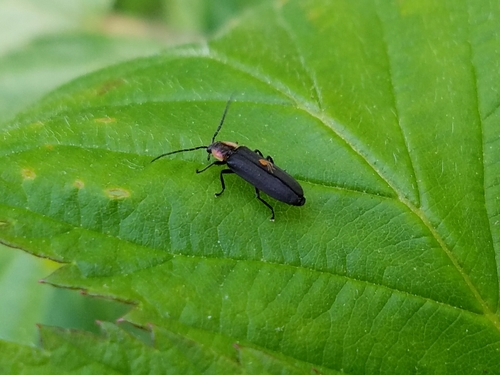
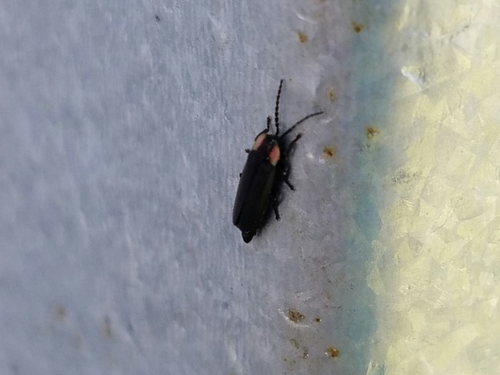
The Flower Elf firefly (Pyropyga minuta) is a tiny black beetle about 3 to 7 mm long, with a pale yellow pronotum marked by a dark rectangular bar. Adults are active in daylight during June and July, often found on leaves and flowers in gardens, yards, open woodlands and similar open areas across the southern United States, Mexico, Guatemala and Honduras. The larvae live underground and glow bioluminescently, while the adults lack lanterns and do not flash.
Source: Wikipedia
How to recognize it
The beetle’s wing covers and body are solid black.
Source: Wikipedia
Size
Adults measure between 3 and 7 mm (about 0.1 to 0.3 in) in length.
Source: Wikipedia
Where it lives
They are seen during the day on leaves or flowers in gardens, yards, open woodlands, fencerows and other open areas.
Source: Wikipedia
Life cycle
They develop through four stages: egg, larva, pupa and adult.
Source: Wikipedia
When you see it
Adults are most often observed in June and July, though they can appear from April to September.
Source: Wikipedia
Where it comes from
They occur in the southern United States, from New Mexico east to North Carolina and north to Kansas. Their range also includes Mexico, Guatemala and Honduras.
Source: Wikipedia
Where it is found in the US
Recorded in 17 of 51 states and DC. Most records: Kentucky, Colorado, Texas, Florida, Ohio, Louisiana, California, Tennessee.
Darker = more records. Counts are museum and citizen-science records, not population size.
Source: GBIF
Status: native in North America; native in United States. Source: iNaturalist
Months it is reported in the US
Source: GBIF
More photos
Questions people ask
When are Flower Elf fireflies active?
They are active during the day, most commonly in June and July, but can be seen from April through September.
Source: Wikipedia
What do the larvae look like?
The larvae live underground and produce a bioluminescent glow.
Source: Wikipedia
Where might I find them?
Look for them on leaves and flowers in gardens, yards, open woodlands and similar open areas during daylight.
Source: Wikipedia
How can I tell them apart from similar fireflies?
In the north they can be mistaken for Pyropyga decipiens, and in the west for Pyropyga nigricans.
Source: Wikipedia
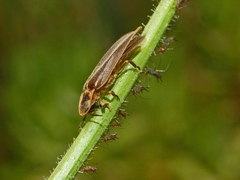
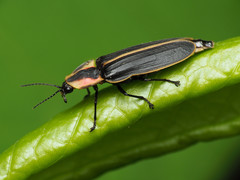
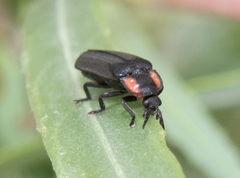
Same family (Lampyridae)


Sources
- Wikipedia: https://en.wikipedia.org/wiki/Pyropyga_minuta
Look it up elsewhere: GBIF · iNaturalist · BugGuide · ITIS · Wikipedia
Text written 2026-10-25 from the sources above and checked sentence by sentence against them. Data fetched 2026-10-25.