 Bug FAQ
Flame Skimmer
Libellula saturata · Order: Odonata · Family: Libellulidae
Also called: Firecracker Skimmer, Red Skimmer

Flame skimmers are 2-3 inches long and males are bright red or orange while females are brown with yellow markings. They live near warm water such as ponds, streams, hot springs, gardens, and backyards in the southwestern United States. Adults eat soft-bodied insects like moths and flies, and their nymphs eat aquatic insects; they breed from May to September.
Source: Wikipedia
How to recognize it
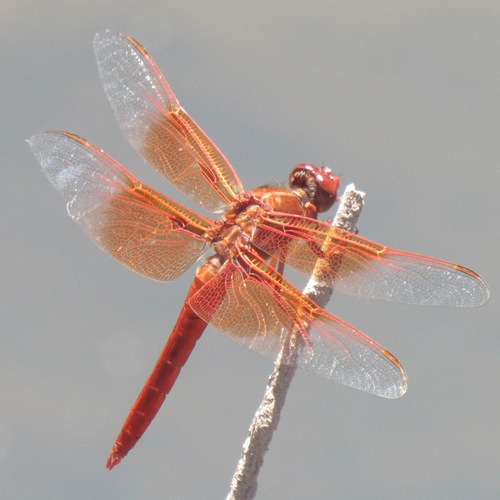
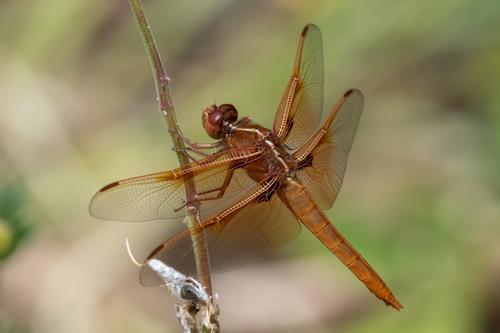
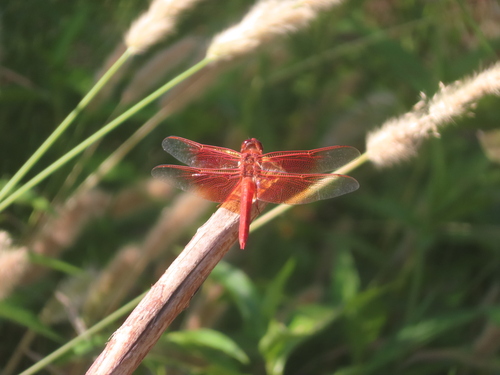
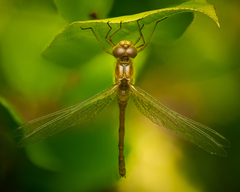
Males are entirely red or dark orange, including eyes, legs, and wing veins; females are medium to dark brown with thin yellow markings.
Source: Wikipedia
Size
Adults measure about 2 to 3 inches (5.1 to 7.6 cm) in length.
Source: Wikipedia
Where it lives
They prefer warm ponds, streams, hot springs, and are also found in public gardens and backyards.
Source: Wikipedia
What it eats
Nymphs feed on aquatic insects; adults catch moths, flies, ants, and other soft-bodied insects.
Source: Wikipedia
Life cycle
Breeding occurs from May through September, and the nymphs have a rounded, chubby abdomen.
Source: Wikipedia
When you see it
Their flight and breeding season runs from May to September.
Source: Wikipedia
Where it comes from
The species is native to western North America, especially the southwestern United States.
Source: Wikipedia
Where it is found in the US
Recorded in 18 of 51 states and DC. Most records: California, Arizona, Texas, New Mexico, Oregon, Nevada, Utah, Wyoming.
Darker = more records. Counts are museum and citizen-science records, not population size.
Source: GBIF
Status: native in North America; native in United States. Source: iNaturalist
Months it is reported in the US
Source: GBIF
More photos
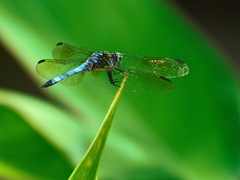
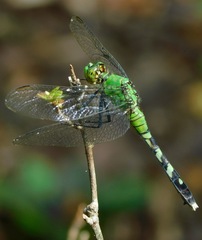
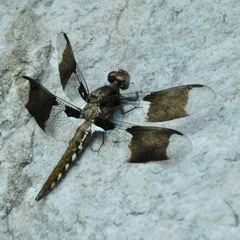
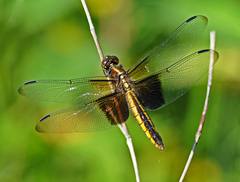
Same family (Libellulidae)

Sources
- Wikipedia: https://en.wikipedia.org/wiki/Flame_skimmer
Look it up elsewhere: GBIF · iNaturalist · BugGuide · ITIS · Wikipedia
Text written 2026-10-22 from the sources above and checked sentence by sentence against them. Data fetched 2026-10-22.