 Bug FAQ
Ferocious polybia wasp
Polybia rejecta · Order: Hymenoptera · Family: Eumenidae
Source: Wikipedia
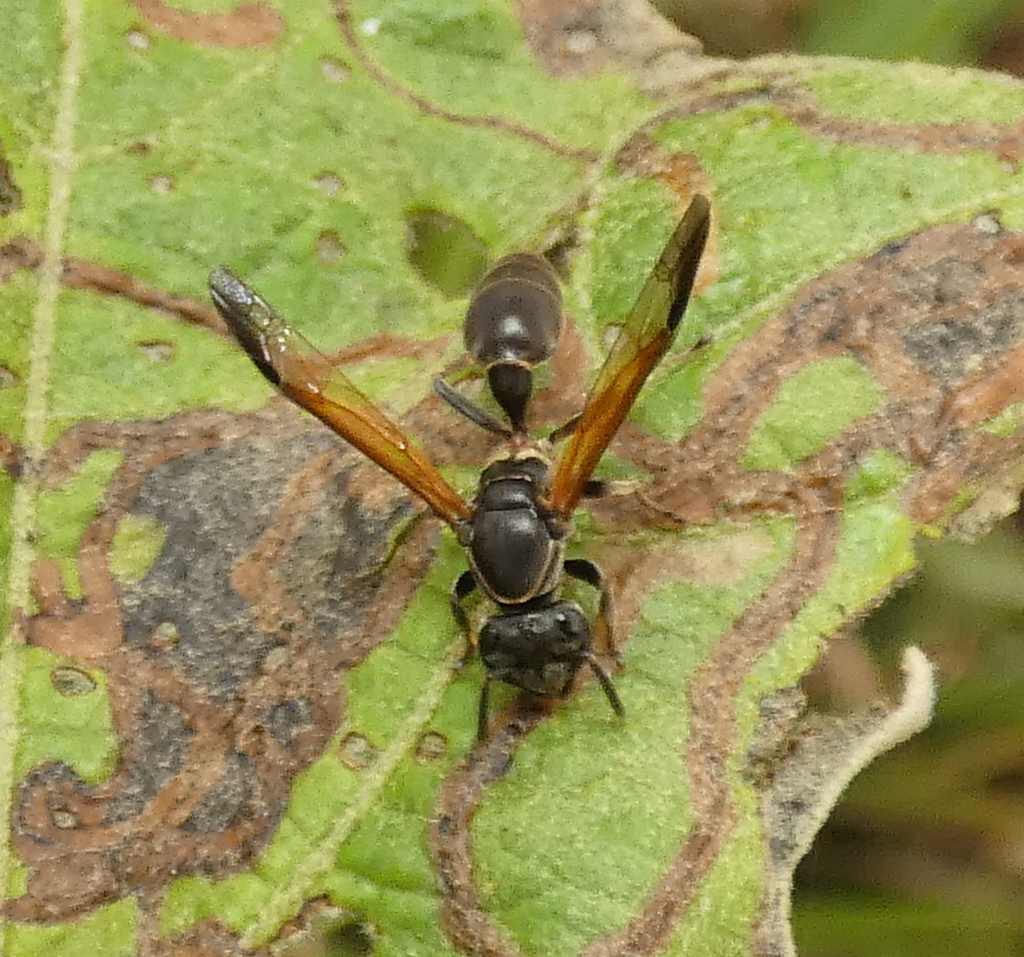
Polybia rejecta is a mostly black social wasp with a small rounded head, short antennae, thin body and thin wings. It lives near water bodies and forages on aquatic plants. The species feeds on the eggs of red-eyed tree frogs, removing embryos one at a time.
Source: Wikipedia
How to recognize it
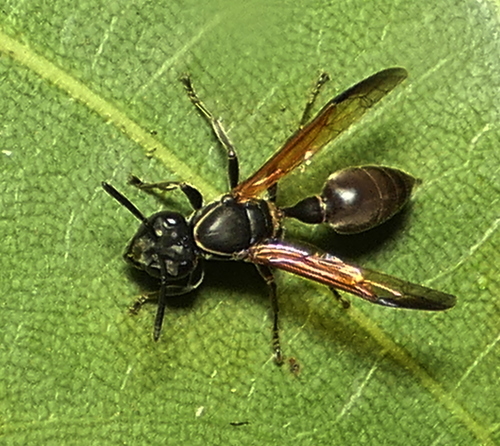
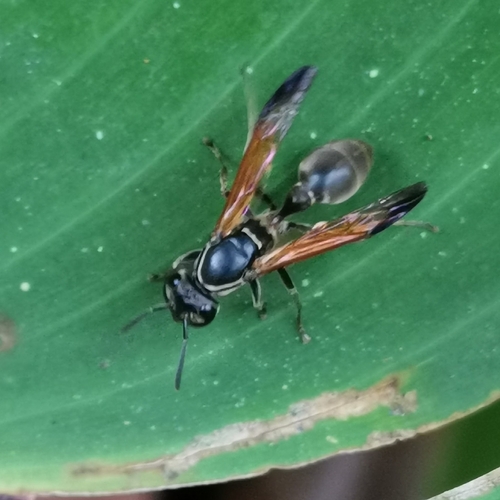
The wasp has an almost completely black body, a small rounded head with short antennae, and thin wings.
Source: Wikipedia
Does it bite or sting?
The sting is painful but not considered traumatic.
Source: Wikipedia
Where it lives
Its distribution depends on nearby water bodies. Aquatic macrophytes are important foraging targets.
Source: Wikipedia
What it eats
Workers attack clutches and remove embryos one at a time.
Source: Wikipedia
Life cycle
The colony has a caste system with queens being the largest females.
Source: Wikipedia
Where it comes from
It is a social wasp native to the Neotropics.
Source: Wikipedia
More photos
Questions people ask
Can this wasp sting people?
Yes, it will sting if you get close, and the sting hurts but is not severe.
Source: Wikipedia
What does Polybia rejecta eat?
It mainly eats the eggs of red-eyed tree frogs, removing the embryos one by one.
Source: Wikipedia
Where is this wasp found?
It lives near water bodies and relies on aquatic plants for food.
Source: Wikipedia
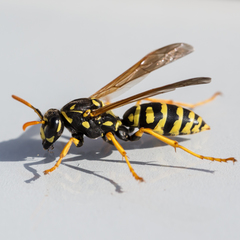
Same family (Eumenidae)

Sources
- Wikipedia: https://en.wikipedia.org/wiki/Polybia_rejecta
Look it up elsewhere: GBIF · iNaturalist · BugGuide · Wikipedia
Text written 2026-10-23 from the sources above and checked sentence by sentence against them. Data fetched 2026-10-23.