 Bug FAQ
Fasciated Conehead Mantid
Empusa fasciata · Order: Mantodea · Family: Empusidae
Also called: Conehead Mantis, Devil's Mare

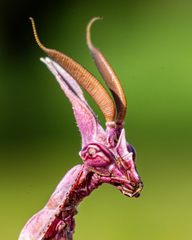
The fasciated conehead mantid has a tapering head with a helmet-like shape, oval eyes, slender forelegs and a long thin thorax, and its yellow-green striped legs blend into dry vegetation. Adults appear in May, males die after mating, females after laying eggs, and the young hatch in July and overwinter as pre-adults.
Source: Wikipedia
How to recognize it
Head tapers into a helmet-like shape; eyes are oval; forelegs are slender and raptorial; thorax is long and thin. Legs have yellowish-green stripes that provide camouflage in vegetation, making the mantid noticeable mainly when moving.
Source: Wikipedia
Where it lives
Prefers dry, warm (xerothermic) sites. Generally active during the day; males fly at night to locate pheromone plumes from receptive females.
Source: Wikipedia
Life cycle
Adult males die soon after mating; females die after laying eggs. Nymphs hatch in July and spend the winter in the pre-adult stage.
Source: Wikipedia
When you see it
Adults are reached in May in areas from Croatia to the Bay of Trieste.
Source: Wikipedia
More photos


Questions people ask
When are fasciated conehead mantids active?
They are mainly diurnal, but males fly at night to follow female pheromone plumes.
Source: Wikipedia
Where can I find them?
They occur from western Asia to northeastern Italy, in Morocco, southern Africa, and are most common in the southern Balkans.
Source: Wikipedia
Same family (Empusidae)


Sources
- Wikipedia: https://en.wikipedia.org/wiki/Empusa_fasciata
Look it up elsewhere: GBIF · iNaturalist · BugGuide · Wikipedia
Text written 2026-10-23 from the sources above and checked sentence by sentence against them. Data fetched 2026-10-22.