 Bug FAQ
Mediterranean Conehead Mantis
Empusa pennata · Order: Mantodea · Family: Empusidae
Also called: Conehead Mantis, Med Conehead Mantid
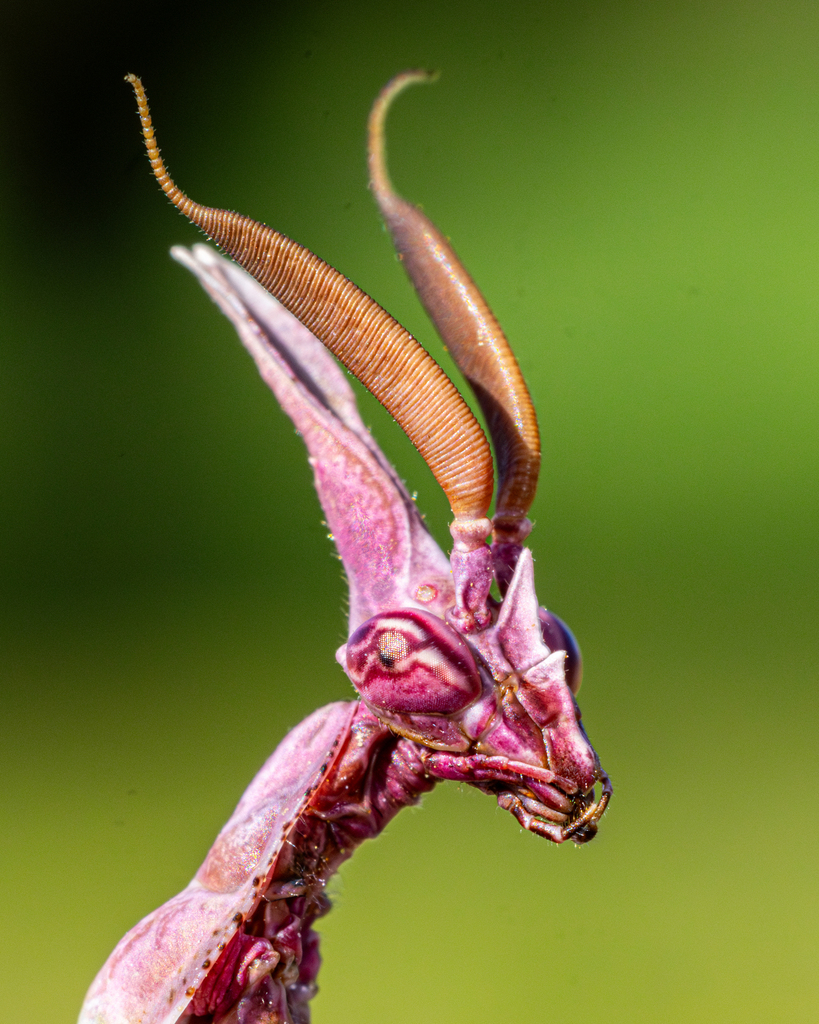
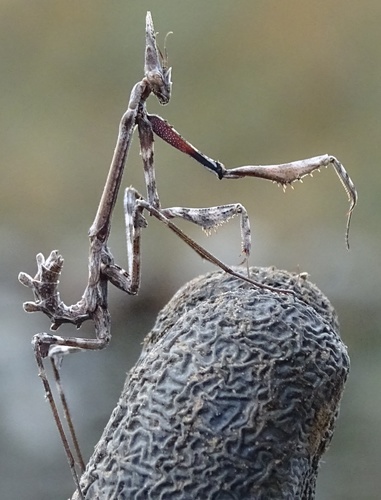
The Mediterranean conehead mantis lives in dry, warm areas and hides among herbs and scrubby plants using green, pink or brown camouflage. Females can reach about 10 cm long, while males are smaller and slimmer, and both have a distinctive crown protrusion. It is native to the Mediterranean region, including parts of southern Europe and North Africa.
Source: Wikipedia
How to recognize it
A noticeable protrusion on the head crown sets this mantis apart from similar species.
Source: Wikipedia
Where it lives
It prefers dry, warm habitats and is found among perennial herbs and scrub vegetation. The mantis has a thin body and large wings for flight.
Source: Wikipedia
What it eats
It stalks and grabs prey with its forelegs, eating insects such as crickets and cockroaches.
Source: Wikipedia
Life cycle
The species overwinters as a nymph and becomes an adult by spring, with eggs developing quickly in summer.
Source: Wikipedia
When you see it
Adults appear in spring after overwintering as nymphs. Males release a sex pheromone as part of their mating behavior.
Source: Wikipedia
Where it comes from
It is native to the Mediterranean region, from Portugal and Spain through Italy and the eastern Mediterranean coasts of North Africa and the Middle East.
Source: Wikipedia
More photos
Questions people ask
How can I identify a Mediterranean conehead mantis?
Look for a head crown with a distinct protrusion and a body up to 10 cm long in females; colors are usually green, pink or brown.
Source: Wikipedia
Where might I find this mantis?
It lives in dry, warm Mediterranean habitats, especially among perennial herbs and scrubby vegetation.
Source: Wikipedia
What does it eat?
It hunts insects, catching them with its raptorial forelegs; typical prey includes crickets and cockroaches.
Source: Wikipedia
When are they active?
They emerge as adults in spring after overwintering as nymphs, and their eggs develop quickly in summer.
Source: Wikipedia
Sources
- Wikipedia: https://en.wikipedia.org/wiki/Empusa_pennata
Look it up elsewhere: GBIF · iNaturalist · BugGuide · Wikipedia
Text written 2026-10-22 from the sources above and checked sentence by sentence against them. Data fetched 2026-10-22.