 Bug FAQ
European Rhinoceros Beetle
Oryctes nasicornis · Order: Coleoptera · Family: Scarabaeidae
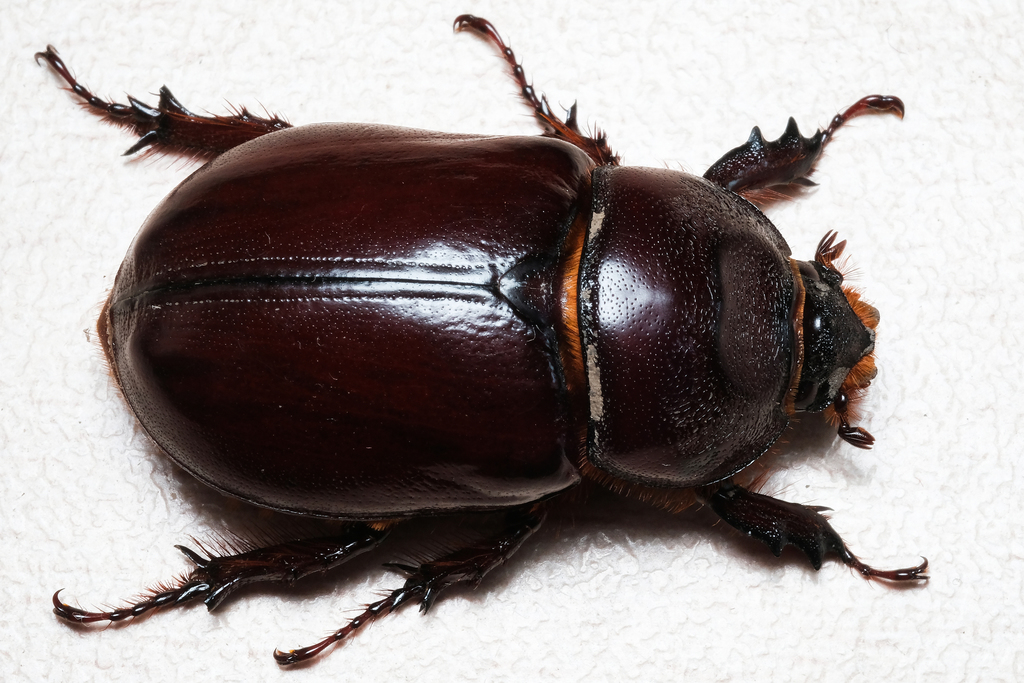
The European rhinoceros beetle is a large beetle, 20 to 42 mm long, with reddish-brown glossy wing covers and a dark head and pronotum. Males have a long curved horn on the head, while females lack horns. It lives in decaying wood, the larvae feed on woody debris, and the whole life cycle takes 2 to 4 years, with adults appearing from late March to May and being active in June and July.
Source: Wikipedia
How to recognize it
The wing covers are reddish brown and glossy, and the head and pronotum are a slightly darker shade. Males have a long curved horn on the head; females have none.
Source: Wikipedia
Size
Adults measure between 20 and 42 mm, with some reaching up to 47 mm.
Source: Wikipedia
Where it lives
They are found on wood, and the large larvae live in rotting wood stumps and sawdust.
Source: Wikipedia
What it eats
Larvae feed on decaying woody material, especially non-resinous wood. Adult beetles do not feed, relying on reserves built up during the larval stage.
Source: Wikipedia
Life cycle
Development from egg to adult takes 2 to 4 years. Adults emerge from late March to May and live for a few months until autumn.
Source: Wikipedia
When you see it
Adults are most active in June and July, flying at dusk and night and attracted to lights.
Source: Wikipedia
Where it comes from
The species occurs throughout the Palaearctic region except the British Isles.
Source: Wikipedia
More photos
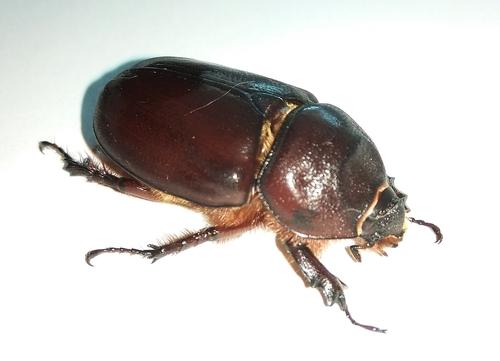
Same family (Scarabaeidae)
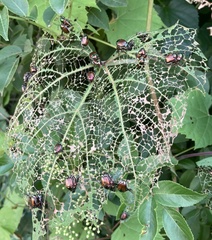 Japanese BeetlePopillia japonicaDamages trees, gardens or crops
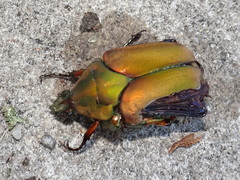 Common Green June BeetleCotinis nitidaDamages trees, gardens or crops
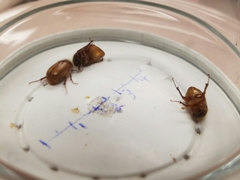 Phyllophaga crinitaPhyllophaga crinitaDamages trees, gardens or crops
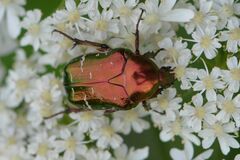 European Rose ChaferCetonia aurata
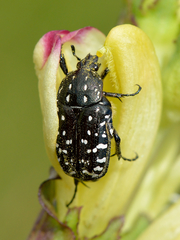 Mediterranean Spotted ChaferOxythyrea funestaDamages trees, gardens or crops
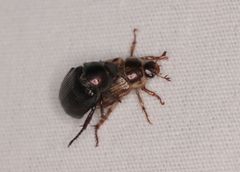 Oriental BeetleExomala orientalisDamages trees, gardens or crops
Sources
- Wikipedia: https://en.wikipedia.org/wiki/European_rhinoceros_beetle
Look it up elsewhere: GBIF · iNaturalist · BugGuide · Wikipedia
Text written 2026-10-22 from the sources above and checked sentence by sentence against them. Data fetched 2026-10-22.