 Bug FAQ
European Gazelle Beetle
Nebria brevicollis · Order: Coleoptera · Family: Carabidae
Also called: Short-necked gazelle beetle, Common Heart Shield
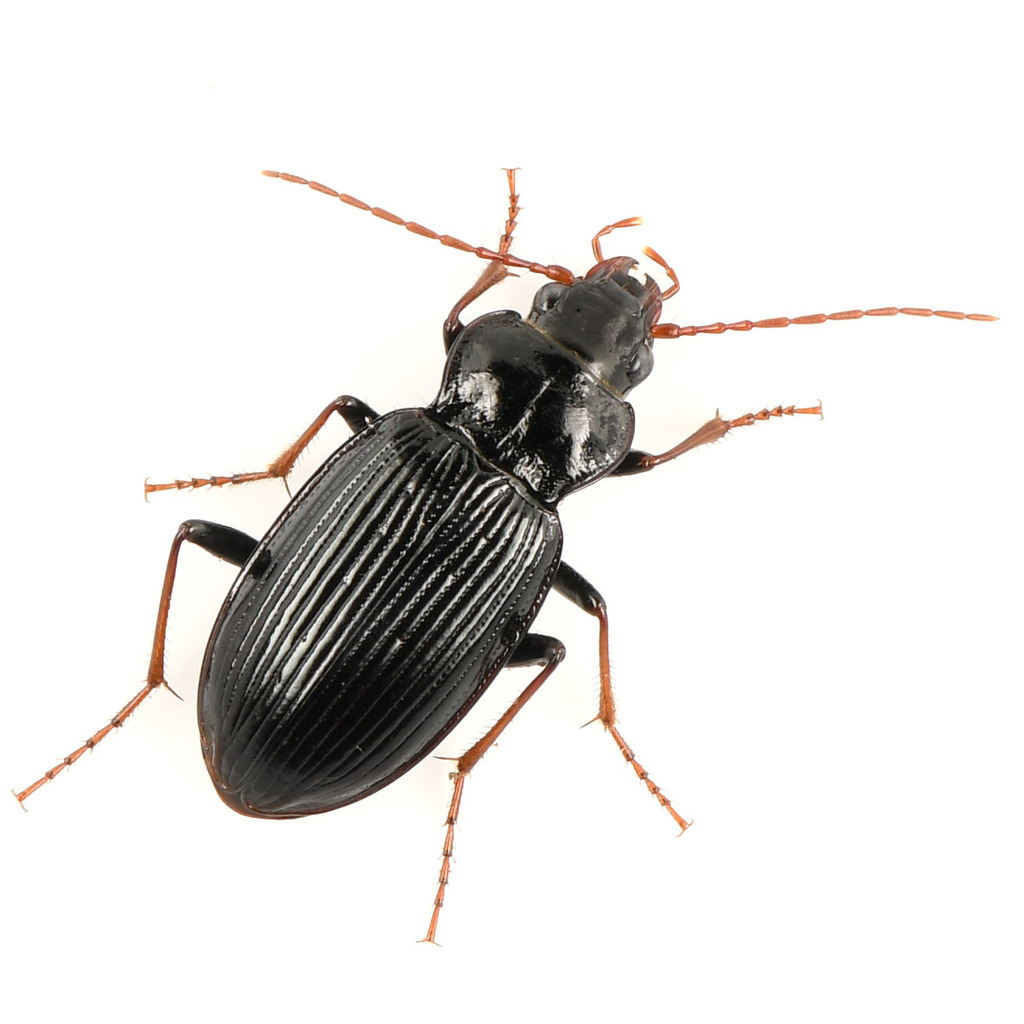
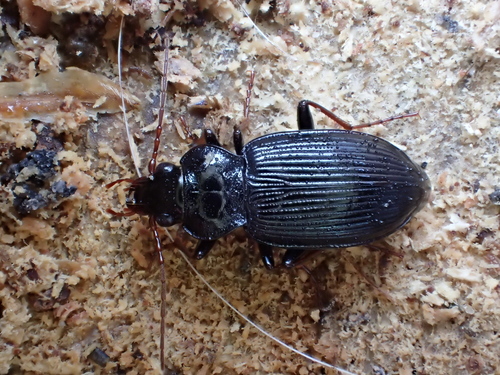
The European Gazelle Beetle is a modest-sized ground beetle about 10 to 14 mm long with a dark brown body and reddish-brown legs, antennae and palps. It lives in shaded leaf litter of deciduous forests but can also be found in parks, gardens and farms, and unlike its relatives it avoids moist places.
Source: Wikipedia
How to recognize it
Its body is dark brown, while the tibiae, tarsi, palpi and antennae are reddish-brown. The pronotum has two lateral setae on each side and a densely punctate base.
Source: Wikipedia
Size
Adults measure between 10 and 14 mm in length.
Source: Wikipedia
Where it lives
It can also occur in disturbed habitats such as parks, gardens and agricultural land. Unlike other Nebria species, it tends to avoid moist environments.
Source: Wikipedia
What it eats
It feeds on molluscs, earthworms and small insects.
Source: Wikipedia
Life cycle
Female beetles have a breeding period of about 27 days, and their eggs hatch after roughly 17 days.
Source: Wikipedia
When you see it
Adults are most abundant from October through December and again from January to mid-May.
Source: Wikipedia
Where it is found in the US
Recorded in 8 of 51 states and DC. Most records: Oregon, Washington, California, New York, Pennsylvania, Virginia, Massachusetts, Rhode Island.
Darker = more records. Counts are museum and citizen-science records, not population size.
Source: GBIF
Status: introduced in United States; introduced in Canada. Source: iNaturalist
Months it is reported in the US
Source: GBIF
More photos


Questions people ask
Are they a garden pest?
They are not reported to damage plants; they mainly eat small invertebrates.
Source: Wikipedia
Same family (Carabidae)


Sources
- Wikipedia: https://en.wikipedia.org/wiki/Nebria_brevicollis
Look it up elsewhere: GBIF · iNaturalist · BugGuide · ITIS · Wikipedia
Text written 2026-10-22 from the sources above and checked sentence by sentence against them. Data fetched 2026-10-22.