 Bug FAQ
European Comma
Polygonia c-album · Order: Lepidoptera · Family: Nymphalidae
Also called: Comma, The Comma
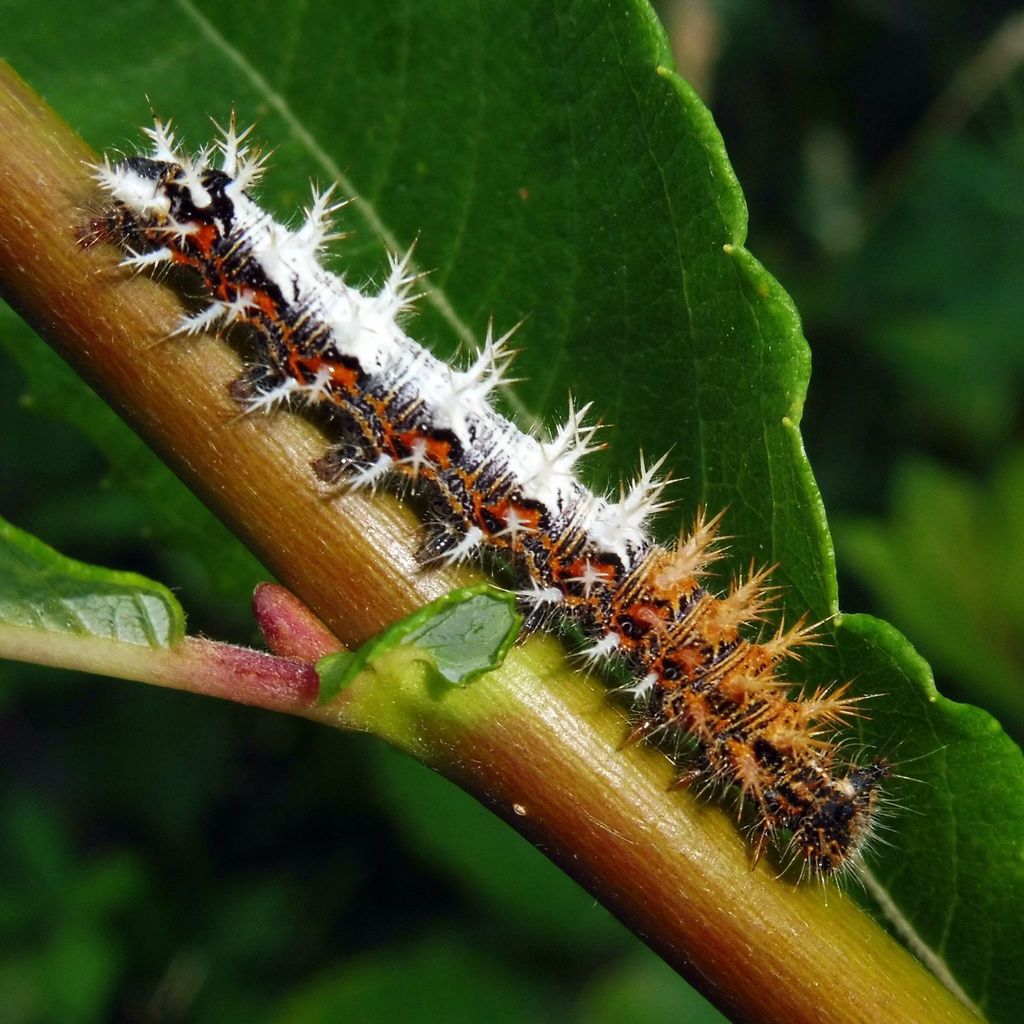
The European comma is a small woodland butterfly with orange and dark dorsal wings and a white comma-shaped spot on the underside of the hindwing. It lives in low-density forests, country lanes and gardens across Europe, North Africa and Asia. The species feeds on many host plants, and its larvae may leave the hatch site to find other food.
Source: Wikipedia
How to recognize it
Adults have bright orange and dark brown dorsal wings and a white comma-shaped spot on the reverse side of the hindwing. The forewing edges have angular notches typical of the Polygonia genus.
Source: Wikipedia
Size
Males have a wingspan of about 22 to 24 mm, while females are slightly larger at 25 to 26 mm.
Source: Wikipedia
Where it lives
It prefers sunny, moist woodland with low-density forest cover.
Source: Wikipedia
What it eats
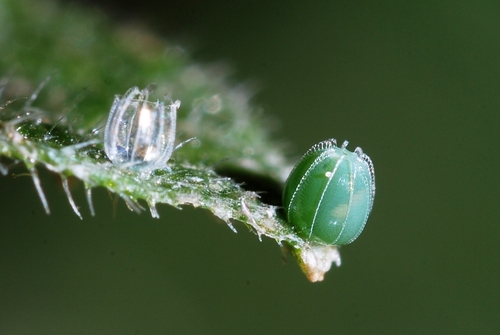
The butterfly is a food generalist and will use many different host plants. First-instar larvae often leave the egg site to search for alternative food sources.
Source: Wikipedia
Life cycle
Pupae are camouflaged to look like shriveled leaves. Later-stage larvae develop strong spines along their backs.
Source: Wikipedia
When you see it
The first generation appears in May-June with a fawn-orange upperside and brown-gold underside. The second generation emerges in July and later, showing a redder upperside and darker brown underside.
Source: Wikipedia
Where it comes from
Its range includes Europe, North Africa and parts of Asia.
Source: Wikipedia
Lookalikes
Angular notches on the forewing edges are characteristic of anglewing butterflies in the Polygonia genus.
Source: Wikipedia
Where it is found in the US
Recorded in 9 of 51 states and DC. Most records: Massachusetts, Nevada, Alaska, Tennessee, Utah, Vermont, Virginia, West Virginia.
Darker = more records. Counts are museum and citizen-science records, not population size.
Source: GBIF
More photos

Same family (Nymphalidae)





Sources
- Wikipedia: https://en.wikipedia.org/wiki/Polygonia_c-album
Look it up elsewhere: GBIF · iNaturalist · BugGuide · Wikipedia
Text written 2026-10-22 from the sources above and checked sentence by sentence against them. Data fetched 2026-10-22.