 Bug FAQ
European Chafer
Amphimallon majale · Order: Coleoptera · Family: Scarabaeidae
Source: Wikipedia
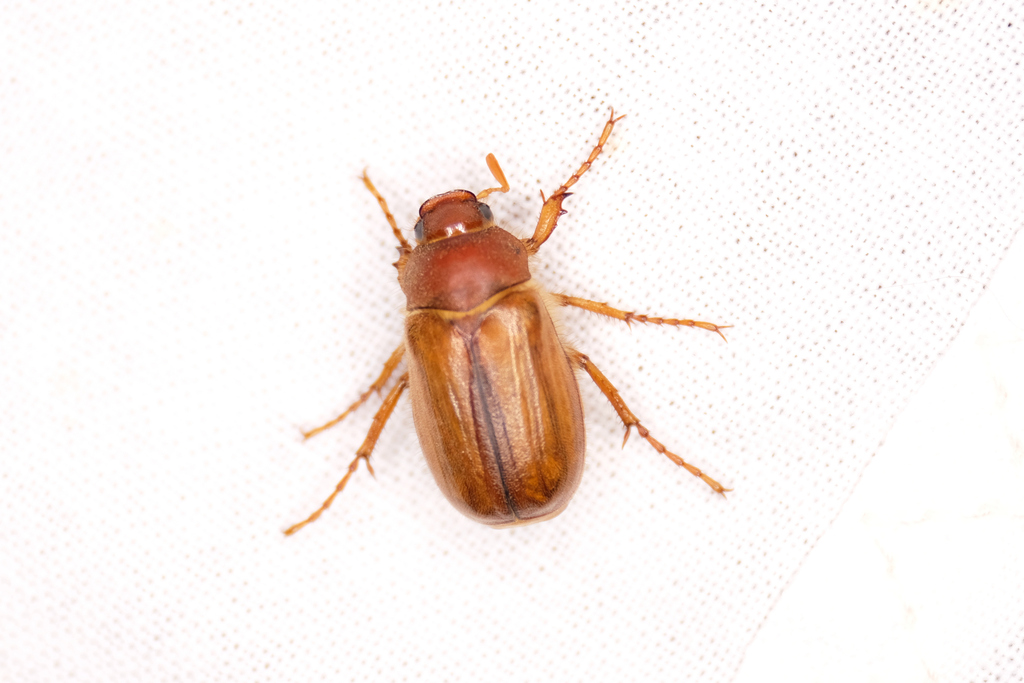
They have a one-year life cycle; adults emerge in late spring, mate for 1 to 2 weeks, and the larvae feed on the roots of cool-latitude grasses, damaging lawns.
Source: Wikipedia
How to recognize it
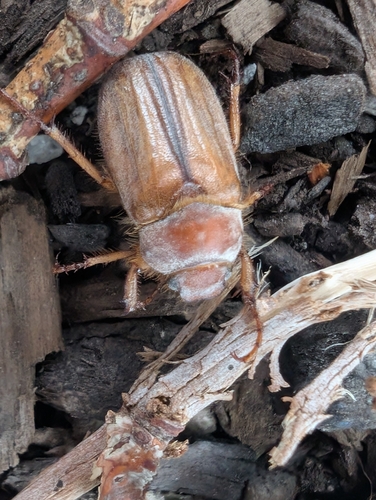
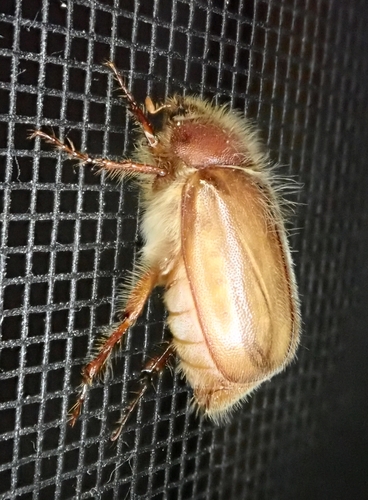
Adults are medium-sized, light reddish-brown beetles about 13 to 14 mm long.
Source: Wikipedia
Size
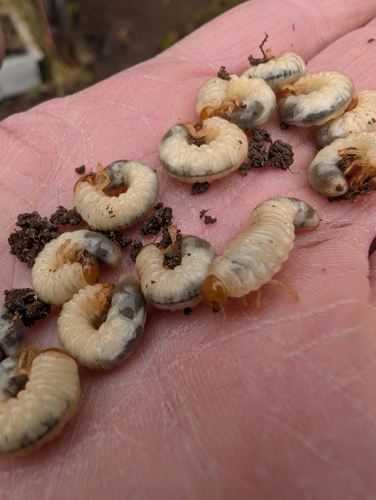
Fully grown larvae measure 20 to 23 mm in length.
Source: Wikipedia
Is it a pest in the house?
The grubs damage residential lawns by feeding on grass roots. Grubs are attractive to crows, skunks and raccoons, which can increase lawn damage.
Source: Wikipedia
What it eats
Larvae consume the roots of cool-latitude grasses.
Source: Wikipedia
Life cycle
The European chafer completes its development in one year. The adult (imago) stage lasts only 1 to 2 weeks.
Source: Wikipedia
When you see it
Adults emerge from the soil in late spring and form large swarms on low trees and shrubs.
Source: Wikipedia
Where it comes from
Originally limited to continental Europe, the species now occurs at temperate latitudes in North America.
Source: Wikipedia
Lookalikes
Pupae look similar to those of other turf-infesting scarabs such as the Japanese beetle.
Source: Wikipedia
Where it is found in the US
Recorded in 19 of 51 states and DC. Most records: Washington, New York, Minnesota, Michigan, Vermont, Massachusetts, Oregon, Illinois.
Darker = more records. Counts are museum and citizen-science records, not population size.
Source: GBIF
Status: introduced in North America; introduced in United States; introduced in Canada. Source: iNaturalist
Months it is reported in the US
Source: GBIF
More photos

Questions people ask
What damage do European chafer grubs cause?
The grubs feed on the roots of cool-latitude grasses, damaging lawns and attracting wildlife such as crows, skunks and raccoons.
Source: Wikipedia
Where is the European chafer now found?
It has spread from continental Europe to temperate regions of North America.
Source: Wikipedia
Same family (Scarabaeidae)
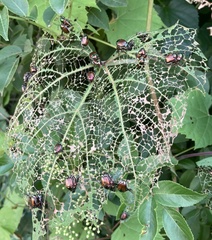 Japanese BeetlePopillia japonicaDamages trees, gardens or crops
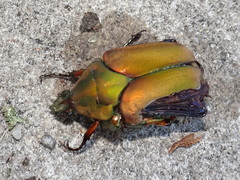 Common Green June BeetleCotinis nitidaDamages trees, gardens or crops
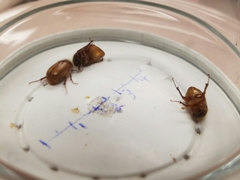 Phyllophaga crinitaDamages trees, gardens or crops
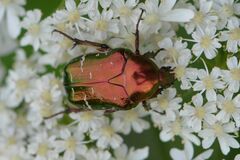 European Rose ChaferCetonia aurata
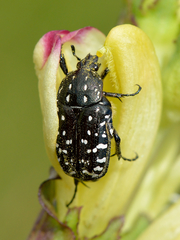 Mediterranean Spotted ChaferOxythyrea funestaDamages trees, gardens or crops
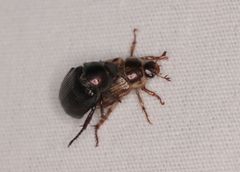 Oriental BeetleExomala orientalisDamages trees, gardens or crops
Sources
- Wikipedia: https://en.wikipedia.org/wiki/European_chafer
Look it up elsewhere: GBIF · iNaturalist · BugGuide · ITIS · Wikipedia
Text written 2026-10-25 from the sources above and checked sentence by sentence against them. Data fetched 2026-10-25.