 Bug FAQ
Eurasian Leaflitter Crab Spider
Ozyptila praticola · Order: Araneae · Family: Thomisidae

Females grow up to about 4 mm and males to about 3 mm, and both sexes are dark reddish-brown in color. It lives in the undergrowth, under bark and on lower tree branches across Europe and the Middle East, and adults can be seen most of the year.
Source: Wikipedia
How to recognize it
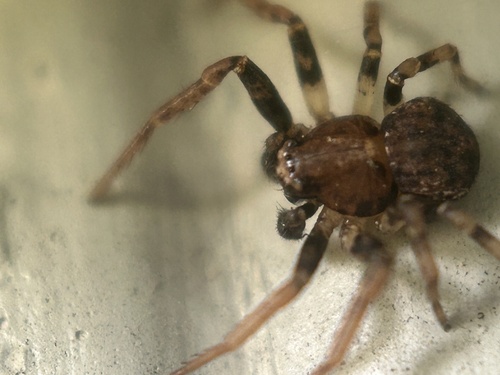
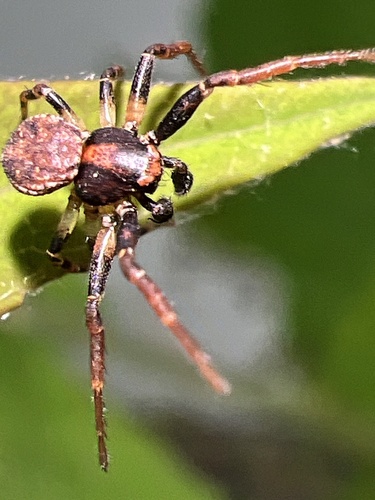
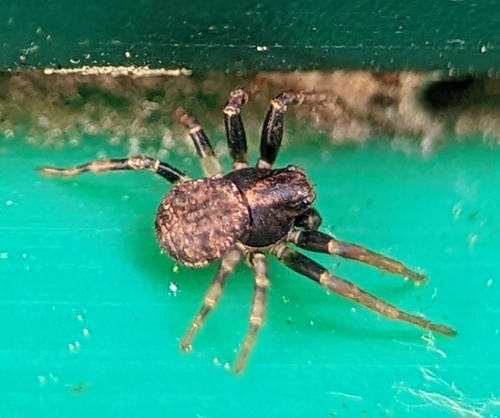
Both males and females have a dark reddish-brown body.
Source: Wikipedia
Size
Females can reach up to 4 mm in length, while males grow up to 3 mm.
Source: Wikipedia
Where it lives
It hunts mainly in the undergrowth but is also found under bark and on lower tree branches.
Source: Wikipedia
When you see it
Adults can be found during most of the year.
Source: Wikipedia
Where it comes from
The species occurs throughout Europe and the Middle East.
Source: Wikipedia
Where it is found in the US
Recorded in 10 of 51 states and DC. Most records: Washington, Massachusetts, Michigan, New York, Illinois, Wisconsin, Ohio, Indiana.
Darker = more records. Counts are museum and citizen-science records, not population size.
Source: GBIF
Status: introduced in Canada; introduced in United States. Source: iNaturalist
Months it is reported in the US
Source: GBIF
More photos

Questions people ask
Same family (Thomisidae)


Sources
- Wikipedia: https://en.wikipedia.org/wiki/Ozyptila_praticola
Look it up elsewhere: GBIF · iNaturalist · BugGuide · ITIS · Wikipedia
Text written 2026-10-28 from the sources above and checked sentence by sentence against them. Data fetched 2026-10-28.