 Bug FAQ
Eurasian Bee Beetle
Trichius fasciatus · Order: Coleoptera · Family: Scarabaeidae
Also called: Bee Beetle, European Bee Beetle
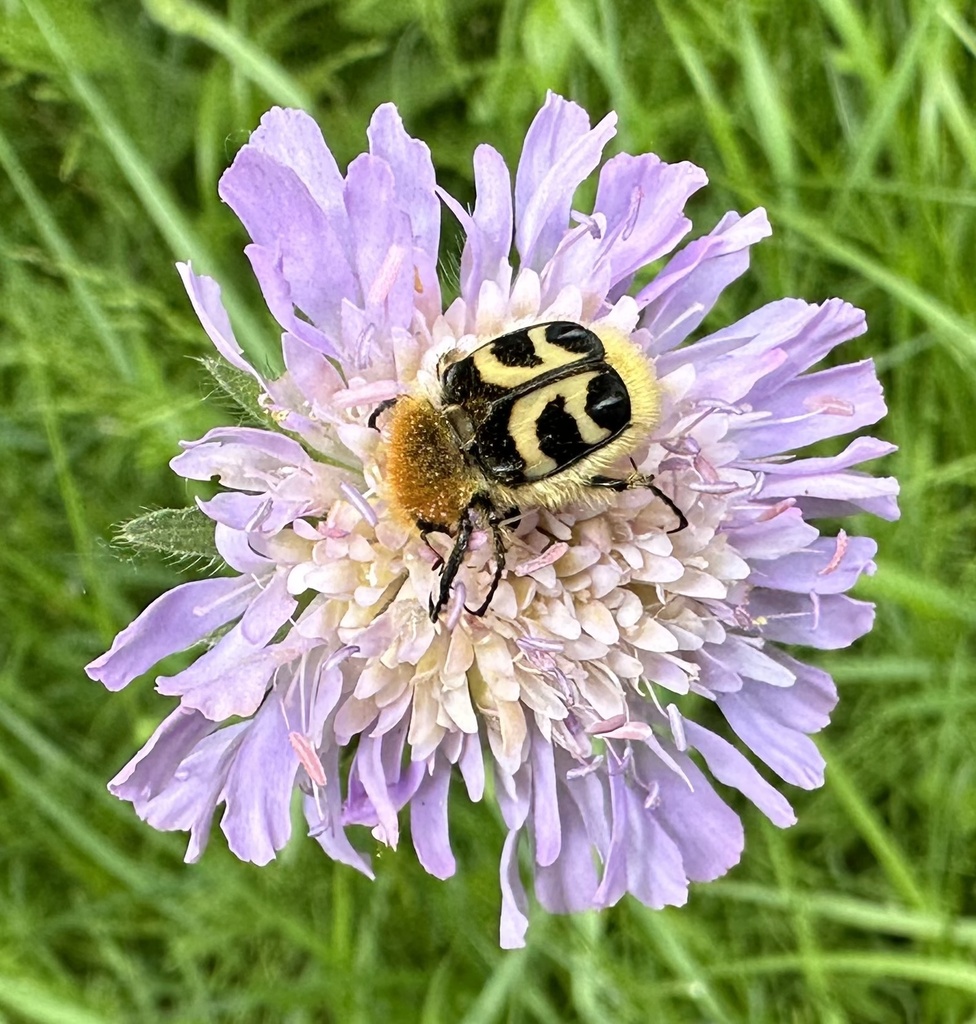
The Eurasian bee beetle is a small beetle about 9 to 12 mm long, with a black head and pronotum and yellow-orange elytra crossed by a few black bands. Adults are seen on flowers in forest clearings and meadow edges from May to July, feeding on pollen, while the larvae live in dead wood of deciduous trees.
Source: Wikipedia
How to recognize it
The head and pronotum are black; the wing covers are yellow to deep orange with a few black bands, the first band reaching the scutellum. The sides of the chest and the abdomen’s back are covered with yellow-orange or white fine hairs.
Source: Wikipedia
Size
Adults measure between 9 and 12 mm in length.
Source: Wikipedia
Where it lives
They are common in forest clearings of mountainous areas and on flowers at forest edges and meadows.
Source: Wikipedia
What it eats
Adults feed on pollen of various flowering plants from May through July. Larvae develop in dead wood and other organic material of deciduous trees.
Source: Wikipedia
Life cycle
Adults are present from May to July, feeding on pollen, while larvae live in dead wood of deciduous trees.
Source: Wikipedia
When you see it
Adults can be seen from May through July.
Source: Wikipedia
Where it comes from
The species occurs throughout most of Europe and into the eastern Palearctic region.
Source: Wikipedia
Same family (Scarabaeidae)
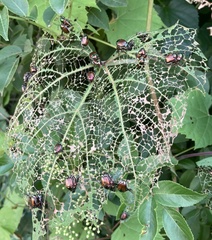 Japanese BeetlePopillia japonicaDamages trees, gardens or crops
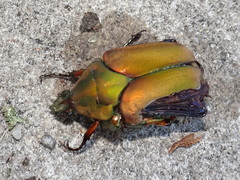 Common Green June BeetleCotinis nitidaDamages trees, gardens or crops
 Phyllophaga crinitaPhyllophaga crinitaDamages trees, gardens or crops
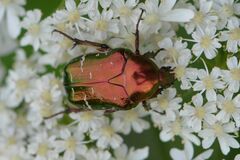 European Rose ChaferCetonia aurata
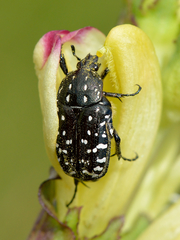 Mediterranean Spotted ChaferOxythyrea funestaDamages trees, gardens or crops
 Oriental BeetleExomala orientalisDamages trees, gardens or crops
Sources
- Wikipedia: https://en.wikipedia.org/wiki/Trichius_fasciatus
Look it up elsewhere: GBIF · iNaturalist · BugGuide · Wikipedia
Text written 2026-10-22 from the sources above and checked sentence by sentence against them. Data fetched 2026-10-22.