 Bug FAQ
Eurasian Armoured Long-jawed Spider
Metellina segmentata · Order: Araneae · Family: Tetragnathidae
Also called: Autumn Spider, Eurasian Armored Long-jawed Spider, Lesser Garden Spider
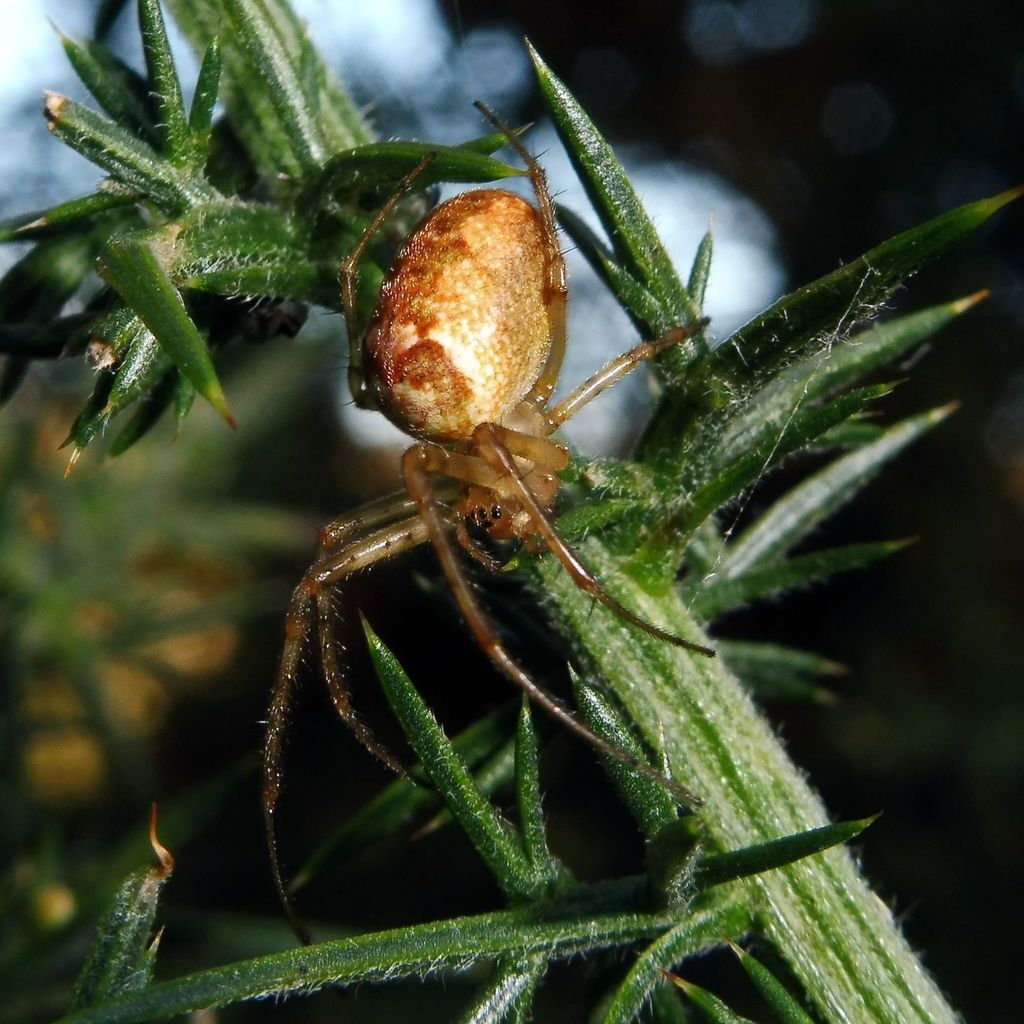
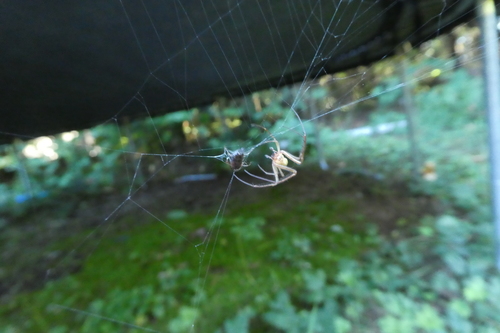
The Eurasian armoured long-jawed spider has a colorful abdomen with yellow, red and orange markings and a black fork-like spot on the carapace, and females show a black strip on the underside of the epigyne. They live in low, bushy areas or among dense branches, with larger spiders preferring well-lit, breezy spots and smaller ones found in window corners and bushes.
Source: Wikipedia
How to recognize it
The abdomen shows yellow, red and orange colors with a black fork-like mark on the carapace. Female undersides have a black strip reaching the end of the epigyne.
Source: Wikipedia
Can it bite, sting or make you sick?
No human bites have been recorded, and their venom is not poisonous to people.
Source: Wikipedia
Where it lives
They prefer low, bushy spots but can also live among dense branches and leaves for extra protection. Larger individuals tend to occupy well-lit, breezy spots between branches, whereas smaller ones are found in lower-quality areas like window corners and bushes.
Source: Wikipedia
What it eats
They catch insects such as flies and moths in their webs, wrap them and usually eat the prey immediately.
Source: Wikipedia
Life cycle
After hatching, spiderlings undergo five to ten molts before reaching maturity. Adults live for one to two years.
Source: Wikipedia
When you see it
Adults are most commonly seen from August through October.
Source: Wikipedia
Where it comes from
They are native to Europe, especially abundant in the United Kingdom.
Source: Wikipedia
Lookalikes
They look very similar to Metallina mengei; reliable identification requires examining the genitalia.
Source: Wikipedia
Where it is found in the US
Recorded in 3 of 51 states and DC. Most records: Washington, Oregon, California.
Darker = more records. Counts are museum and citizen-science records, not population size.
Source: GBIF
Status: introduced in Canada; introduced in United States. Source: iNaturalist
Months it is reported in the US
Source: GBIF
More photos
Questions people ask
What do these spiders look like?
They have a yellow, red and orange abdomen with a black fork-like mark on the carapace, and females show a black strip on the underside of the epigyne.
Source: Wikipedia
How big are they?
Males measure about 4 to 6 mm and females about 4 to 8 mm in length.
Source: Wikipedia
Where are they found?
They are native to Europe, especially the United Kingdom, and have also been introduced to Canada.
Source: Wikipedia
Do they bite humans?
No human bites have been recorded, and their venom is not poisonous to people.
Source: Wikipedia
Same family (Tetragnathidae)


Sources
- Wikipedia: https://en.wikipedia.org/wiki/Metellina_segmentata
Look it up elsewhere: GBIF · iNaturalist · BugGuide · ITIS · Wikipedia
Text written 2026-10-26 from the sources above and checked sentence by sentence against them. Data fetched 2026-10-26.