 Bug FAQ
Euphorb Mini-Fairy Bee
Perdita minima · Order: Hymenoptera · Family: Andrenidae
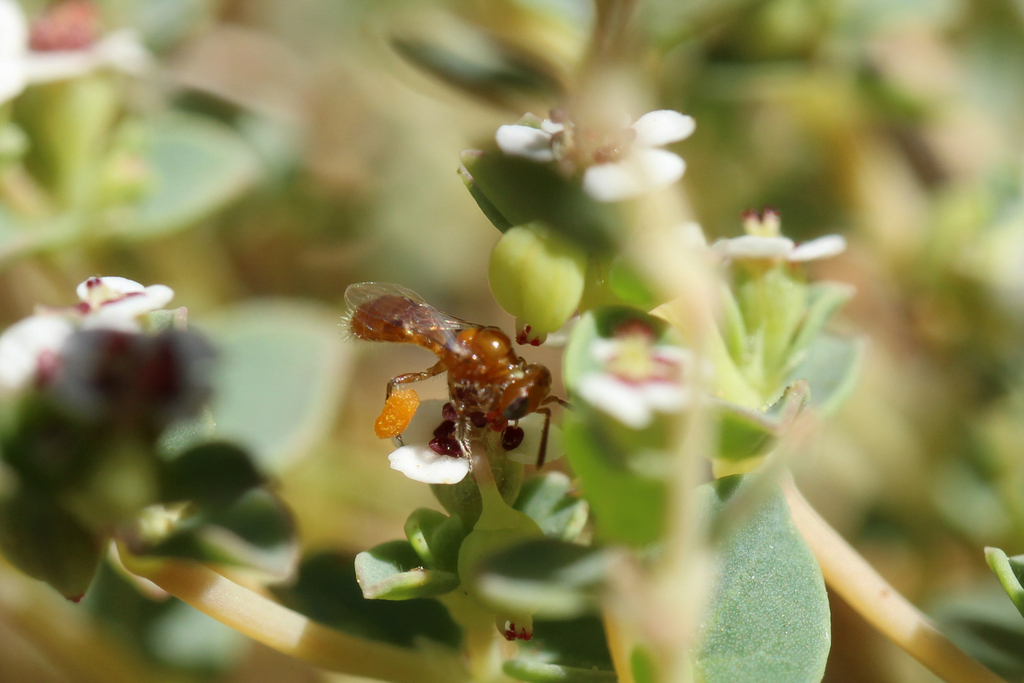
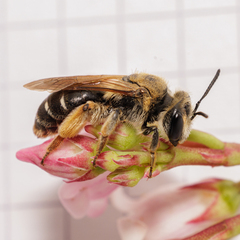
The Euphorb Mini-Fairy Bee is the tiniest known bee, measuring just under 2 mm and weighing about 0.33 mg. It is a mining bee in the Andrenidae family that nests in sandy soil and visits a range of plants, such as spurges, for food and pollination.
Source: Wikipedia
How to recognize it
It belongs to the mining bee group Perdita minima in the family Andrenidae.
Source: Wikipedia
Size
Adults are just under 2 mm long and weigh about 0.33 mg, making it the smallest known bee species.
Source: Wikipedia
Where it lives
It builds its nests in sandy soils.
Source: Wikipedia
What it eats
It feeds on a variety of plants, including spurges, and helps pollinate them.
Source: Wikipedia
Where it is found in the US
Recorded in 7 of 51 states and DC. Most records: Arizona, California, New Mexico, Nevada, Texas, Utah, Colorado.
Darker = more records. Counts are museum and citizen-science records, not population size.
Source: GBIF
Status: native in North America; native in United States. Source: iNaturalist
Months it is reported in the US
Source: GBIF
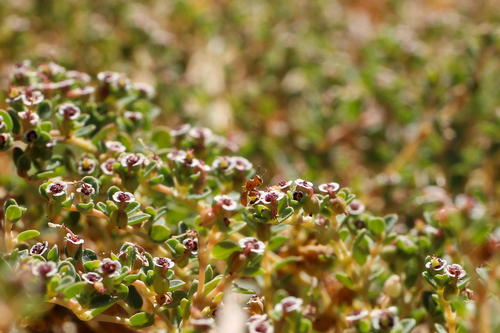
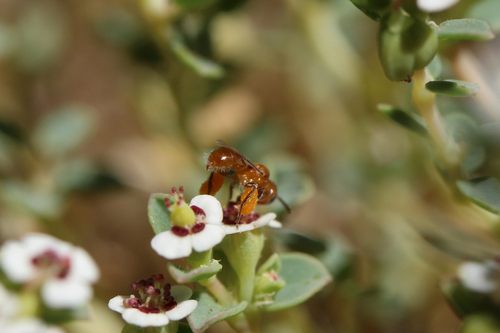
More photos
Questions people ask
How big is the Euphorb Mini-Fairy Bee?
It is just under 2 mm long and weighs about 0.33 mg.
Source: Wikipedia
What plants does it visit?
It feeds on and pollinates various plants, including spurges.
Source: Wikipedia
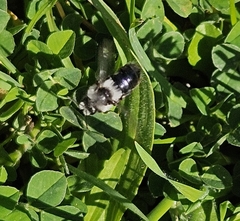
Same family (Andrenidae)



Sources
- Wikipedia: https://en.wikipedia.org/wiki/Perdita_minima
Look it up elsewhere: GBIF · iNaturalist · BugGuide · ITIS · Wikipedia
Text written 2026-10-24 from the sources above and checked sentence by sentence against them. Data fetched 2026-10-24.