 Bug FAQ
Ashy Mining Bee
Andrena cineraria · Order: Hymenoptera · Family: Andrenidae
Also called: Grey Mining Bee
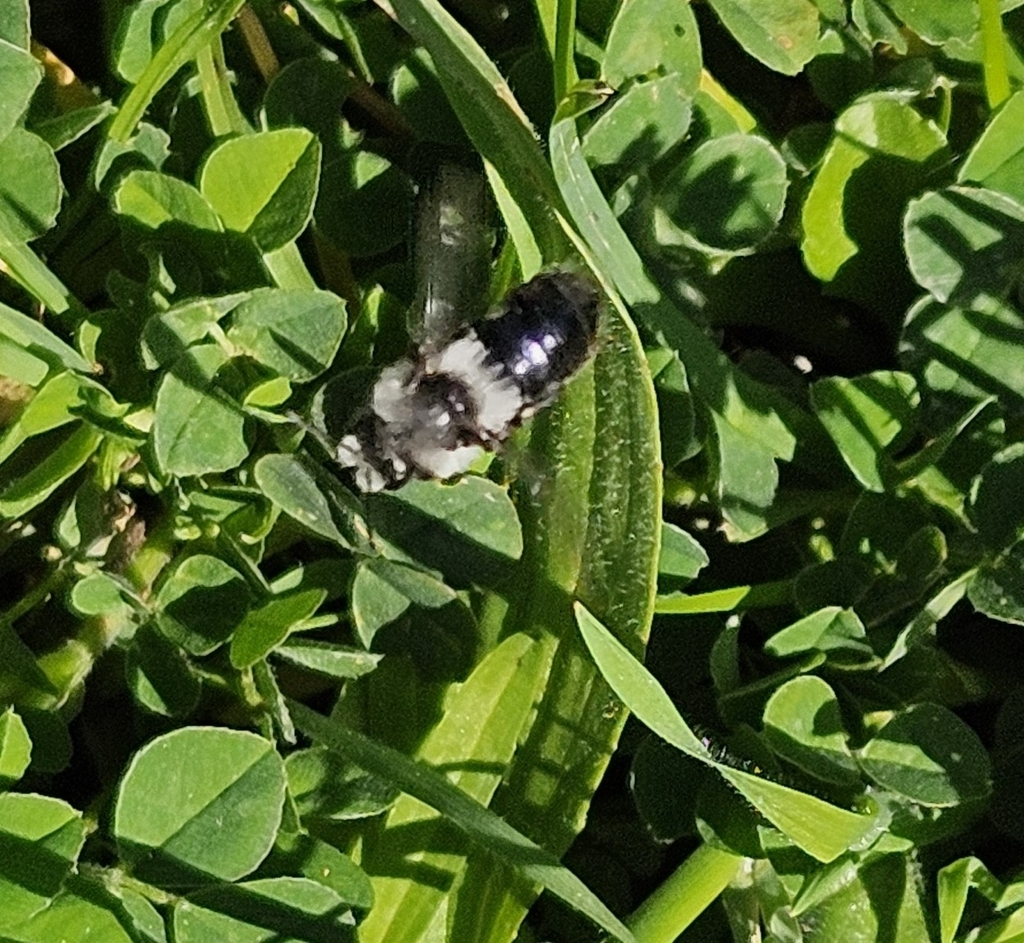
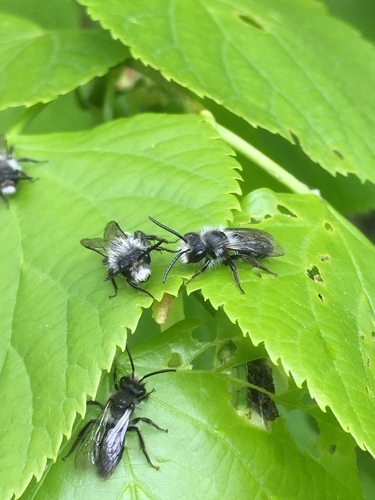
Ashy mining bees are solitary, black bees with distinctive grey and white hair patterns. They nest in lawns and flowerbeds, are common across Europe, and pollinate many garden plants from April to early June.
Source: Wikipedia
Does it bite or sting?
They are docile and their stingers are too short to penetrate human skin, so they are safe around children and pets.
Source: Wikipedia
Life cycle
Each female builds her own simple burrow nest with several brood cells branching off, making the species solitary.
Source: Wikipedia
When you see it
Adults fly from April until early June, especially during fruit-tree flowering.
Source: Wikipedia
Where it comes from
The species is common and widespread throughout Europe, from Ireland across central Europe into Scandinavia.
Source: Wikipedia
Lookalikes
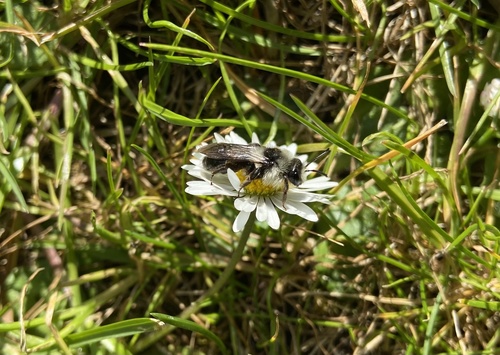
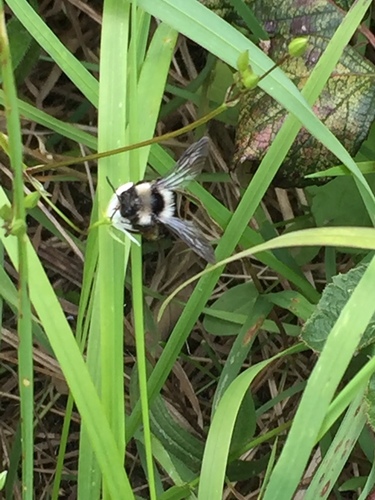
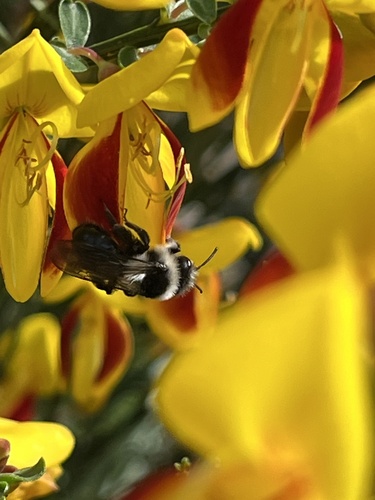
Their distinctive black, grey and white coloration makes them easy to recognize among other Andrena bees.
Source: Wikipedia
More photos
Questions people ask
Are ashy mining bees dangerous to humans or pets?
No, they are docile and their stingers cannot pierce human skin.
Source: Wikipedia
When are ashy mining bees active?
They are on the wing from April through early June, especially when fruit trees are in bloom.
Source: Wikipedia
Where do ashy mining bees build their nests?
They nest in lawns, flowerbeds, parkland, calcareous grassland, orchards and at the edges of farmland.
Source: Wikipedia
Same family (Andrenidae)

Sources
- Wikipedia: https://en.wikipedia.org/wiki/Ashy_mining_bee
Look it up elsewhere: GBIF · iNaturalist · BugGuide · ITIS · Wikipedia
Text written 2026-10-22 from the sources above and checked sentence by sentence against them. Data fetched 2026-10-22.