 Bug FAQ
Tawny Mining Bee
Andrena fulva · Order: Hymenoptera · Family: Andrenidae
Also called: mining bee

The tawny mining bee is a European solitary bee that flies from March to May and nests in vertical shafts about 8 to 12 inches deep. Females are 8 to 10 mm long, covered in reddish-brown hair on the back and black hair underneath, while males are 10 to 12 mm and have golden-brown hairs with white facial hairs and a tooth on each mandible. It lives in short vegetation of light woodlands, dry grasslands, parks and gardens across lowland England, Wales and parts of southern Scotland.
Source: Wikipedia
How to recognize it
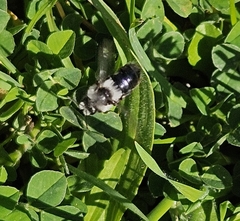
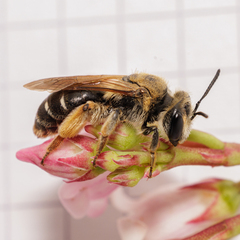
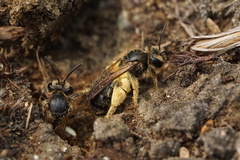
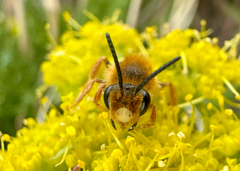
Females have fox-red hair on the dorsal thorax and abdomen and black hair on the head and ventral side. Males have golden-brown or reddish-brown hairs, some long white facial hairs, and a tooth on each mandible.
Source: Wikipedia
Size
Nests are vertical shafts 200 to 300 mm (8 to 12 in) deep.
Source: Wikipedia
Where it lives
Found among short vegetation in light woodlands, dry grasslands, parks and gardens. Present in lowland England, Wales and a few sites in southern Scotland.
Source: Wikipedia
What it eats
Adults visit a variety of nectar-producing and pollen-bearing plants.
Source: Wikipedia
Life cycle
Mating occurs in spring; males die after mating and females begin nest construction. Eggs hatch within days, larvae grow quickly, pupate in weeks, and adults emerge in spring after hibernation.
Source: Wikipedia
When you see it
Adults are active from March through May. They emerge in spring after hibernation.
Source: Wikipedia
Where it comes from
It is a European species occurring from the Balkans to southern Scandinavia, including the United Kingdom and Ireland.
Source: Wikipedia
More photos

Same family (Andrenidae)
Sources
- Wikipedia: https://en.wikipedia.org/wiki/Tawny_mining_bee
Look it up elsewhere: GBIF · iNaturalist · BugGuide · ITIS · Wikipedia
Text written 2026-10-22 from the sources above and checked sentence by sentence against them. Data fetched 2026-10-22.