 Bug FAQ
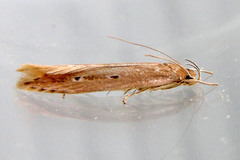
Eralea albalineella
Eralea albalineella · Order: Lepidoptera · Family: Cosmopterigidae
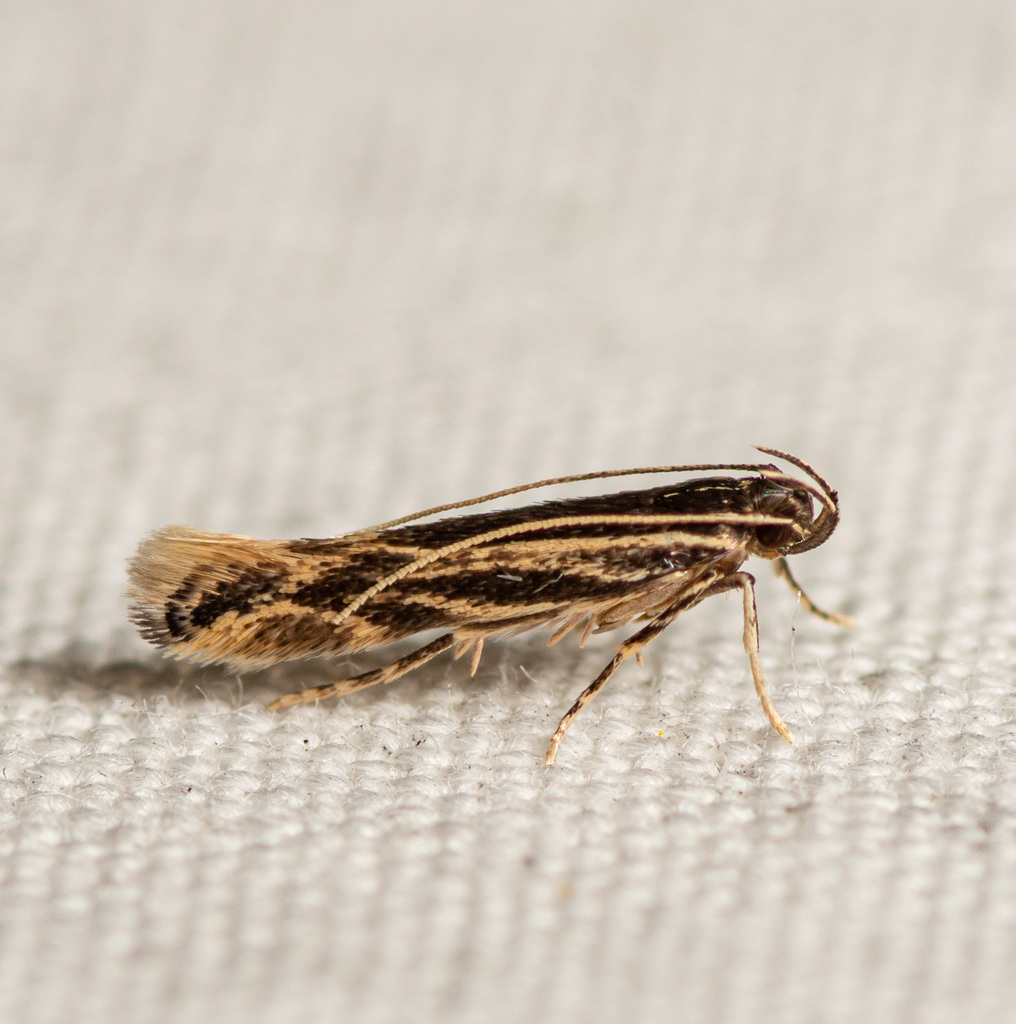
The moth Eralea albalineella has a wingspan of about 7 mm. It occurs in North America, with records from West Virginia, South Carolina, Louisiana, Florida, Texas and California. Adults are on the wing from April through July and again in September and November.
Source: Wikipedia
How to recognize it
Eralea albalineella belongs to the moth family Cosmopterigidae.
Source: Wikipedia
Size
Its wingspan measures roughly 7 mm.
Source: Wikipedia
Where it lives
It has been recorded in several U.S. states across the continent, including West Virginia, South Carolina, Louisiana, Florida, Texas and California.
Source: Wikipedia
When you see it
Adults fly from April to July and also in September and November.
Source: Wikipedia
Where it comes from
The species is native to North America, with documented occurrences in the same states listed for its habitat.
Source: Wikipedia
Where it is found in the US
Recorded in 12 of 51 states and DC. Most records: Texas, California, Florida, North Carolina, Colorado, Tennessee, Georgia, Louisiana.
Darker = more records. Counts are museum and citizen-science records, not population size.
Source: GBIF
Months it is reported in the US
Source: GBIF
More photos

Questions people ask
Where can I find Eralea albalineella?
They have been found in North America, specifically in West Virginia, South Carolina, Louisiana, Florida, Texas and California.
Source: Wikipedia
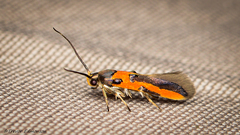
Same family (Cosmopterigidae)


Sources
- Wikipedia: https://en.wikipedia.org/wiki/Eralea_albalineella
Look it up elsewhere: GBIF · iNaturalist · BugGuide · Wikipedia
Text written 2026-10-29 from the sources above and checked sentence by sentence against them. Data fetched 2026-10-29.