 Bug FAQ
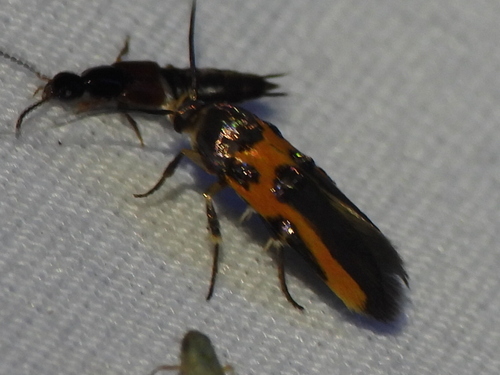
Kermes Scale Moth
Euclemensia bassettella · Order: Lepidoptera · Family: Cosmopterigidae
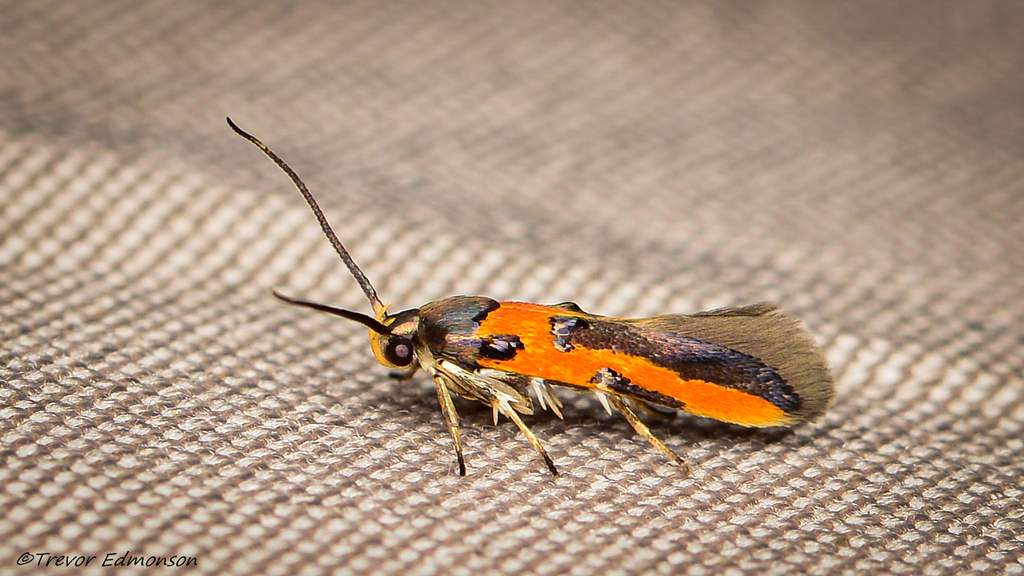
The Kermes Scale Moth is a tiny moth with a wingspan of about 9 to 14 mm (0.35 to 0.55 in). It lives on or near oak trees that host scale insects, and its larvae parasitize several scale-insect genera. Adults are seen from February and then from April through October across parts of the United States and Canada, from New Hampshire and southern Ontario down to Florida and eastern Texas.
Source: Wikipedia
Size
Wingspan ranges from 9 to 14 mm (0.35 to 0.55 in).
Source: Wikipedia
Where it lives
Found on or near oak trees that are infected with scale insects.
Source: Wikipedia
What it eats
Larvae parasitize scale insects of the genus Allokermes and possibly Eriokermes, Nanokermes and Kermes.
Source: Wikipedia
Where it comes from
Occurs in North America, including New Hampshire, southern Ontario, Illinois, Florida and eastern Texas.
Source: Wikipedia
Where it is found in the US
Recorded in 35 of 51 states and DC. Most records: Texas, Florida, Louisiana, Oklahoma, Mississippi, Alabama, North Carolina, Maryland.
Darker = more records. Counts are museum and citizen-science records, not population size.
Source: GBIF
Status: native in North America; native in Canada. Source: iNaturalist
Months it is reported in the US
Source: GBIF
More photos
Sources
- Wikipedia: https://en.wikipedia.org/wiki/Euclemensia_bassettella
Look it up elsewhere: GBIF · iNaturalist · BugGuide · Wikipedia
Text written 2026-10-23 from the sources above and checked sentence by sentence against them. Data fetched 2026-10-23.