 Bug FAQ
Shy Cosmet Moth
Limnaecia phragmitella · Order: Lepidoptera · Family: Cosmopterigidae
Also called: Bulrush Cosmet
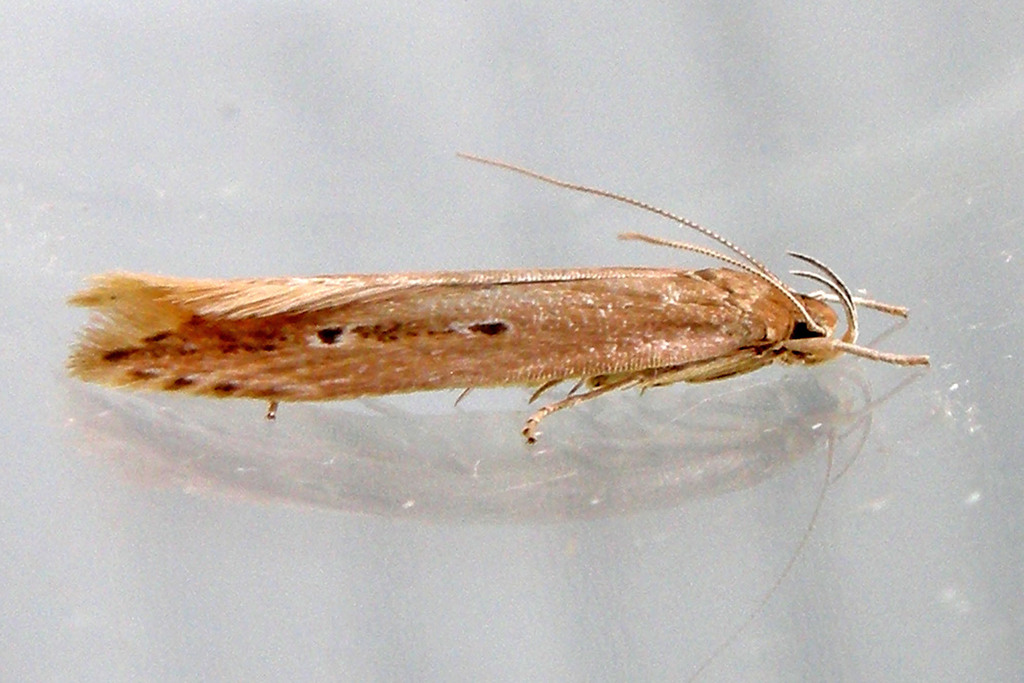
The shy cosmet moth measures about 15 to 22 mm in length. It lives in fens and marshes across Europe, Asia, Australia, New Zealand and much of North America.
Source: Wikipedia
How to recognize it
The head is ochre, the antennae are yellow-white with brown rings and a nearly white tip. Forewings are ochre with a pale yellow leading edge, a faint grey-brown line along the anal fold, and a small elongated white spot near the line’s end.
Source: Wikipedia
Where it lives
It prefers fen and marsh habitats.
Source: Wikipedia
Where it comes from
It occurs throughout Europe, as well as in Asia, Australia and New Zealand.
Source: Wikipedia
Where it is found in the US
Recorded in 42 of 51 states and DC. Most records: Michigan, Minnesota, New York, Massachusetts, Maryland, Pennsylvania, Vermont, Ohio.
Darker = more records. Counts are museum and citizen-science records, not population size.
Source: GBIF
Status: native in North America; native in United States; native in Canada. Source: iNaturalist
Months it is reported in the US
Source: GBIF
More photos
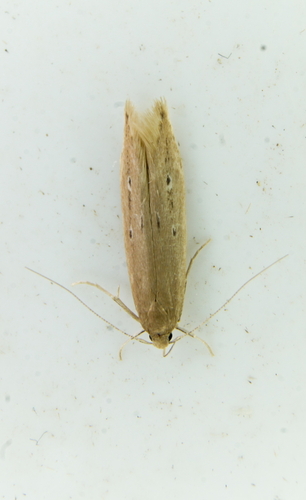
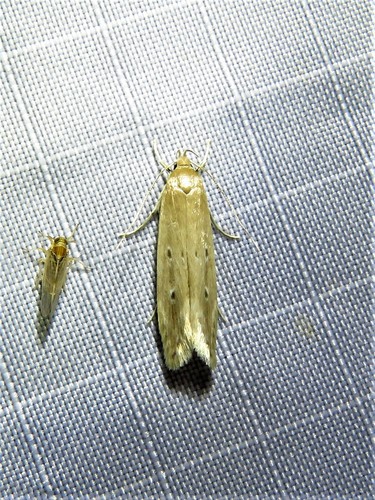
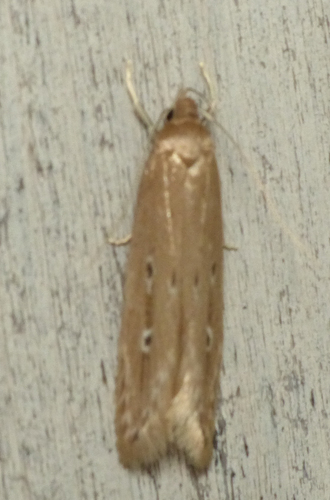
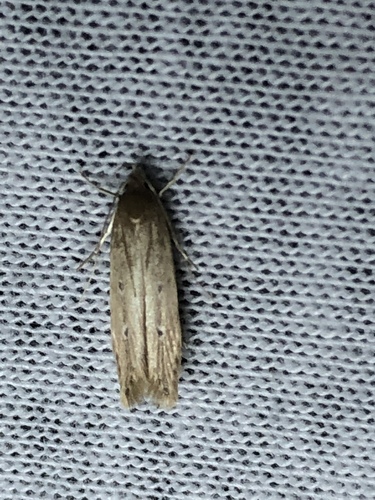
Same family (Cosmopterigidae)
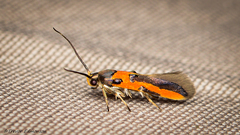
Sources
- Wikipedia: https://en.wikipedia.org/wiki/Limnaecia_phragmitella
Look it up elsewhere: GBIF · iNaturalist · BugGuide · ITIS · Wikipedia
Text written 2026-10-24 from the sources above and checked sentence by sentence against them. Data fetched 2026-10-24.