 Bug FAQ
Elongated Bean Weevil
Lixus pulverulentus · Order: Coleoptera · Family: Curculionidae
Source: Wikipedia
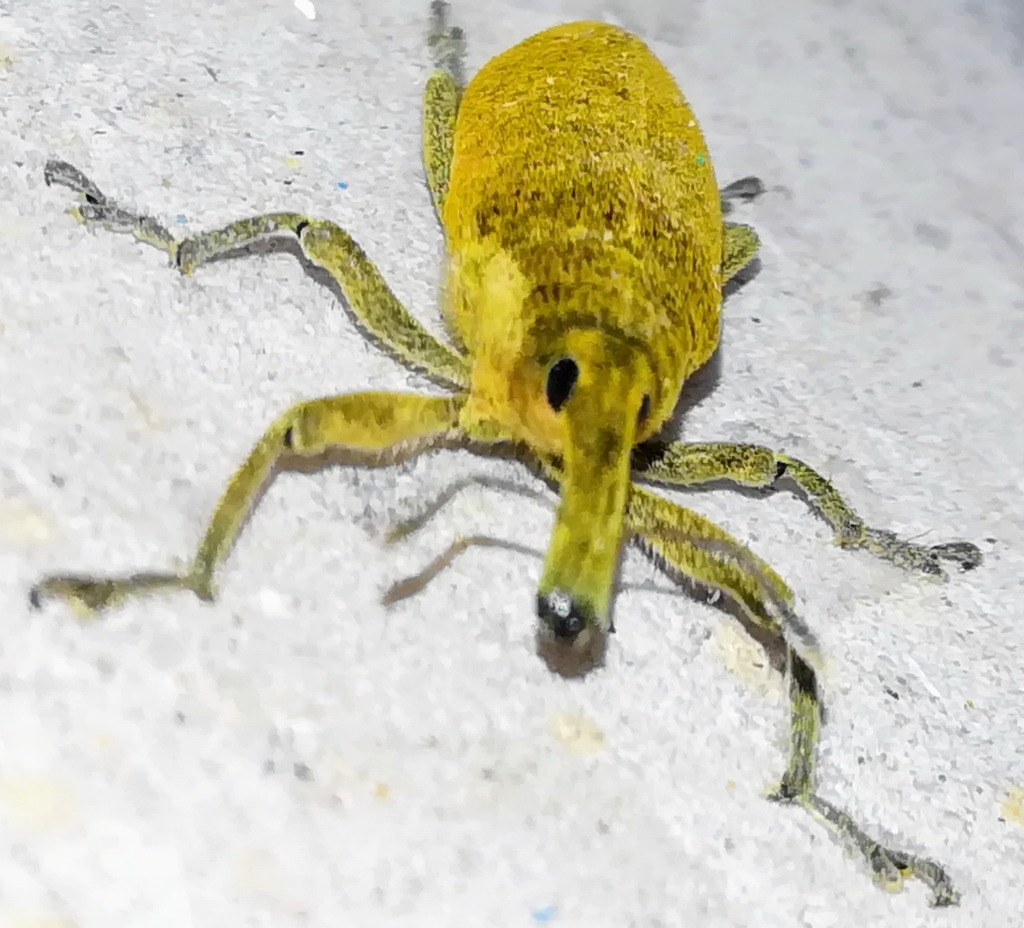
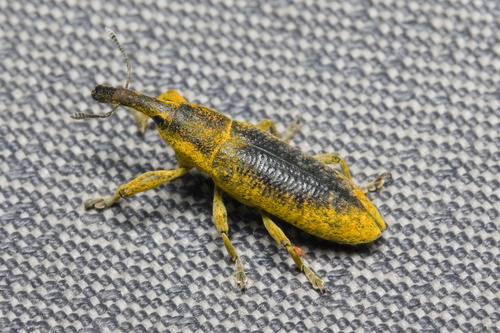
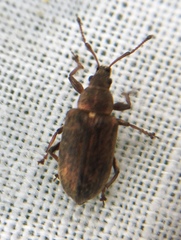
These weevils have a narrow, elongated body that is dusted yellow-brown and a smooth, conical pronotum. Adults are about 10.5 to 17.5 mm long and appear from April through June.
Source: Wikipedia
How to recognize it
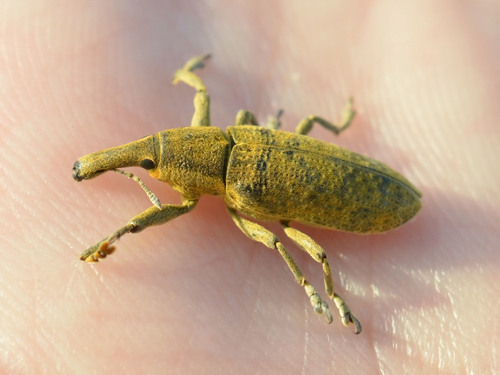
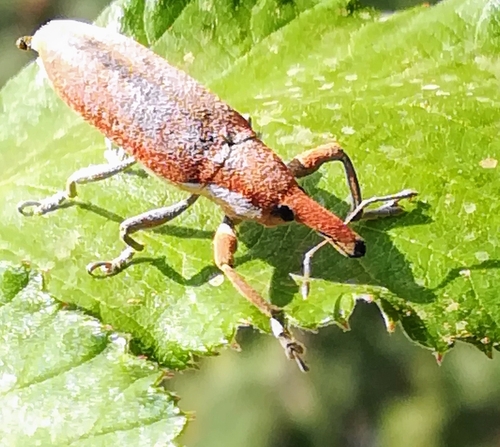
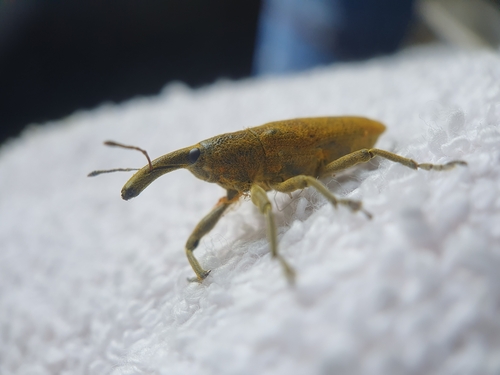
They are long and narrow with a dust-colored (yellowish-brown) surface. The pronotum is cone-shaped and not noticeably granular.
Source: Wikipedia
Size
Adults measure roughly 10.5 to 17.5 mm in length.
Source: Wikipedia
What it eats
Larvae develop inside stems of plants in the mallow, aster and legume families.
Source: Wikipedia
Life cycle
Pupation occurs inside the same stems where the larvae feed.
Source: Wikipedia
When you see it
Adults emerge in April and are most commonly seen in May and June.
Source: Wikipedia
More photos
Questions people ask
What plants do elongated bean weevils damage?
Their larvae feed inside stems of mallow, aster and legume plants, harming those crops.
Source: Wikipedia
When can I expect to see these weevils?
Adults appear in April and are most abundant during May and June.
Source: Wikipedia
How big are adult elongated bean weevils?
They range from about 10.5 to 17.5 mm long.
Source: Wikipedia
How can I recognize an elongated bean weevil?
Look for a narrow, elongated, yellow-brown body with a smooth, cone-shaped pronotum.
Source: Wikipedia
Same family (Curculionidae)
 Green Immigrant Leaf WeevilPolydrusus formosusDamages trees, gardens or crops
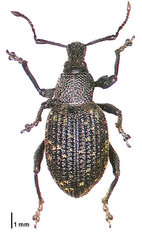 Black Vine WeevilOtiorhynchus sulcatusDamages trees, gardens or crops
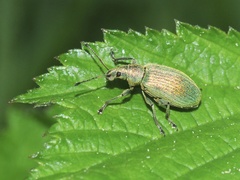 Nettle weevilPhyllobius pomaceusDamages trees, gardens or crops
 Asian Oak WeevilCyrtepistomus castaneusDamages trees, gardens or crops
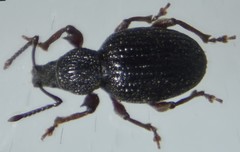 Strawberry Root WeevilOtiorhynchus ovatusDamages trees, gardens or crops
 Common Leaf WeevilPhyllobius pyriDamages trees, gardens or crops
Sources
- Wikipedia: https://en.wikipedia.org/wiki/Lixus_pulverulentus
Look it up elsewhere: GBIF · iNaturalist · BugGuide · Wikipedia
Text written 2026-10-22 from the sources above and checked sentence by sentence against them. Data fetched 2026-10-22.