 Bug FAQ
Elm Zigzag Sawfly
Aproceros leucopoda · Order: Hymenoptera · Family: Argidae
Also called: Zig-zag Elm Sawfly, Zig-zag Sawfly
Source: Wikipedia
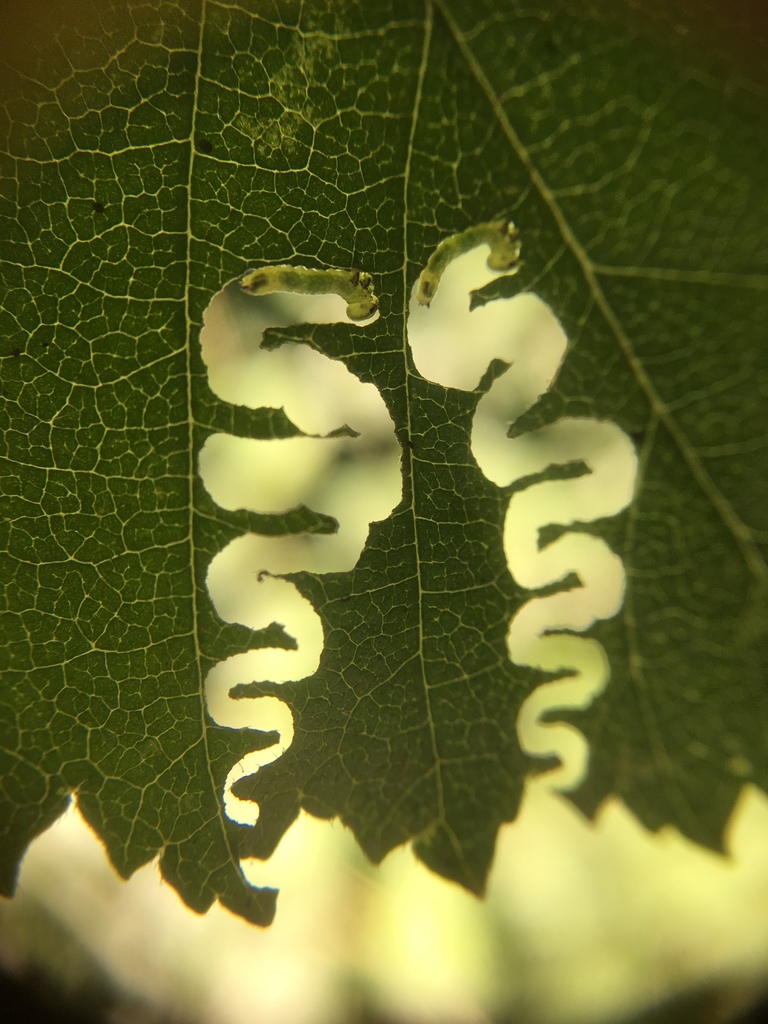
Adult elm zigzag sawflies are small black insects 6 to 10 mm long with pale legs. The green larvae feed on elm leaves, making a distinctive zig-zag cut, and can strip a tree of foliage.
Source: Wikipedia
How to recognize it
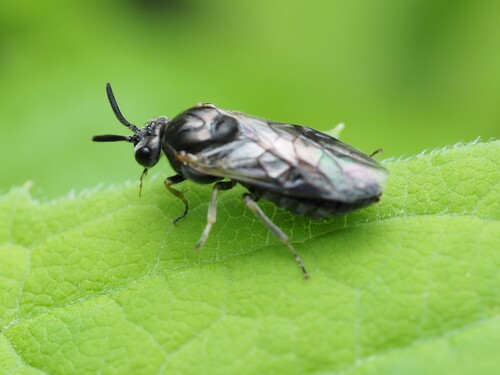
Adults are small, black, and have pale legs. Larvae are green, starting about 4 mm and growing to 10 mm.
Source: Wikipedia
Size
Adults measure 6 to 10 mm in length. Pupae are about 8 mm long and green.
Source: Wikipedia
Where it lives
Heavy elm defoliation can weaken trees and lead to their death. The insect overwinters as a pupa in leaf litter and emerges in spring.
Source: Wikipedia
What it eats
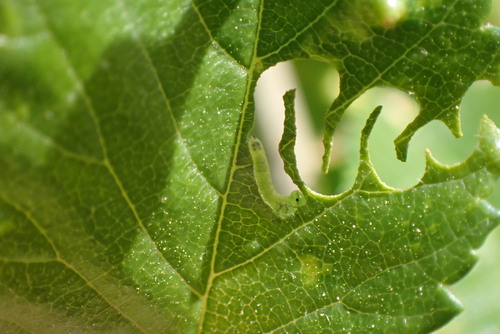
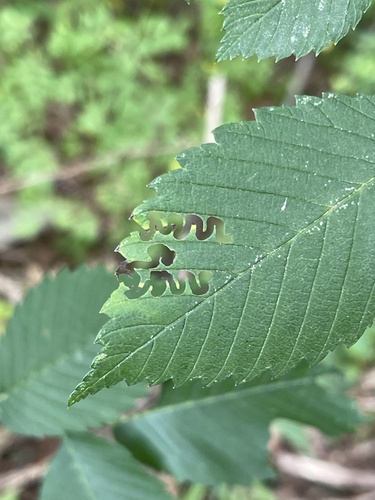
Larvae feed on the leaves of elm (Ulmus) trees. Early feeding creates a zig-zag cut in the leaf surface.
Source: Wikipedia
Life cycle
Larvae grow for 2 to 3 weeks, then spin a transparent lattice cocoon on the leaf underside to pupate. There are several generations per year; the final autumn generation makes a thicker cocoon that falls with leaves.
Source: Wikipedia
When you see it
The autumn generation’s solid cocoon drops with leaves, allowing the pupa to overwinter in leaf litter.
Source: Wikipedia
Where it comes from
It originates from eastern Asia, specifically China and Japan.
Source: Wikipedia
Lookalikes
As larvae mature through 4 to 7 instars, their feeding traces become less regular and harder to distinguish from other elm leaf feeders.
Source: Wikipedia
Where it is found in the US
Recorded in 13 of 51 states and DC. Most records: Minnesota, Massachusetts, Pennsylvania, Vermont, New York, Ohio, Wisconsin, Maryland.
Darker = more records. Counts are museum and citizen-science records, not population size.
Source: GBIF
Status: introduced in Canada; introduced in United States. Source: iNaturalist
Months it is reported in the US
Source: GBIF
More photos

Questions people ask
How can I tell if I have elm zigzag sawfly larvae?
Look for small green caterpillars on elm leaves that make a zig-zag cut as they eat.
Source: Wikipedia
How many generations does this sawfly have each year?
It produces several generations annually, with a distinct autumn generation that creates a thicker cocoon.
Source: Wikipedia
When does the sawfly overwinter?
The final generation pupates in a solid cocoon that falls with autumn leaves, and the pupa stays in leaf litter through winter.
Source: Wikipedia
What trees are damaged by this insect?
Its larvae feed on elm (Ulmus) leaves, causing severe defoliation that can kill the tree.
Source: Wikipedia
Same family (Argidae)

Sources
- Wikipedia: https://en.wikipedia.org/wiki/Aproceros_leucopoda
Look it up elsewhere: GBIF · iNaturalist · BugGuide · Wikipedia
Text written 2026-10-23 from the sources above and checked sentence by sentence against them. Data fetched 2026-10-22.