 Bug FAQ
Cibdela janthina
Cibdela janthina · Order: Hymenoptera · Family: Argidae
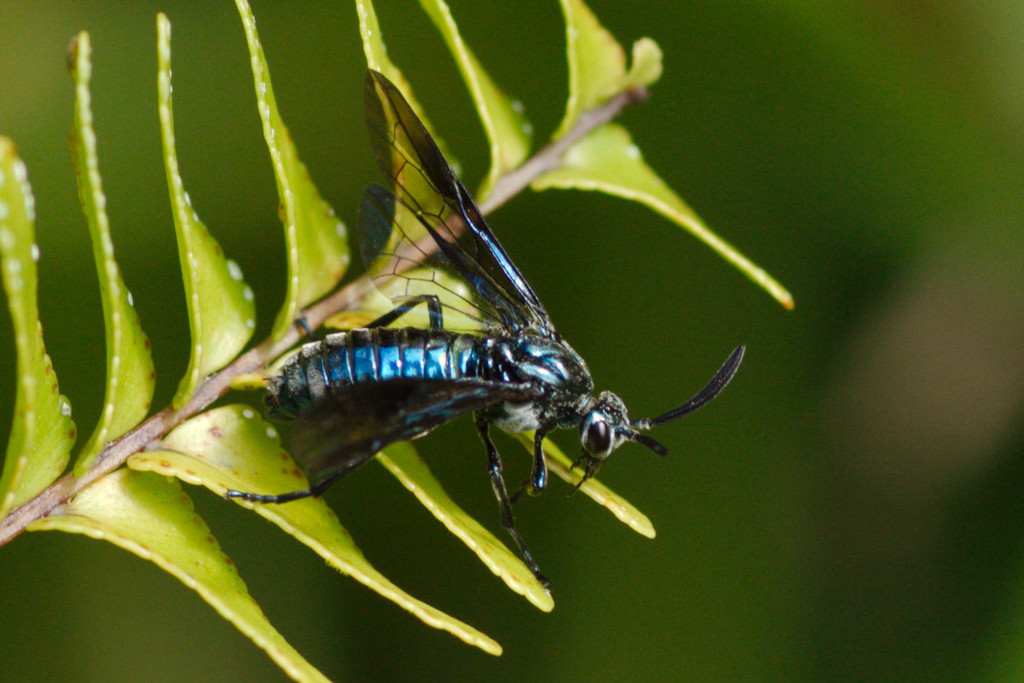
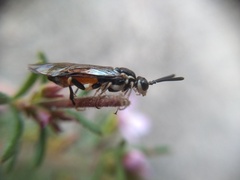
Males are about 8 mm long while females reach roughly 9.5 mm. The insect has a shiny dark-blue metallic colour. It originates from Sumatra in Southeast Asia and has been introduced to La Réunion.
Source: Wikipedia
How to recognize it
It shows a metallic dark-blue colour.
Source: Wikipedia
Size
Males are about 8 mm long; females are about 9.5 mm.
Source: Wikipedia
Where it lives
The species has been introduced to La Réunion.
Source: Wikipedia
What it eats
A known parasitoid of this species is Proterops borneoensis.
Source: Wikipedia
Where it comes from
It is native to Sumatra in Southeast Asia.
Source: Wikipedia
Questions people ask
Where does Cibdela janthina come from?
It is native to Sumatra in Southeast Asia and has been introduced to La Réunion.
Source: Wikipedia
What attacks Cibdela janthina?
A parasitoid called Proterops borneoensis attacks it.
Source: Wikipedia
Same family (Argidae)
Sources
- Wikipedia: https://en.wikipedia.org/wiki/Cibdela_janthina
Look it up elsewhere: GBIF · iNaturalist · BugGuide · Wikipedia
Text written 2026-10-23 from the sources above and checked sentence by sentence against them. Data fetched 2026-10-23.