 Bug FAQ
Elegant Grass-carrying Wasp
Isodontia elegans · Order: Hymenoptera · Family: Sphecidae
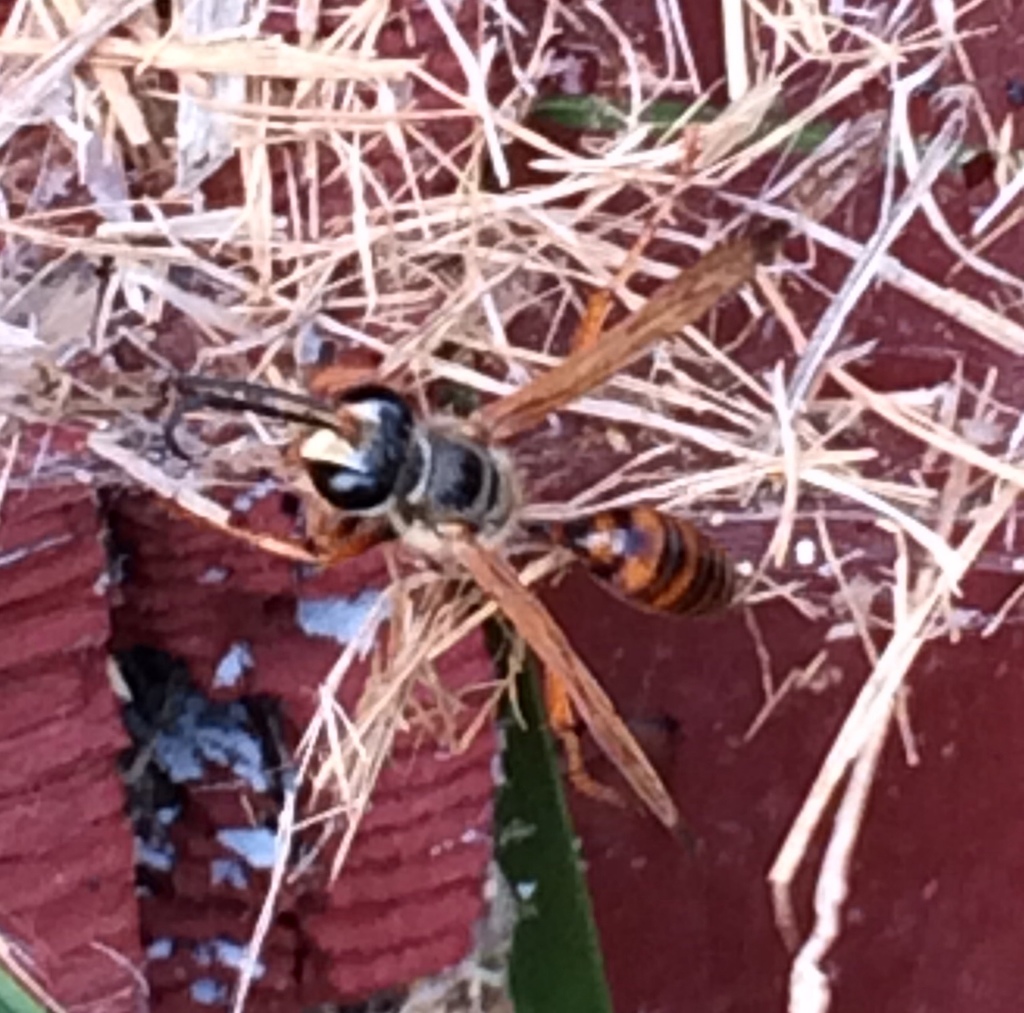
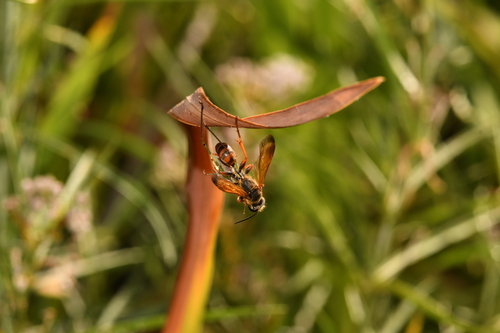
The elegant grass-carrying wasp is mostly black with a rusty-red to yellowish abdomen and translucent tinted wings. It is a solitary wasp that builds nests in existing holes and lines them with finely chewed grass fibers while hunting grasshoppers and crickets for food.
Source: Wikipedia
How to recognize it
Its body is generally black, the abdomen ranges from rusty-red to yellowish, and the wings are clear with a slight tint.
Source: Wikipedia
Size
Adults have a black body, a rust-red to yellow abdomen, and see-through wings that may show a faint color.
Source: Wikipedia
Where it lives
They use holes made by other insects for nests and line those cavities with finely chewed fibers from dead weeds and grass.
Source: Wikipedia
What it eats
They hunt orthopteran insects such as grasshoppers and crickets to provision their nests.
Source: Wikipedia
Life cycle
Isodontia elegans is a solitary, nest-provisioning wasp that captures orthopterans for its larvae.
Source: Wikipedia
Where it comes from
Originally known from western and southern parts of North America, they are now also appearing in the northeastern corner of the continent.
Source: Wikipedia
Where it is found in the US
Recorded in 26 of 51 states and DC. Most records: California, Washington, Illinois, New York, Colorado, Utah, Oregon, Arizona.
Darker = more records. Counts are museum and citizen-science records, not population size.
Source: GBIF
Status: native in North America; native in United States. Source: iNaturalist
Months it is reported in the US
Source: GBIF
More photos
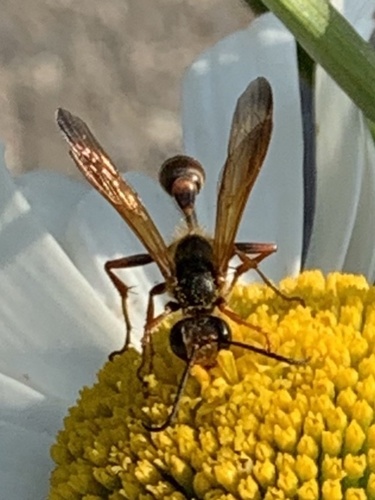
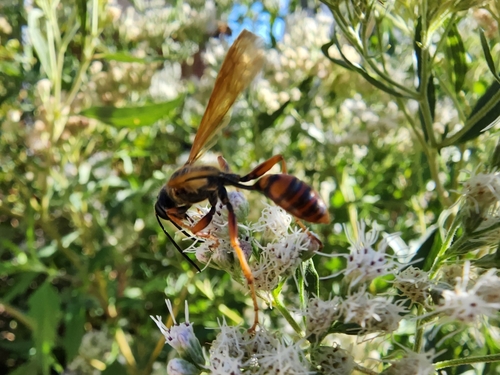
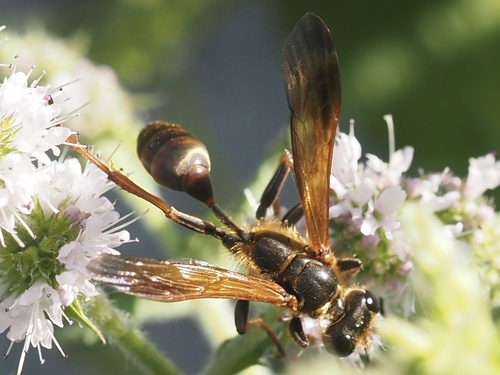
Questions people ask
What does the elegant grass-carrying wasp eat?
It hunts orthopteran insects like grasshoppers and crickets to feed its young.
Source: Wikipedia
Where can I find this wasp?
It was first known from western and southern North America but is now also found in the northeastern United States.
Source: Wikipedia
Same family (Sphecidae)
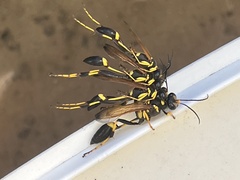 Yellow-legged Mud-dauber WaspSceliphron caementariumCan sting
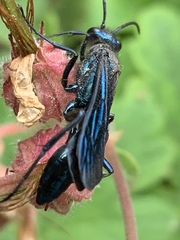 Common Blue Mud-dauber WaspChalybion californicumCan sting
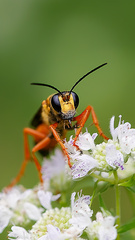 Great Golden Digger WaspSphex ichneumoneus
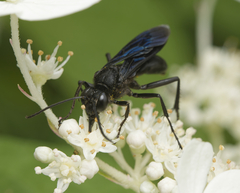 Great Black Digger WaspSphex pensylvanicusCan sting
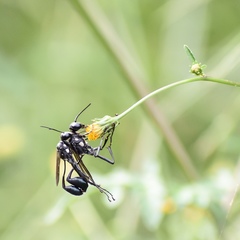 Gold-marked Thread-waisted WaspEremnophila aureonotata
 Mexican Grass-carrying WaspIsodontia mexicana
Sources
- Wikipedia: https://en.wikipedia.org/wiki/Isodontia_elegans
Look it up elsewhere: GBIF · iNaturalist · BugGuide · ITIS · Wikipedia
Text written 2026-10-23 from the sources above and checked sentence by sentence against them. Data fetched 2026-10-23.