 Bug FAQ
Eight-spotted Skimmer
Libellula forensis · Order: Odonata · Family: Libellulidae
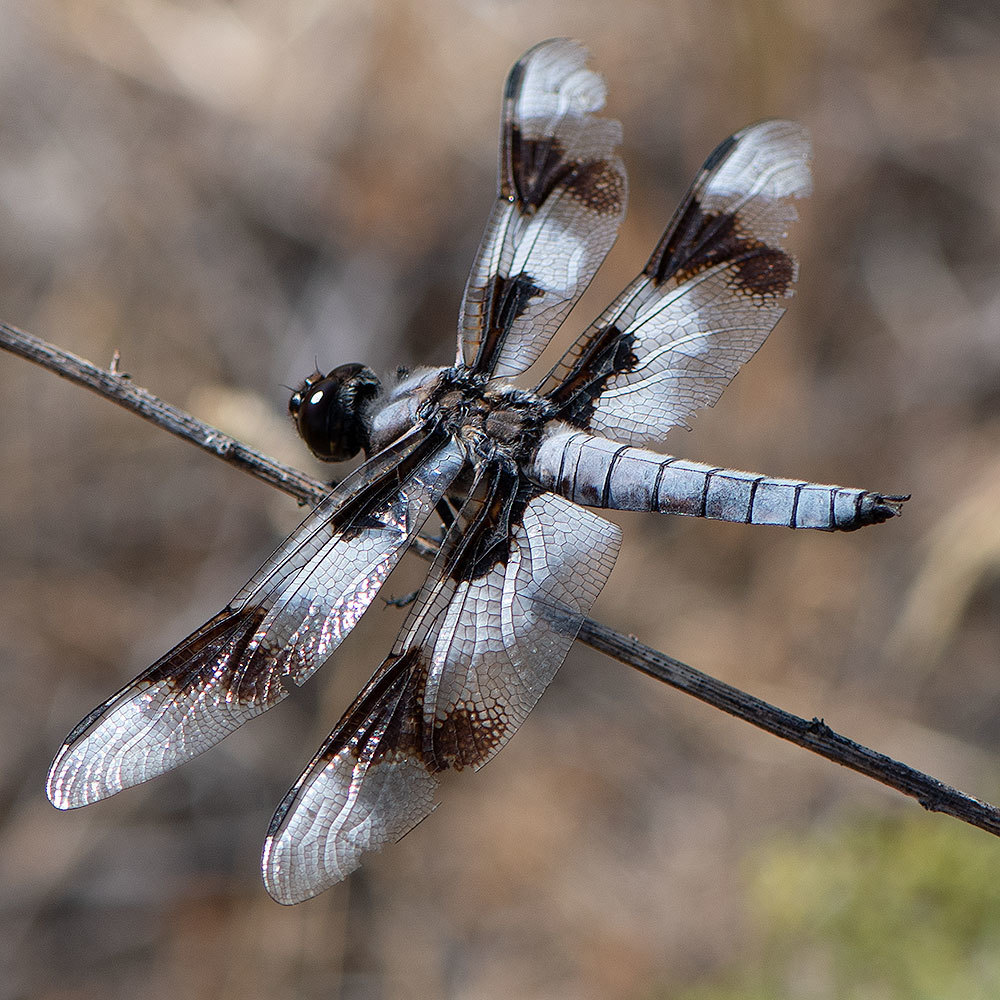
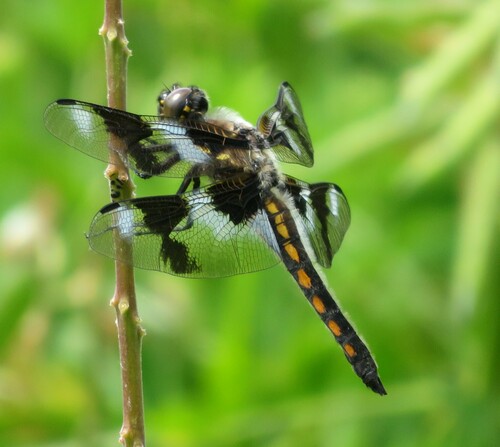
The eight-spotted skimmer is a medium-sized dragonfly about 44 to 50 mm long. Males have eight white spots on their wings, and some females also show white spots, a unique trait among North American female dragonflies. It lives near muddy ponds and lakes west of the Rockies and can be seen from April through October.
Source: Wikipedia
How to recognize it
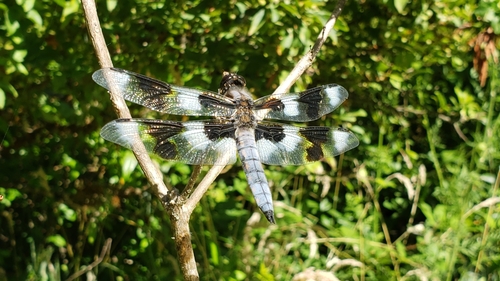
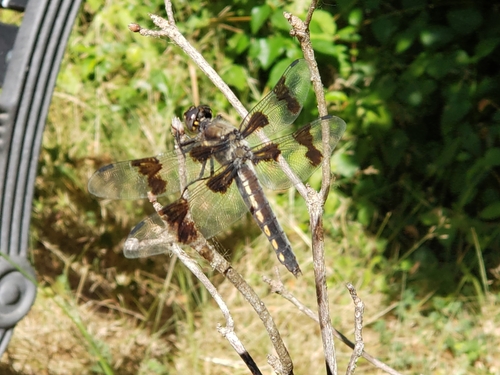
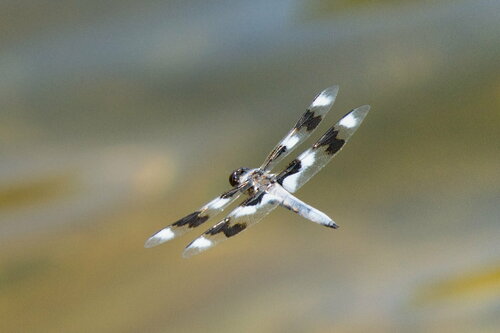
The species gets its name from eight black marks on the wings, and males add eight opaque white spots. Some eastern females also have white wing spots, the only North American females with that feature.
Source: Wikipedia
Size
Adults measure between 44 and 50 mm in total length.
Source: Wikipedia
When you see it
Adults are on the wing from April through October.
Source: Wikipedia
Where it comes from
Its range is west of the Rockies, associated with muddy ponds and lakes.
Source: Wikipedia
Where it is found in the US
Recorded in 16 of 51 states and DC. Most records: Oregon, Washington, California, Idaho, Utah, Colorado, Nevada, Montana.
Darker = more records. Counts are museum and citizen-science records, not population size.
Source: GBIF
Status: native in North America; native in Canada; native in United States. Source: iNaturalist
Months it is reported in the US
Source: GBIF
More photos
Same family (Libellulidae)




Sources
- Wikipedia: https://en.wikipedia.org/wiki/Eight-spotted_skimmer
Look it up elsewhere: GBIF · iNaturalist · BugGuide · ITIS · Wikipedia
Text written 2026-10-22 from the sources above and checked sentence by sentence against them. Data fetched 2026-10-22.