 Bug FAQ
Echo Azure
Celastrina echo · Order: Lepidoptera · Family: Lycaenidae
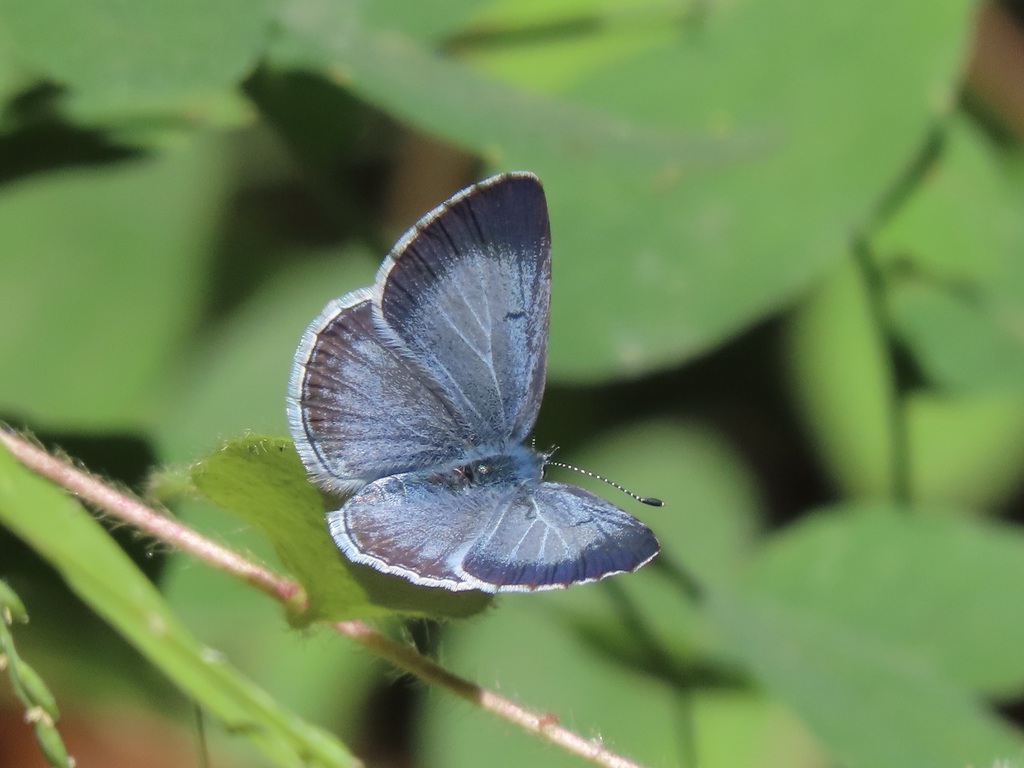
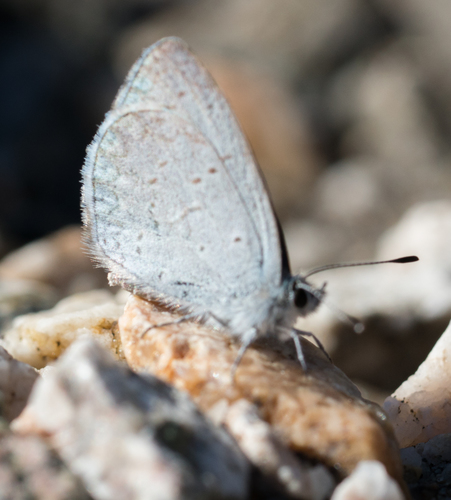
Echo Azure butterflies are pale blue-grey with small black spots and have bright blue-green wings. They live in western U.S. woodlands, shrublands and near mountain streams where host plants grow. Eggs are laid on flower buds, larvae feed on buds and receive honeydew from attending ants, and adults sip nectar from many of the same plants.
Source: Wikipedia
Where it lives
Found in woodlands, shrublands, and near mountain streams where woody host plants are present.
Source: Wikipedia
What it eats
Larvae feed on Ceanothus, Spiraea, Aesculus, Rubus, and some legumes; adults drink nectar from these and other plants like Heteromeles and Rhamnus.
Source: Wikipedia
Life cycle
Eggs are laid on flower buds; larvae eat buds and flowers while ants tend them for honeydew.
Source: Wikipedia
When you see it
They may have one to several broods from early spring (February) through fall, depending on weather.
Source: Wikipedia
Where it comes from
Observed mainly in western U.S. states such as California, Oregon, Arizona, New Mexico, and Montana.
Source: Wikipedia
Where it is found in the US
Recorded in 24 of 51 states and DC. Most records: California, Arizona, Washington, Oregon, Idaho, Nevada, New Mexico, Utah.
Darker = more records. Counts are museum and citizen-science records, not population size.
Source: GBIF
Status: native in North America; native in Canada; native in United States. Source: iNaturalist
Months it is reported in the US
Source: GBIF
More photos
Questions people ask
Are they a pest for gardens or crops?
They feed on a variety of native plants, but there is no information that they cause damage to gardens or crops.
Source: Wikipedia
Same family (Lycaenidae)





Sources
- Wikipedia: https://en.wikipedia.org/wiki/Celastrina_echo
Look it up elsewhere: GBIF · iNaturalist · BugGuide · ITIS · Wikipedia
Text written 2026-10-22 from the sources above and checked sentence by sentence against them. Data fetched 2026-10-22.