 Bug FAQ
Eastern Pine Elfin
Incisalia niphon · Order: Lepidoptera · Family: Lycaenidae
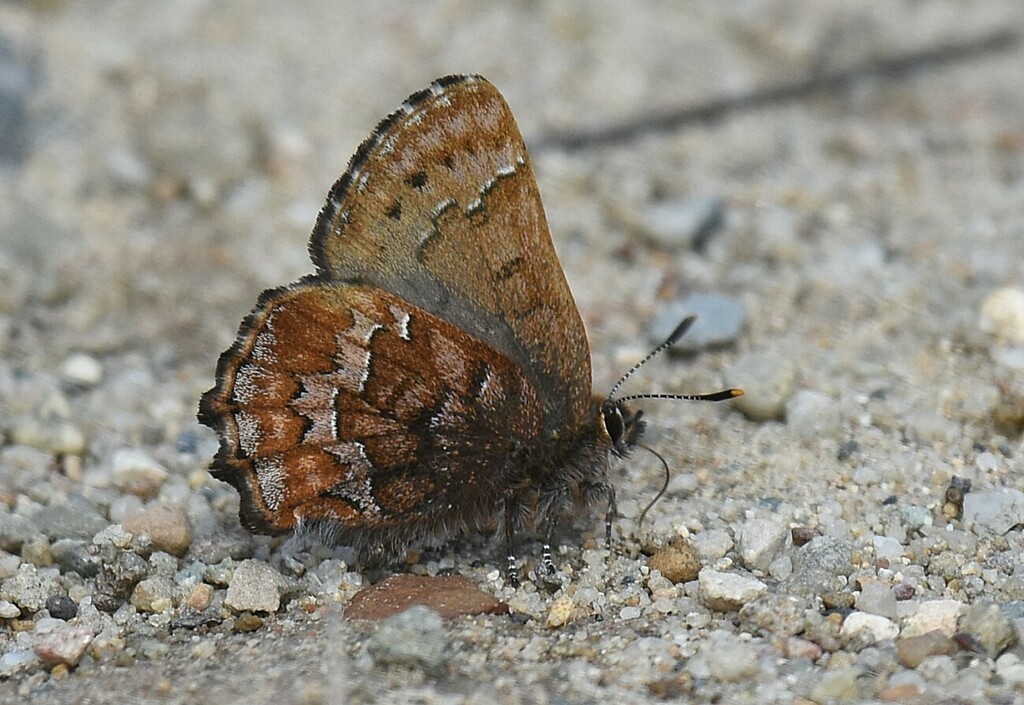
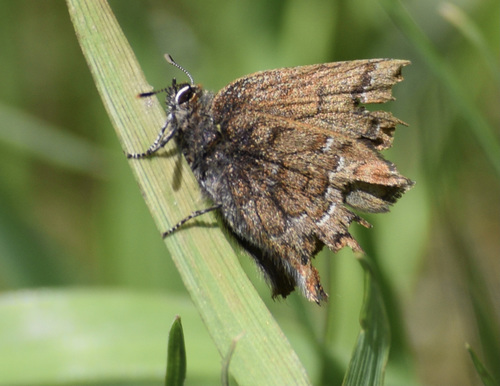
The Eastern Pine Elfin is a small butterfly with a wingspan of about 22 to 27 mm (0.9 to 1.1 in). It lives in sandy pine habitats across North America, where its caterpillars feed on pine flowers, seedpods, jack pine and white pine. Adults appear in a single flight period to March to April in the south and mid-May to early June in the north to and the chrysalids hibernate in loose cocoons under litter.
Source: Wikipedia
Size
The wingspan ranges from 22 to 27 mm (0.87 to 1.06 in).
Source: Wikipedia
Where it lives
It prefers sandy areas where pine trees grow.
Source: Wikipedia
What it eats
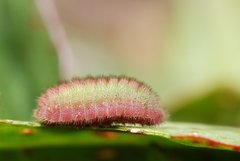
Caterpillars eat pine flowers and developing seedpods.
Source: Wikipedia
When you see it
The flight period is March-April in the south and mid-May to early June in the north.
Source: Wikipedia
Where it comes from
It is native to North America.
Source: Wikipedia
Where it is found in the US
Recorded in 43 of 51 states and DC. Most records: Massachusetts, Vermont, Michigan, New Hampshire, New York, Maine, New Jersey, Connecticut.
Darker = more records. Counts are museum and citizen-science records, not population size.
Source: GBIF
Months it is reported in the US
Source: GBIF
More photos
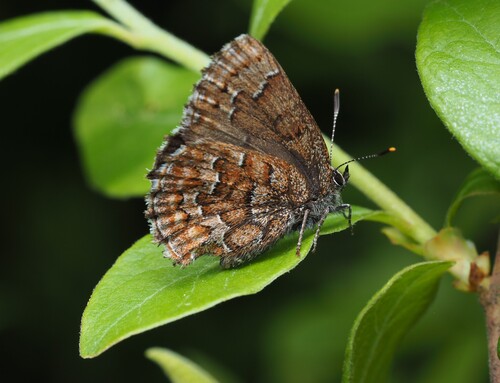
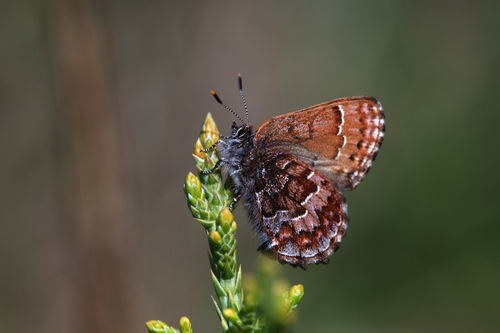
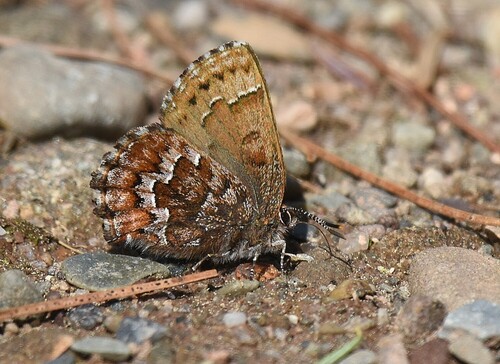
Questions people ask
When can I see Eastern Pine Elfin butterflies?
Adults appear in one flight period to March to April in the south and mid-May to early June in the north.
Source: Wikipedia
What do the caterpillars eat?
They feed on pine flowers, developing seedpods, jack pine and white pine.
Source: Wikipedia
How can I tell it apart from the western pine elfin?
Look for two dark bars in the forewing underside cell; the western species has only one.
Source: Wikipedia
Same family (Lycaenidae)





Sources
- Wikipedia: https://en.wikipedia.org/wiki/Callophrys_niphon
Look it up elsewhere: GBIF · iNaturalist · BugGuide · ITIS · Wikipedia
Text written 2026-10-24 from the sources above and checked sentence by sentence against them. Data fetched 2026-10-23.