 Bug FAQ
Eastern Hercules Beetle
Dynastes tityus · Order: Coleoptera · Family: Scarabaeidae
Also called: Unicorn Beetle
Source: Wikipedia
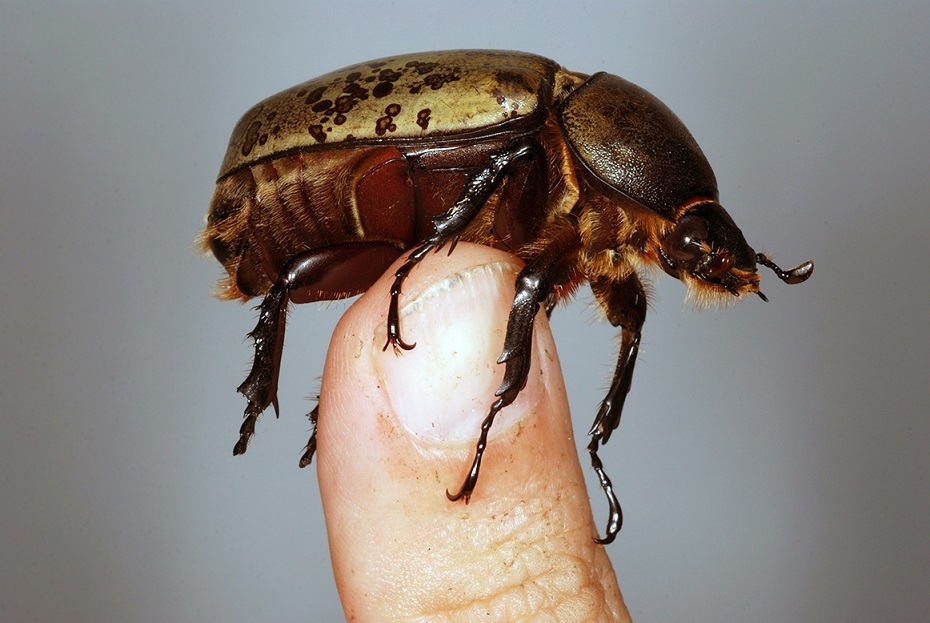
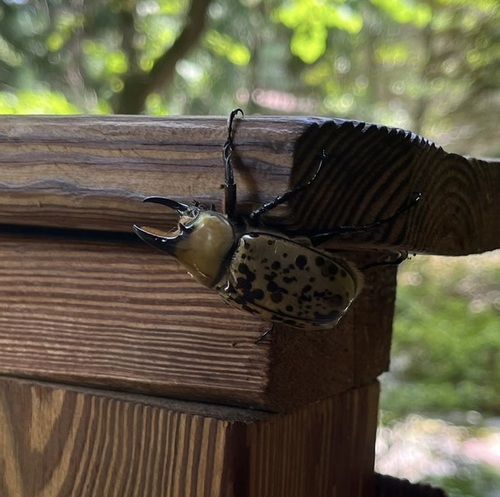
Adult eastern Hercules beetles are 40 to 60 mm long, with males bearing a forward-projecting horn and both sexes about 20 to 27 mm wide.
Source: Wikipedia
How to recognize it
The beetle’s wing covers are green, gray or tan and usually have black spots or markings.
Source: Wikipedia
Size
Males reach 40 to 60 mm in length, including the horn; females are shorter but both sexes are 20 to 27 mm wide. The whole animal, horns included, can be up to 60 mm long.
Source: Wikipedia
Is it a pest in the house?
Larvae feed on decaying wood, which can include wood in structures, but no evidence shows they damage homes. Adults are found in vegetation and leaf litter, not in homes.
Source: Wikipedia
Does it bite or sting?
Despite their large horns, eastern Hercules beetles are harmless to humans.
Source: Wikipedia
Where it lives
Larvae develop inside decaying wood. Adults are found in vegetation and under moist leaf litter.
Source: Wikipedia
What it eats
Adults have been seen drinking sap from ash trees, though their full diet is not well known.
Source: Wikipedia
Life cycle
They undergo complete metamorphosis: egg, larva, pupa, then adult.
Source: Wikipedia
When you see it
Adults stay underground through winter in their pupal cells. They emerge in summer and live for about 6 to 8 months.
Source: Wikipedia
Lookalikes
Only two of the eight Dynastes species occur in the United States; all are restricted to the Americas.
Source: Wikipedia
Where it is found in the US
Recorded in 26 of 51 states and DC. Most records: North Carolina, Virginia, Maryland, Georgia, Tennessee, Texas, Kentucky, Alabama.
Darker = more records. Counts are museum and citizen-science records, not population size.
Source: GBIF
Status: endemic in North America; endemic in United States. Source: iNaturalist
Months it is reported in the US
Source: GBIF
More photos
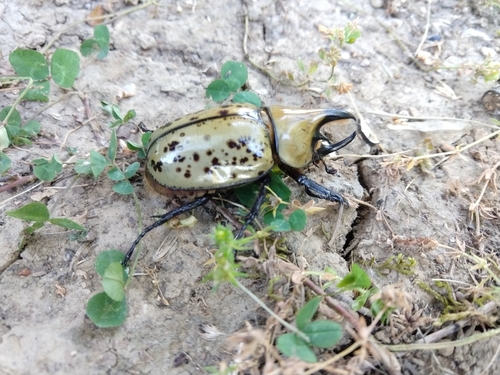
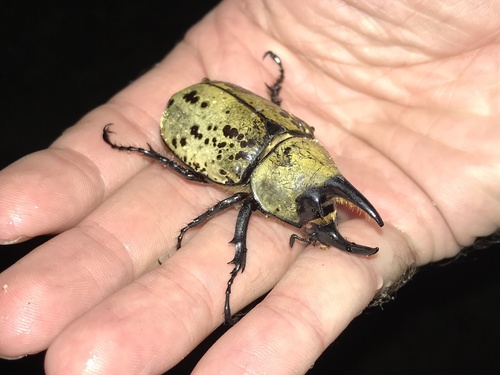
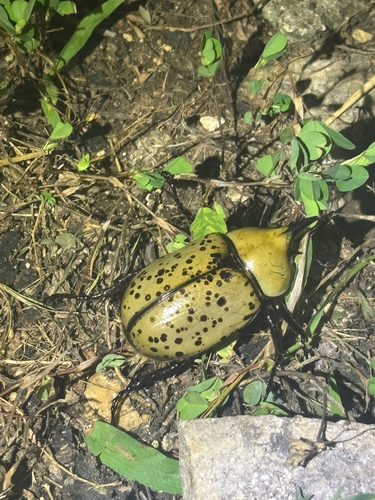
Questions people ask
Do eastern Hercules beetles bite or sting?
No, they are harmless to people and do not bite or sting.
Source: Wikipedia
Can they damage my house or furniture?
There is no evidence they damage homes; larvae feed on decaying wood in nature.
Source: Wikipedia
Where might I find them?
Look for adults in moist leaf litter or vegetation in the eastern United States; larvae live inside decaying wood.
Source: Wikipedia
Same family (Scarabaeidae)
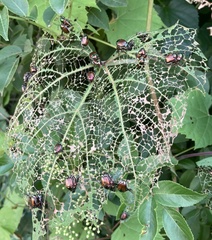 Japanese BeetlePopillia japonicaDamages trees, gardens or crops
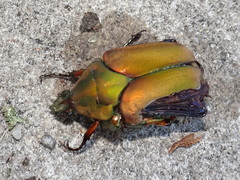 Common Green June BeetleCotinis nitidaDamages trees, gardens or crops
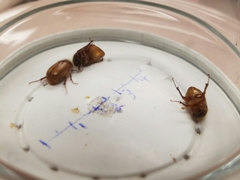 Phyllophaga crinitaPhyllophaga crinitaDamages trees, gardens or crops
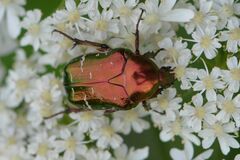 European Rose ChaferCetonia aurata
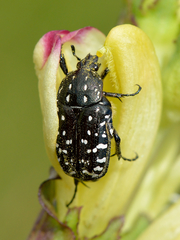 Mediterranean Spotted ChaferOxythyrea funestaDamages trees, gardens or crops
 Oriental BeetleExomala orientalisDamages trees, gardens or crops
Sources
- Wikipedia: https://en.wikipedia.org/wiki/Dynastes_tityus
Look it up elsewhere: GBIF · iNaturalist · BugGuide · ITIS · Wikipedia
Text written 2026-10-22 from the sources above and checked sentence by sentence against them. Data fetched 2026-10-22.